Image: Courtesy Portland Art Museum
Tucked in the Portland Art Museum’s refreshed second-floor galleries hangs a vibrant, kaleidoscopic artwork of geometric patterns overlaid with the words “Past + Future = Present.” Created by Choctaw and Cherokee artist Jeffrey Gibson for the US Pavilion at the 2024 Venice Biennale, the piece is part of Shifting the Narrative: 21st Century Acquisitions, an exhibition that kicked off last fall when the museum unveiled its transformed space. Displayed alongside flat bags from the Columbia River Plateau region, Choctaw basketry, Northwest Coast transformation masks, and works from contemporary artists Lillian Pitt, Julie Buffalohead, Sara Siestreem, and Will Wilson, Gibson’s words also point to a curatorial shift.
“People have Native art in this box that it’s in the past, and they don’t see Native people as part of contemporary art,” says Kathleen Ash-Milby, PAM’s curator of Native American art and a member of the Navajo Nation. “Our artists are working today. It’s not just about the past.”
When PAM’s renovation began in 2023, galleries were emptied; Ash-Milby jumped at the opportunity to hit the reset button. Before the renovation, the Native American collection was organized through an anthropological lens, artwork separated by region—Northwest Coast, Great Basin, Plains, and so on. “We’re not a natural history museum,” says Ash-Milby. “I want to forefront the perspective of artists.”
So far, that’s meant bringing on curatorial partners including Nez Perce and Cayuse artist and scholar Phil Cash Cash and local multidisciplinary creator Brenda Mallory. It’s also meant the intentional placement of Native American and Indigenous art throughout the museum, where shared spaces create a dialogue and draw together work from Asian, Native American, Northwest, and modern and contemporary artists. It’s a dialogue that’s present in The Stars We Do Not See, as well. The Australian Indigenous traveling exhibition, which opened in September and will leave in January, features more than 200 contemporary works.
“I think what we’re doing in our permanent collections galleries and what The Stars We Do Not See is doing is breaking down what people’s preconceptions are about Indigenous art globally,” Ash-Milby says.
We spoke with the curator earlier this year about a few pieces in PAM’s permanent collection.
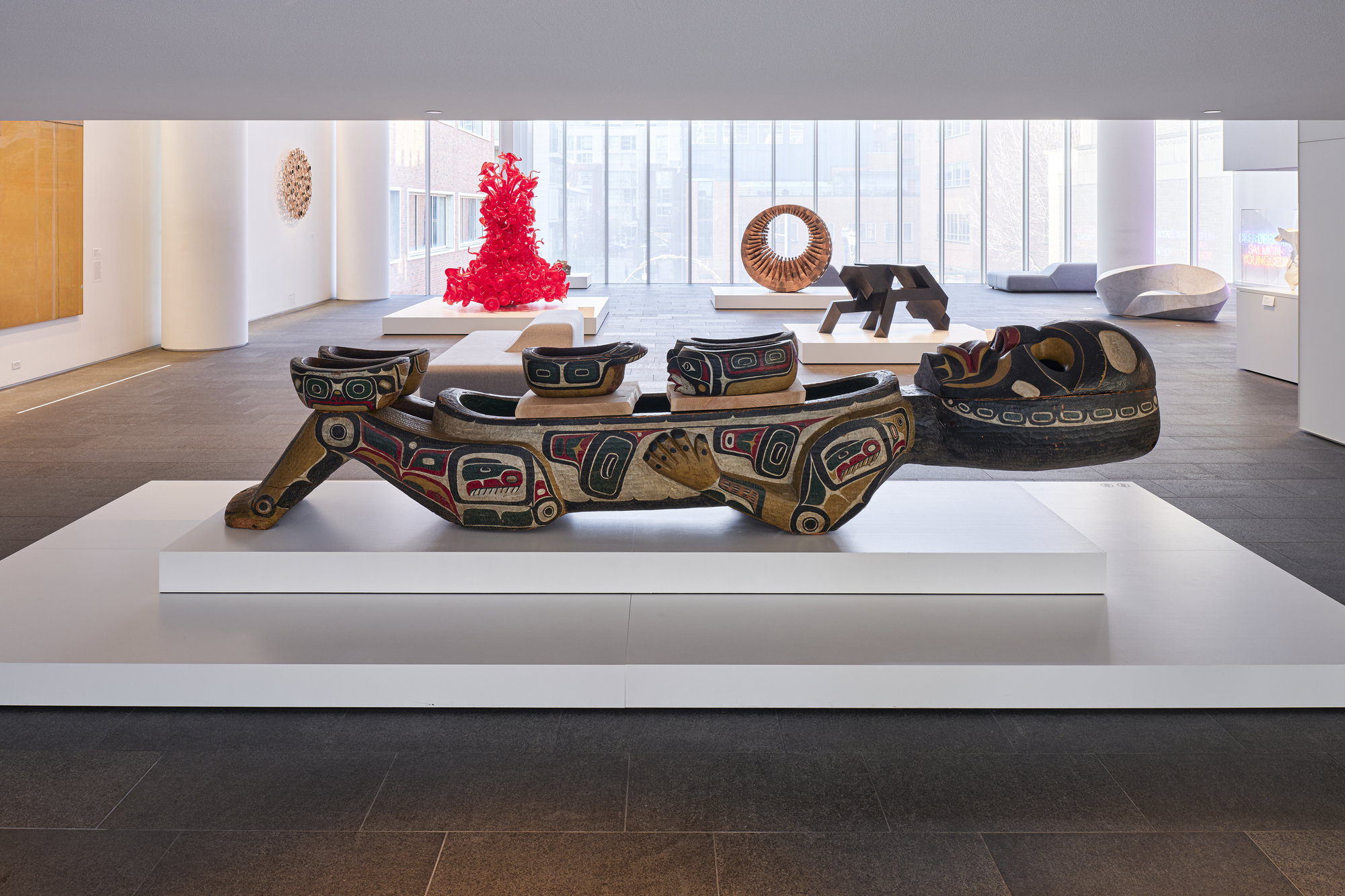
Image: Courtesy Portland Art Museum
Dzunuk’wa Feast Dish
Charlie James, Kwakwaka’wakw
A monumental piece designed as a vessel for sharing food at potlatch ceremonies, James’s cedar carving represents the Kwakwaka’wakw mythological figure Dzunuk’wa, a wild woman who lives in the woods and preys on children. In PAM’s collection since 1948 and displayed in various iterations, it had never been properly arranged until 2025, when Kwakwaka’wakw artist Marianne Nicolson visited and “set the museum straight,” says Ash-Milby. “She showed us the correct orientation. The bowls each represent parts of her body. The work was designed to bring people together.” Now, visitors can walk all the way around the giant carving and “view her in all her glory.” Featured in Forming Nature, Nature Formed, Whitsell Family Gallery, thru January 3, 2027.
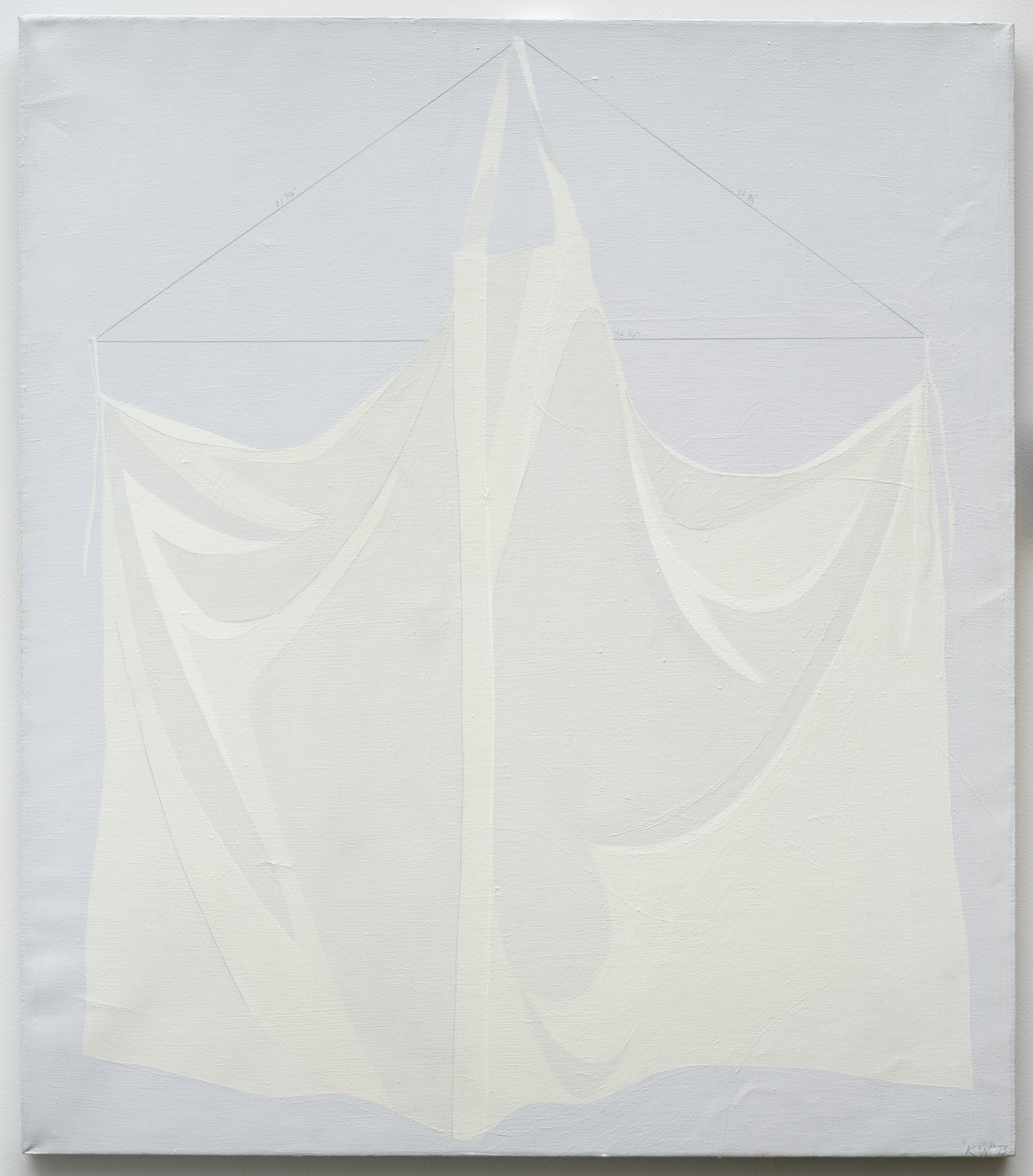
Image: Courtesy Portland Art Museum
A Pregnant Apron
Kay WalkingStick, Cherokee Nation and American
Better known today for later landscape paintings, WalkingStick launched her artistic career in the 1960s and ’70s at the height of second-wave feminism. Newly married and a mother of two, WalkingStick was heavily influenced by and responded to “what was happening in the world right at that time,” explains Ash-Milby. WalkingStick created hard-edged figural paintings and abstract work about sexuality, feminism, and personhood. Showing a painter’s apron suspended from three points of a triangle, A Pregnant Apron (1974) “is symbolic of womanhood,” says Ash-Milby, as it plays with abstract composition, geometry, and negative space. Featured in Abstraction Since Mark Rothko, Polak Gallery, thru November 15.
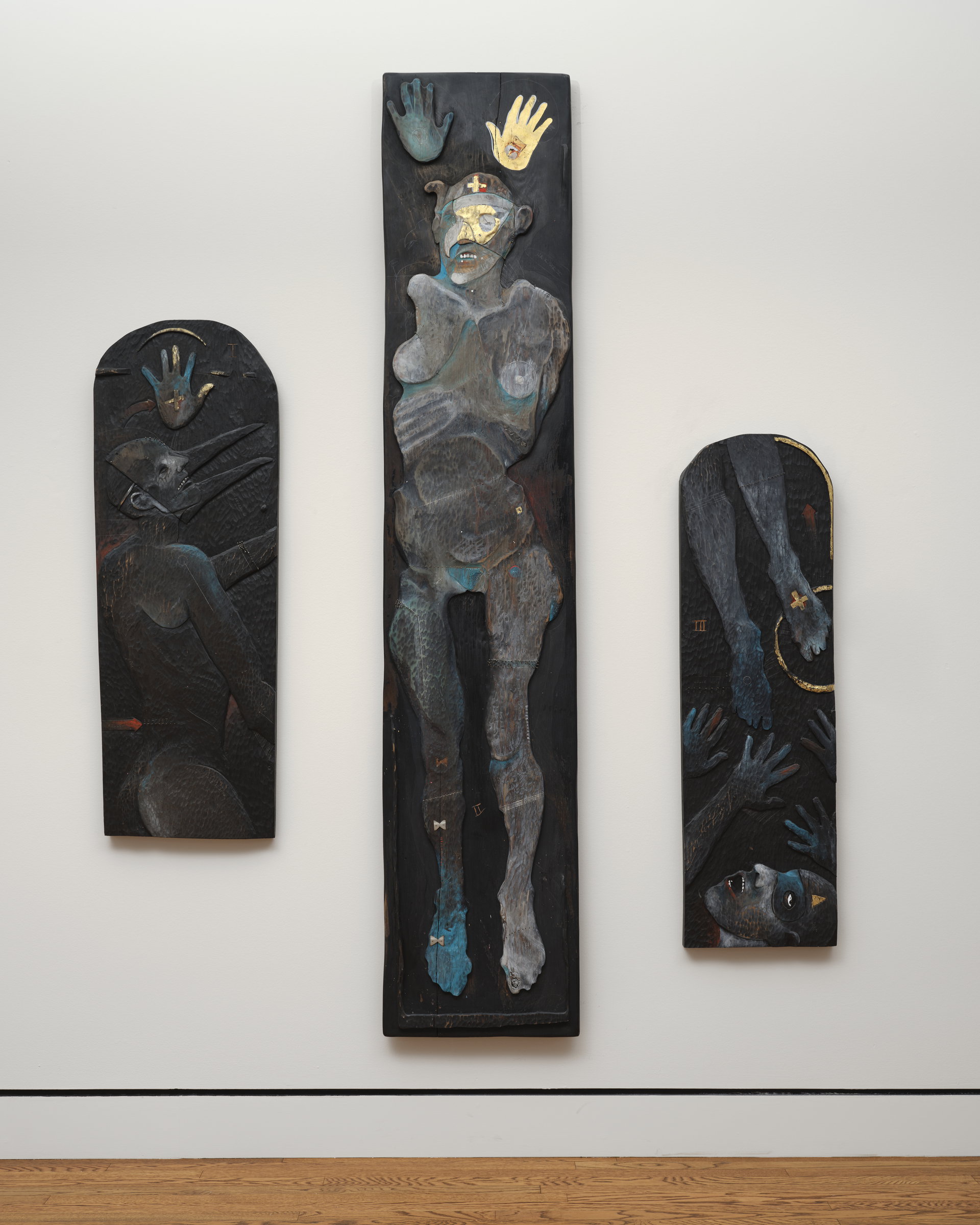
Image: Courtesy Portland Art Museum
Hawk and Crows
Rick Bartow, Wiyot
A folk and blues musician since he first picked up a guitar in high school, Bartow performed for wounded soldiers at military hospitals during the Vietnam War. Haunted by the horrors he witnessed, Bartow turned to art: graphite drawings, acrylic paintings, found sculptures made of wood scraps, screws, and nails. Many of his works express themes of mortality and the fragility of life, says Ash-Milby. Hawk and Crows, a relief carving on cedar with acrylic, features ghostly and disfigured bodies with anguished faces. With small nails hammered into the wood, graphite, and gold leaf, the triptych is reminiscent of Renaissance paintings of the crucifixion of Christ. Featured in Rick Bartow: Storyteller, Piacentini Gallery, thru May 23, 2027.
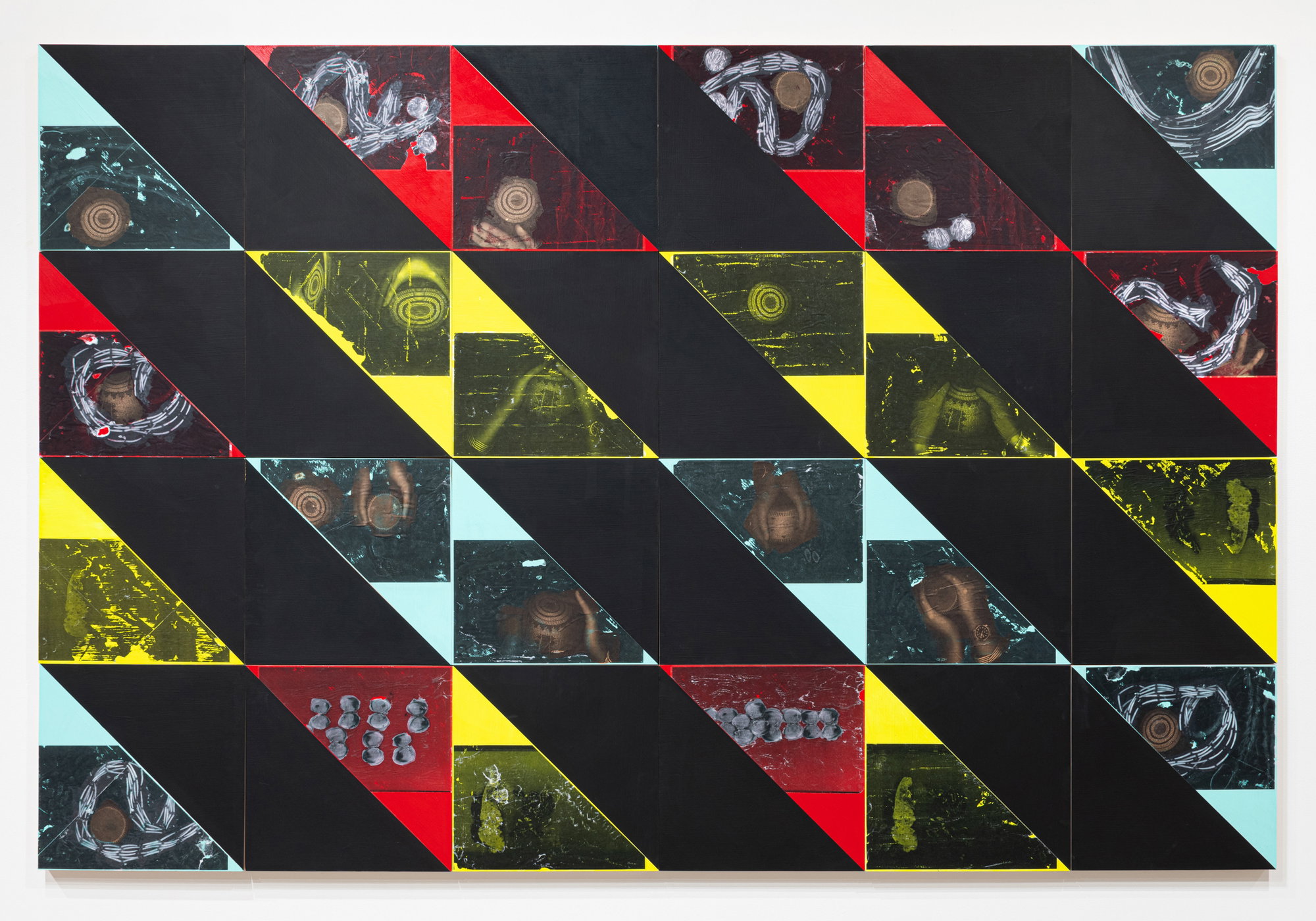
Image: Courtesy Portland Art Museum
fastened to the rock (blood, sweat, and tears)
Sara Siestreem, Hanis Coos
Siestreem’s nine-foot-wide painting blends Hanis Coos basket weaving tradition with modern technologies. The 2022 work, made up of 24 separate panels, features bold geometric patterns in black, yellow, and red juxtaposed with Xerox scans of shells and the artist’s hands holding woven baskets. Siestreem, Ash-Milby says, exemplifies how contemporary Native artists “blur the line between the past and the present,” depicting traditional and ancestral motifs with contemporaryelements and ongoing issues of social and ecological justice, Indigenous identity and sovereignty, resistance, and colonial violence. Featured in Shifting the Narrative: 21st Century Acquisitions, Pat and Trudy Ritz Gallery, thru December 13.
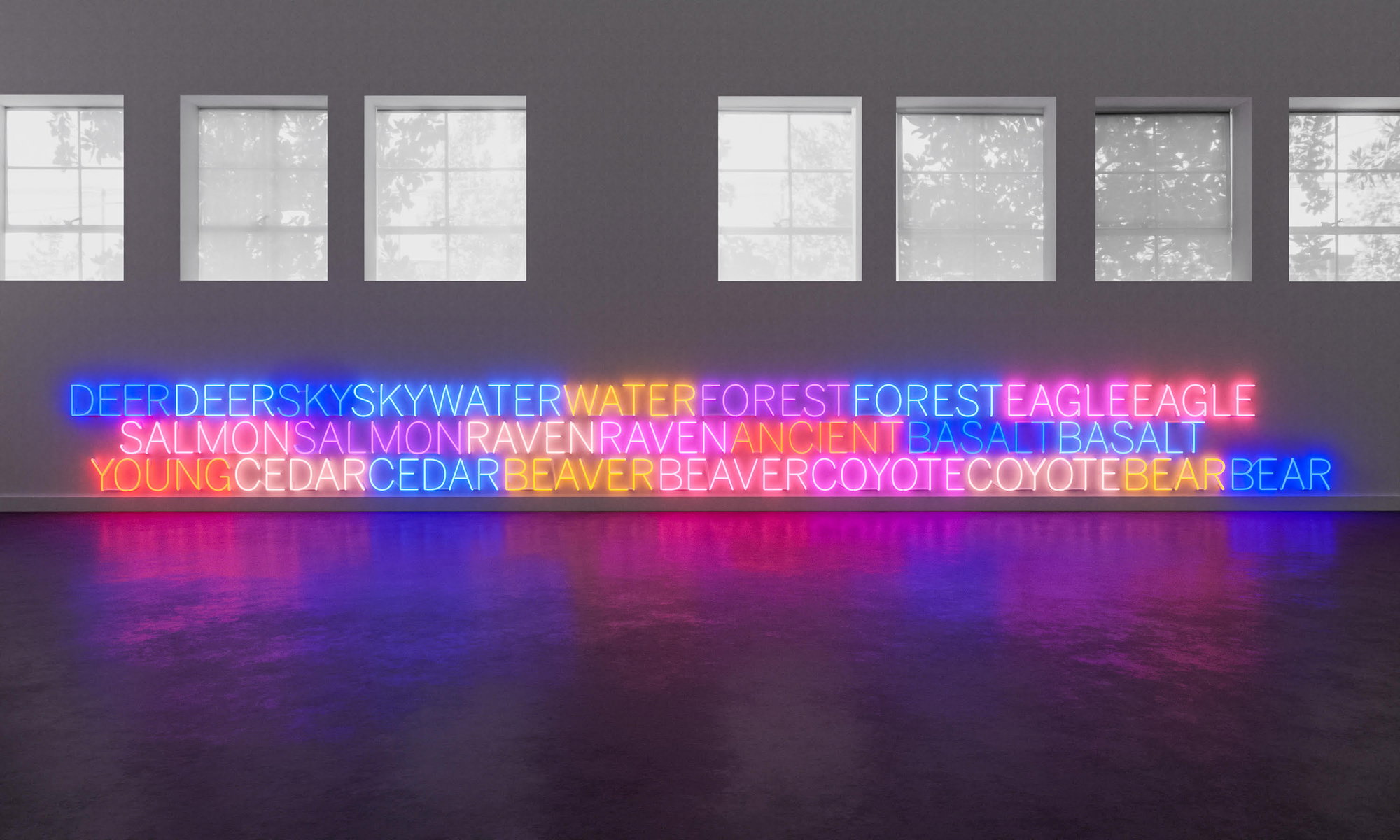
A Shared Horizon (Western Door)
Marie Watt, Seneca Nation of Indians and American
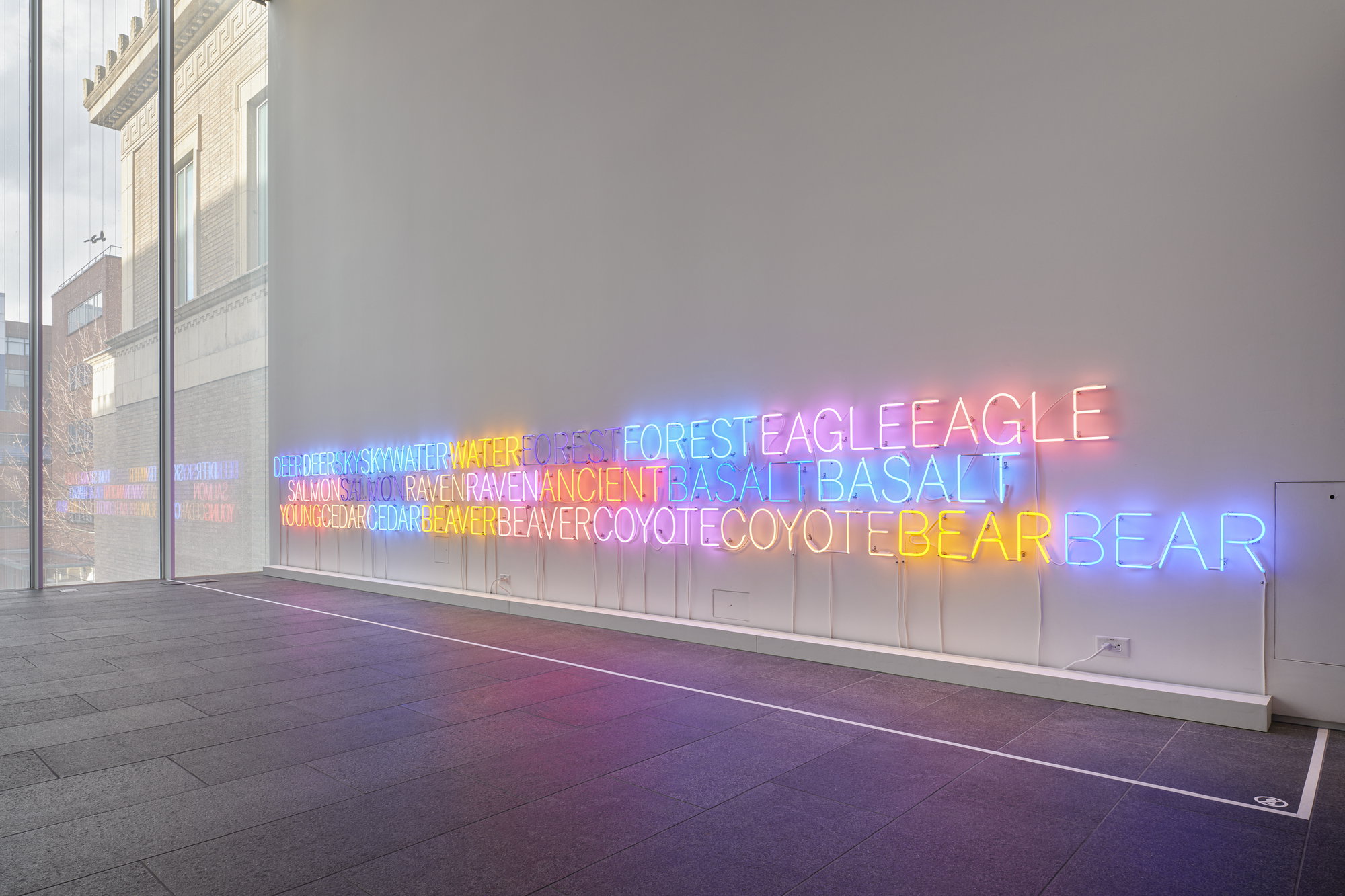
Stand in the South Park Blocks facing the museum and you can observe Watt’s 2022 work cast a soft neon glow across the glass Rothko Pavilion. “When it’s a gray day it feels like a bit of joy and happiness drawing you to the museum,” says Ash-Milby. The nearly-27-foot-wide art installation is hard to miss, repeating the words “salmon, salmon, cedar, cedar, eagle, eagle” in a call-and-response text-based work about our kin relationships with the natural world and animal relatives. Look closely, the words “young” and “ancient” stand out in bright red. Featured in Forming Nature, Nature Formed, Whitsell Family Gallery, thru January 3, 2027.
Published in the Our Super Markets issue of Portland Monthly.
|
|
|