

Image: Aaron Lee
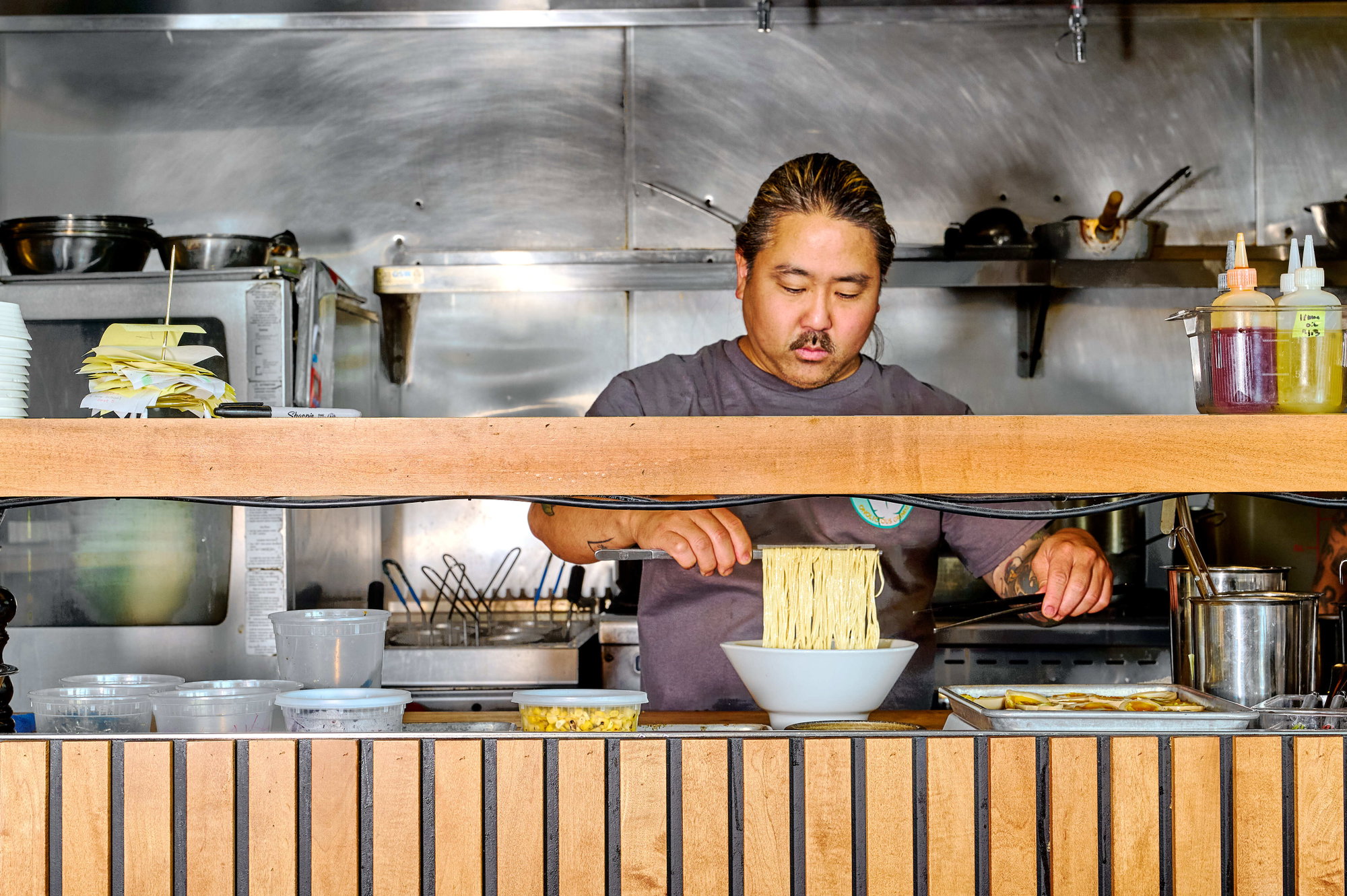
When the staff at Toya Ramen were juggling a full house one day last summer, chef Colin Yoshimoto handed diners two bowls meant to represent both soup and birria beef while behaving like neither. Sure, the noodles were there, with broth in the smaller bowl as might be served tsukemen-style, but Yoshimoto had instructed staff to inform diners that they may “sip it, dip it, or pour it.” Part of a collab dinner with Diego Palacios of the Mexican street food project Machetes, the offering combined braised bone-in short rib with red masa noodles and caldo on the side.
Just a few years ago, birria ramen might have been enough of a hook to fill seats, but the scene has matured, and a more savvy class of ramen heads are looking to see that the fundamentals are in order, first and foremost. To Jeff Extine, a co-owner of Matsunoki Ramen, which has locations downtown and off North Mississippi, this distinction marks a new stage of development, a third wave of Portland ramen. For him, it’s analogous to coffee. Prior to the prevalence of single-origin pour-overs, coffee went through an evolution of mass production, increasing specialization, and subsequent obsession over quality. Ramen’s local
history, however, isn’t quite so linear.
There wasn’t really a ramen scene when Patrick Fleming was first plotting his Boke Bowl pop-up in the late ’00s, though Japanese restaurants like Toshi and Koji Osakaya had had it on their menus for a while, and Gabe Rosen had been getting praise for his bowls at Biwa. When Fleming went looking for investment, friends, family, and bankers stared blankly, asking, “You mean like Top Ramen?”
For Fleming, who was largely informed by the technique-driven influence of French and Italian traditions (“At the heart of all great cuisine is sauce and broth,” he says), ramen felt a bit like a blank canvas. Boke Bowl—which launched in 2010 and moved into a brick-and-mortar in 2011 in the Central Eastside, not far from Biwa—came to feature versions based around duck confit, miso cod with shumai meatballs, and even rabbit.
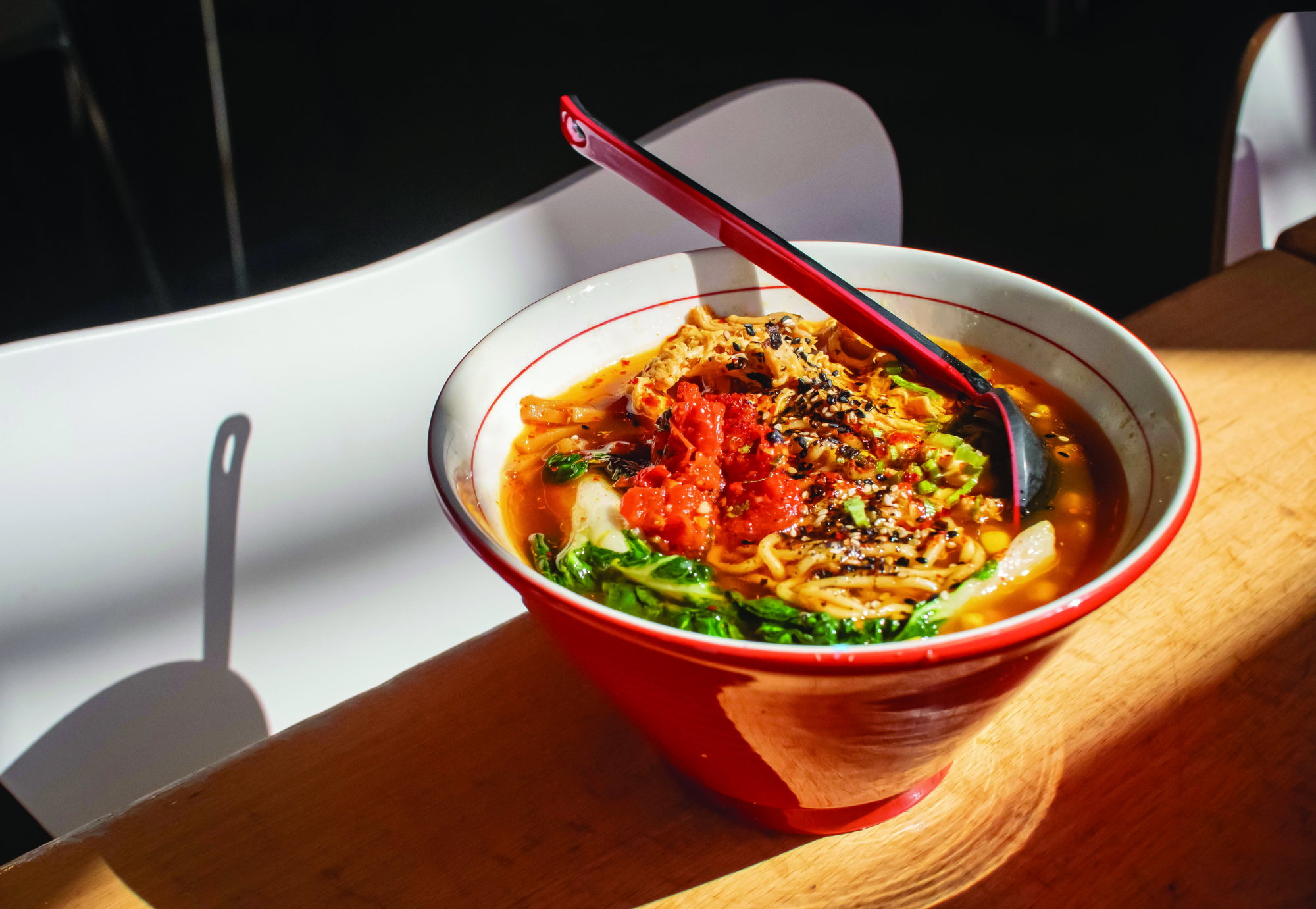
Image: Ron Scott
At the forefront of this local first wave, Boke Bowl and Biwa were already prefiguring the third. If Portland ramen today looks to chef authorship and away from conventional framework, both fit that bill. As Rosen fussed over the nuances of Biwa’s housemade noodles in 2007, the Portland Mercury asked about the details of his process. He remarked plainly, “I came up with a soup that I like. We make it.”
Then came Boxer. Micah Camden and Katie Poppe were already known for Little Big Burger and Blue Star Donuts when they launched in 2013 in downtown’s Union Way, across from Powell’s. Portland Monthly’s Karen Brooks thought the tonkotsu-shoyu broth “crie[d] out for dimensionality,” but she saw “addictive potential” in Boxer Ramen’s spicy miso. Boxer saw rapid expansion, eventually having five Portland locations before the company closed in 2024 following postpandemic financial strain and then bankruptcy.
Boxer’s initial success kicked off a second wave for the local scene, marked by a sudden ubiquity. Tokyo-based Marukin opened its first American restaurant here in 2016, bringing Hakata-style tonkotsu and a Japanese ramen company’s accumulated technical knowledge to SE Ankeny Street. Afuri followed months later with its delicate, citrus-scented yuzu shio. Kayo’s Ramen Bar opened on North Williams the same year, after owners Kayoko and Matt Kaye tested 46 noodle recipes before settling on what they called “Noodle #47.”
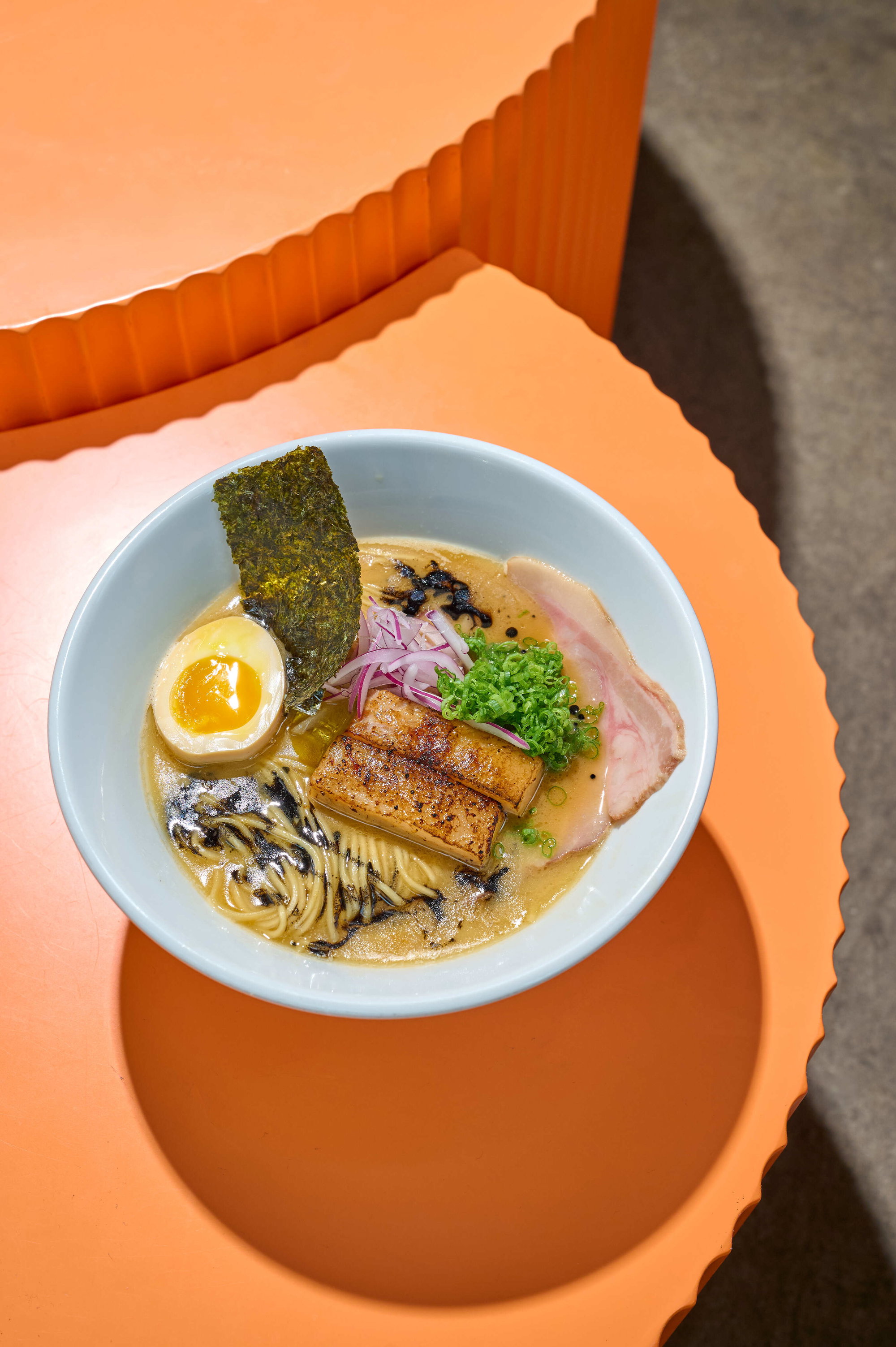
Image: Aaron Lee
Marukin eventually separated from its Japanese parent and became locally owned Kinboshi, itself a fitting bridge between Portland’s supposed second and third waves. A decade later, the city’s ramen menus look considerably less interchangeable. At Toya in the Central Eastside, Yoshimoto makes noodles daily and builds much of the menu around comparatively delicate chintan broths. Beyond shoyu and shio, he has made truffle-scented ramen and carbonara-like mazemen, and the menu changes with the seasons.
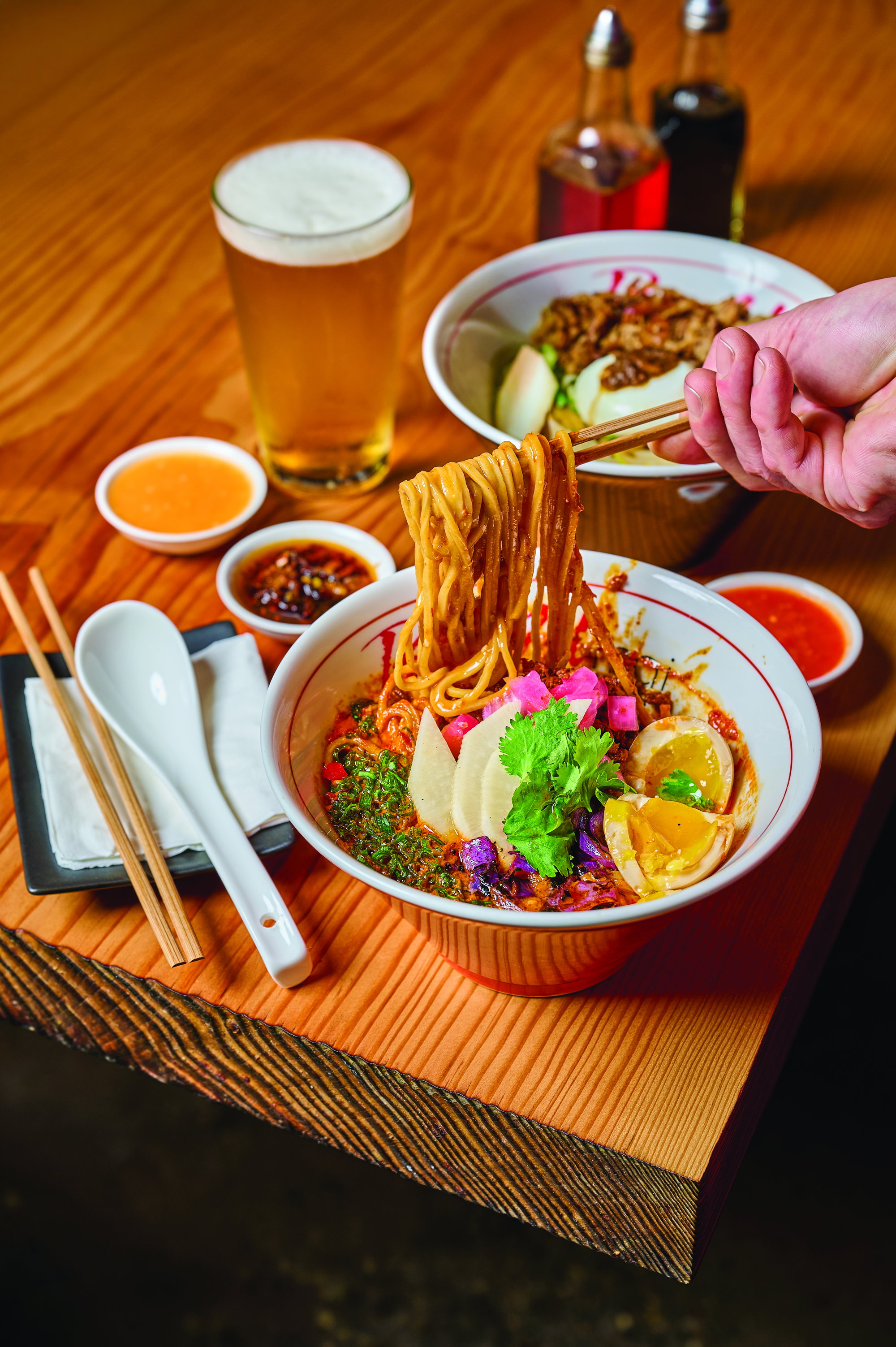
Image: Aaron Lee
Baka Umai, which has locations on NW 23rd and SE Hawthorne, makes its own noodles and has turned chile into something resembling a research program, with bowls ranging from chorizo-men and mala miso to Reaper Ramen built with fermented Carolina Reaper mash. Matsunoki works from a rich pork-and-chicken tonkotsu foundation and lets its seasonal bowls wander, with specials like spring pea mazemen with shrimp, wasabi and arugula and a fall pumpkin tantanmen with crunchy pepitas.
At the now-closed Wu-Ron’s, in the former Noraneko space under the Morrison Bridge, Kimitaka “Taka” Terashita built a ramen-ya around a tightly focused menu of Nagahama-style ramen, inspired by the bowls co-owner Shintaro Yamada grew up eating near Fukuoka’s fish market. Rather than chase flashy specials, Wu-Ron’s doubled down on specificity.
Portland’s third wave, though, is less about experimentation than specificity: restaurants carving out increasingly distinct identities. A chef can make a red masa noodle for birria. Another can devote a restaurant to Nagahama tonkotsu or ferment their own chile mash. Each is free to define ramen on their own terms.
For Toya’s Yoshimoto, that freedom comes only after technique. Make the same broth every day, he says, and eventually a few degrees of temperature matter. The proportion of chicken feet to older hens matters. One gives gelatin, another flavor. “It’s not additions,” Yoshimoto said. “It’s not ‘What can I add, what can I get?’”
At Matsunoki, Extine describes essentially the same philosophy in different terms. Ramen, he says, welcomes experimentation because it is itself a relatively modern Japanese food. Flavor can bend. Technique should not. “When things are being made with intent, then that’s where there can be a lot of playfulness and creativity,” he says. To Extine, execution matters more than strict tradition. A bowl crowded with every topping commonly associated with ramen can become as anonymous as a burger that always arrives with the same lettuce, tomato, pickles, and ketchup.
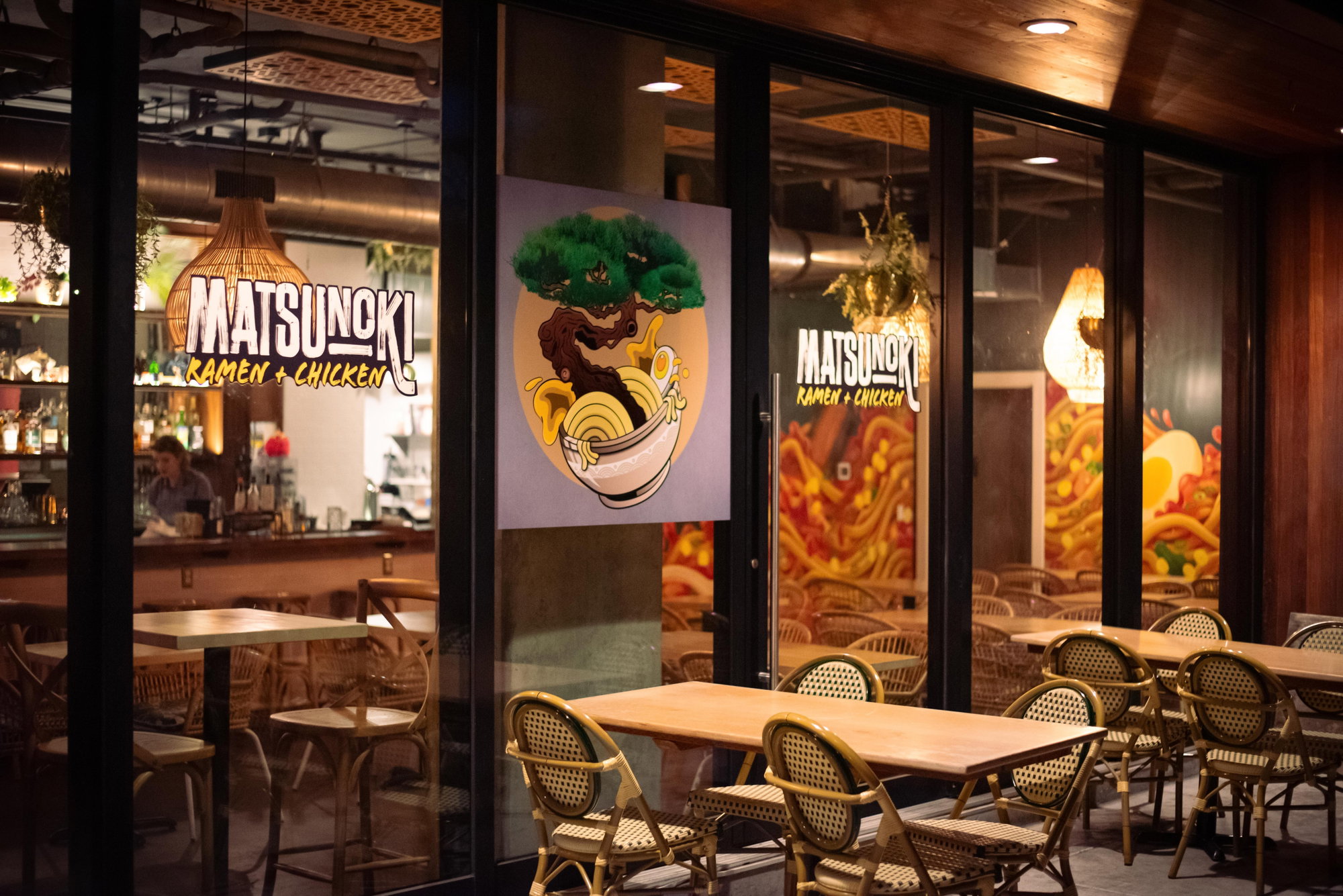
Image: Ron Scott
That idea also explains Yoshimoto’s initial resistance to birria ramen. Third-wave ramen, in this sense, is not permission to dump anything into a bowl. Yoshimoto is wary of novelty, believing that it can disguise weak fundamentals. Hype brings customers once, he says, but a restaurant lives on the people who return, who then bring four friends and tell them what to order.
At the Machetes collaboration, he trusted Palacios to make the birria. His own responsibility was to make a noodle that could carry the flavor of corn while retaining ramen’s texture, and then to construct a way to eat the dish that honored the pleasures of birria, rather than just pouring consomé over noodles and calling it done.
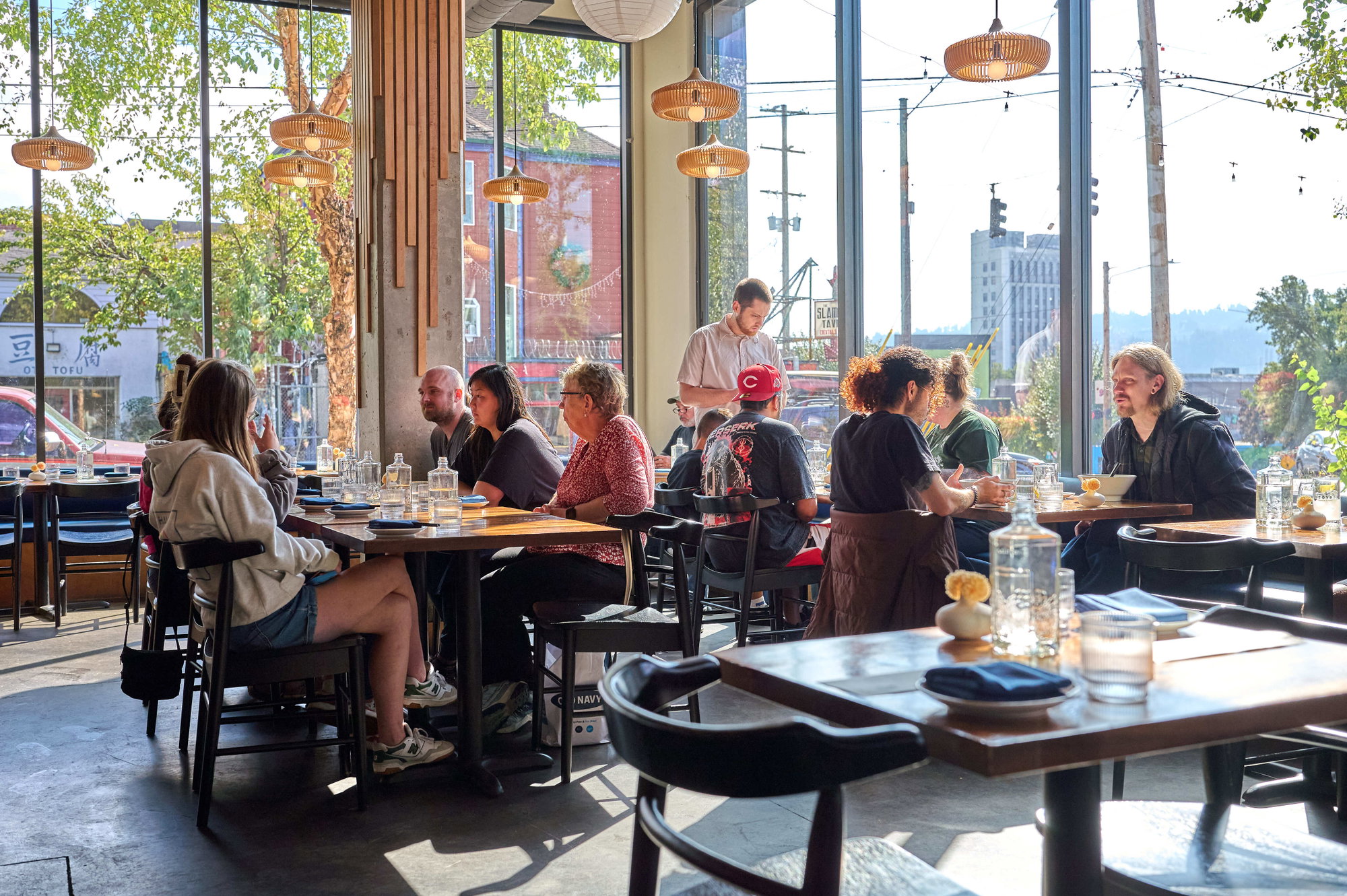
Image: Aaron Lee
That distinction between novelty and expression is the fault line of Portland’s third wave. It’s also taking place under difficult economic conditions. The more specialized Portland’s ramen shops become, the sharper their operators have to be about keeping the doors open. Ramen is labor-intensive before a customer ever sits down.
Yoshimoto notices that Toya’s cold ramen can tempt someone who has already decided to eat there, but it doesn’t bring customers through the door. Longer, hotter summers and warmer winters, Yoshimoto worries, could make Portland’s already seasonal appetite for hot noodle soup increasingly difficult for independent restaurants.
Boke Bowl is roughly 30 percent slower in summer, Fleming says. Its original menu centered on ramen, steam buns, and a Brussels sprout salad. Over time, cold noodle salads, poke, curry, and rice bowls joined the mix to help make the restaurant viable year-round. Longevity comes down to consistency and integrity. Sixteen years after Boke’s first pop-up, Fleming sees customers who once brought toddlers still coming in, the children the same height as their parents. Boke has become, in his description, a family ramen restaurant rather than a cool-kid destination.
It’s a reminder that waves level off, and a reminder that Portland diners no longer need every ramen restaurant to explain the category from scratch. They’re suitably versed in the difference between a milky tonkotsu and a clear chintan, between a soup noodle and mazemen, between maximalism and restraint. Yoshimoto can offer explanatory description of flour ratios, broth extraction, and noodle chemistry to curious diners, should they be inclined to ask. But he doesn’t need to.
“If a dish needs to be explained to a consumer as to why it’s good, then it’s probably not very good,” he says. “That’s my job to understand why. Their job is just: Is this delicious or is this not delicious?”
Published in the Portland’s 50 Best Restaurants issue of Portland Monthly.
|
|
|