

Over the ages, Mount St. Helens has had many faces. The youngest and most volatile of the Cascades’ volcanoes was first known as “Loowit” to some of the Native Americans who settled on its flanks. Legends told that the spirit Sahale erected the mountain where he’d killed a beautiful maiden and her two sparring lovers (Adams and Hood, of course). Thereafter, the mesmerizing, Mount Fuji–like peak stood watch over generations of Cascadians, blasting forth rocks and gas periodically while inspiring many to climb its summit and cavort in its shadows. On a single day in 1980, St. Helens transformed into a worldwide symbol of violence and devastation. But in the years that followed, exhilaration and hope took root as the mountain’s entirely new geography of resilience became a revered laboratory of stunning geological and biological processes. Caves, lava domes, hummocks, wildflowers, waterfalls, hot springs—the student of nature (and outdoor fun) will find it all here. It’s time you brush up and take a closer look.

Mount St. Helens: Anatomy of an Eruption
Inside the events of May 18, 1980—and scientific insight on when it could happen again.

Life Goes On: Mount St. Helens’ Flora and Fauna
Ecologists reflect on the rebirth of the mountain after its modern eruptions—and a field guide to its wildest residents (yes, including Sasquatch).

A User’s Guide to St. Helens Highlights
An aerial view of the mountains attractions, and a step-by-step approach to summiting the volcano.

Mount St. Helens: The Deep History
From the birth of the beast to its explosion in 1980 through its 21st-century rumblings, we offer a look back at the mountain's major moments.

16 Perfect Trails for Exploring Mount St. Helens
Whether you're scouting for a family-friendly stroll or a three-day backpacking challenge, we've rounded up the best hiking opportunities on the volcano's west, east, and south sides.
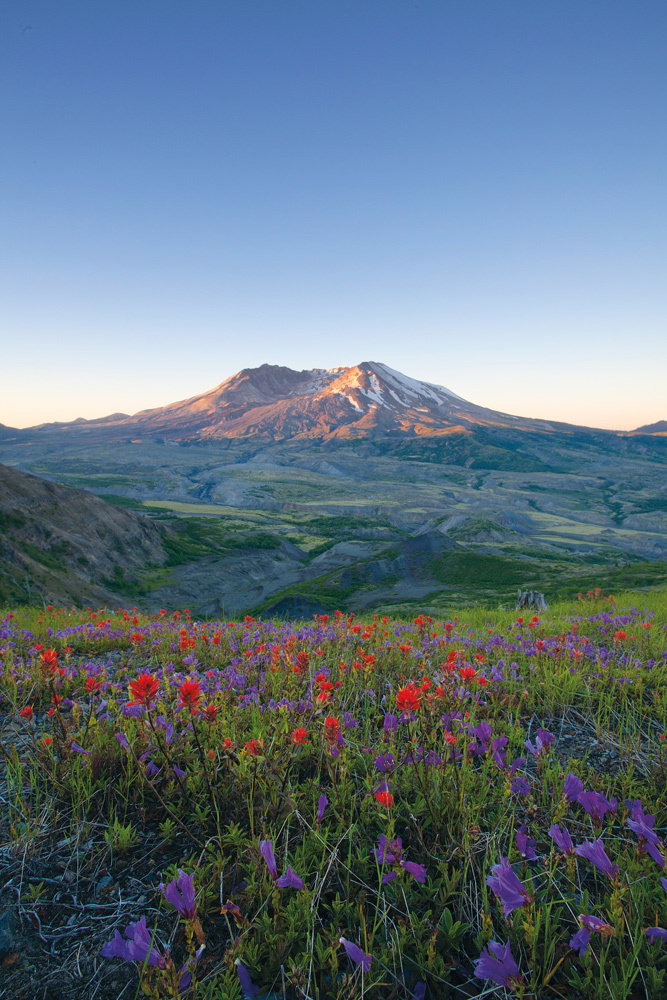
Coming Back to the Lady
Legendary Portland author Ursula K. Le Guin offers a perspective on the blast and changing landscape of Mount St. Helens.

Pro Tips for Photographing Mount St. Helens
How to take the ultimate shot of the peak, the crater, and the wildlife around the mountain.
|
|
|


