Property Watch: An Italianate Home in Goose Hollow with a Basement Podcast Studio

Image: Courtesy Gage Grund
The first house built in the Goose Hollow neighborhood went up in 1845 by none other than Daniel Lownsdale, whose land would later become much of the central city. Portland was incorporated six years afterward, which makes the Goose Hollow neighborhood one of our very oldest.
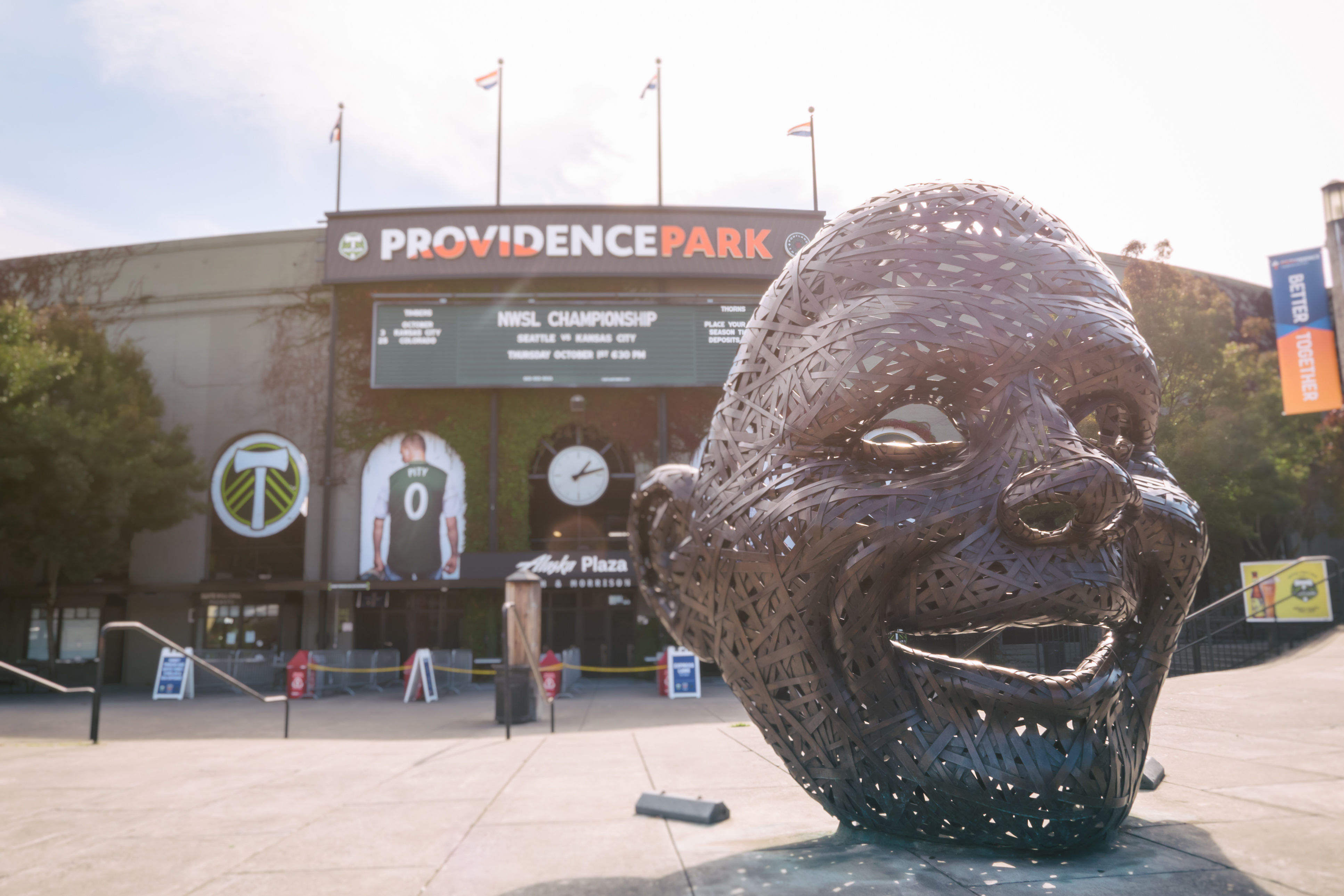
As such, it's long been a mix of historic homes and industry. There was the tannery that Lownsdale kept (where Providence Park now stands), and Chinese immigrant–owned vegetable farms, both fed by Tanner Creek, which occupied the original hollow in an area called Tanner Creek Gulch (it has since been filled in). According to historian Tracy J. Prince, the hollow started around SW Jefferson and 17th, and ran "approximately twenty blocks long, fifty feet deep, and two blocks wide." (There's a cool old map that shows it.)

Image: Courtesy Gage Grund
As for the first part of the neighborhood's name, that also comes from those early days. Purportedly, women would tend their flocks of geese in the low lands around the creek, and one day, a dispute arose when the flocks got mixed. An 1875 article in The Oregonian reported: "Women not only pulled goose feathers, but pulled hair," and the case made it all the way to court. While The Oregonian first used the name Goose Hollow in 1879, it fell out of favor as the neighborhood was developed with highways and a stadium, returning only when Bud Clark, who would later become mayor, named his pub the Goose Hollow Inn in 1967.
By that time, neighborhood boundaries included higher ground, where prominent merchants, doctors, and civic figures had built their homes, ranging from mansions to those like this 1880 Italianate house on the corner of SW Columbia Street and 17th Avenue. This typology often featured grand residences upstairs and practical outposts (apothecaries, dry goods stores, offices) at street level. Today, the house is zoned commercial and remains the ultimate live-work set-up, with its two-story residence meticulously restored and the basement converted into that most modern of industries: a podcast studio.
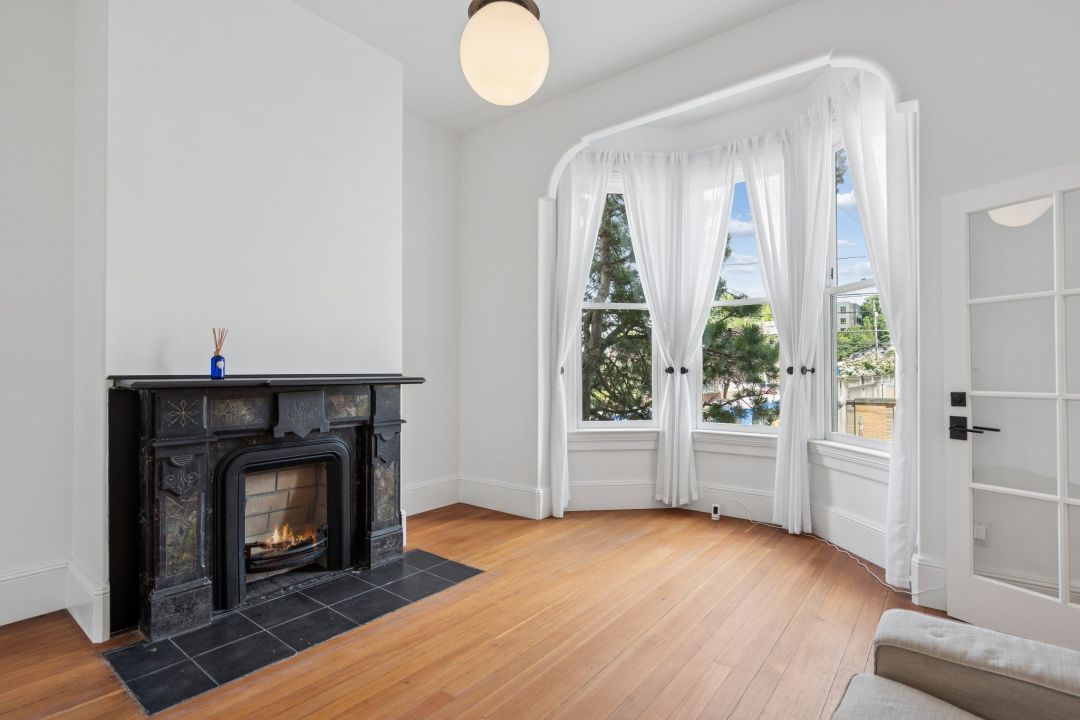
Image: Courtesy Gage Grund
The Italianate style was very popular across the country between 1850 and 1880; San Francisco townhouses and New York brownstones come to mind. The style can be characterized by a fair bit of flourish, or stay simpler, as we see here in the house's double height polygonal bay window and elaborated cornice. The latter has a smidge of decoration in the detailed panels, painted red and tucked between the brackets.
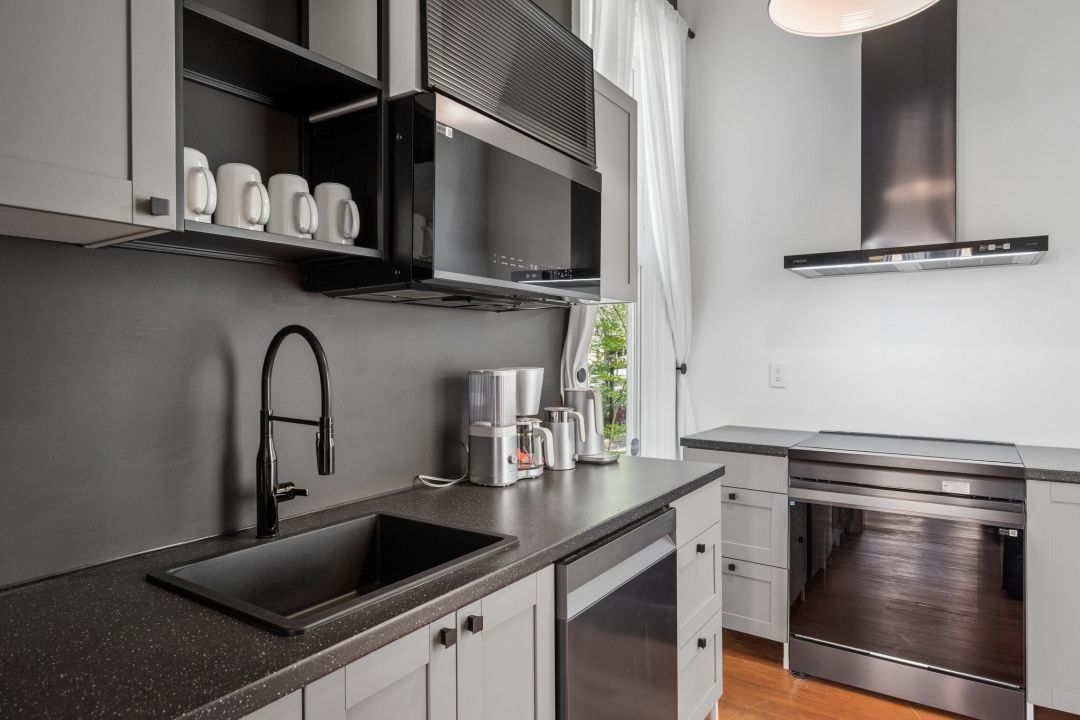
Image: Courtesy Gage Grund
That simplicity continues inside, with preserved period details punctuating a pared-back interior. Throughout all 1,970 square feet and four bedrooms, there are 10- to 12-foot ceilings and refinished fir floors warming up the white walls. Additional restored millwork encompasses the oversized windows, doors, and lines the baseboards.
In both parlors (there are two), an arched surround sets off the alcove of the bay window, while the living room's original fireplace, possibly cast iron or painted slate, is pure drama. Meanwhile, more than a little modernity has snuck in, thanks to the brand-new kitchen with Samsung Bespoke appliances, and three bathrooms with their own updated finishes.

Image: Courtesy Gage Grund
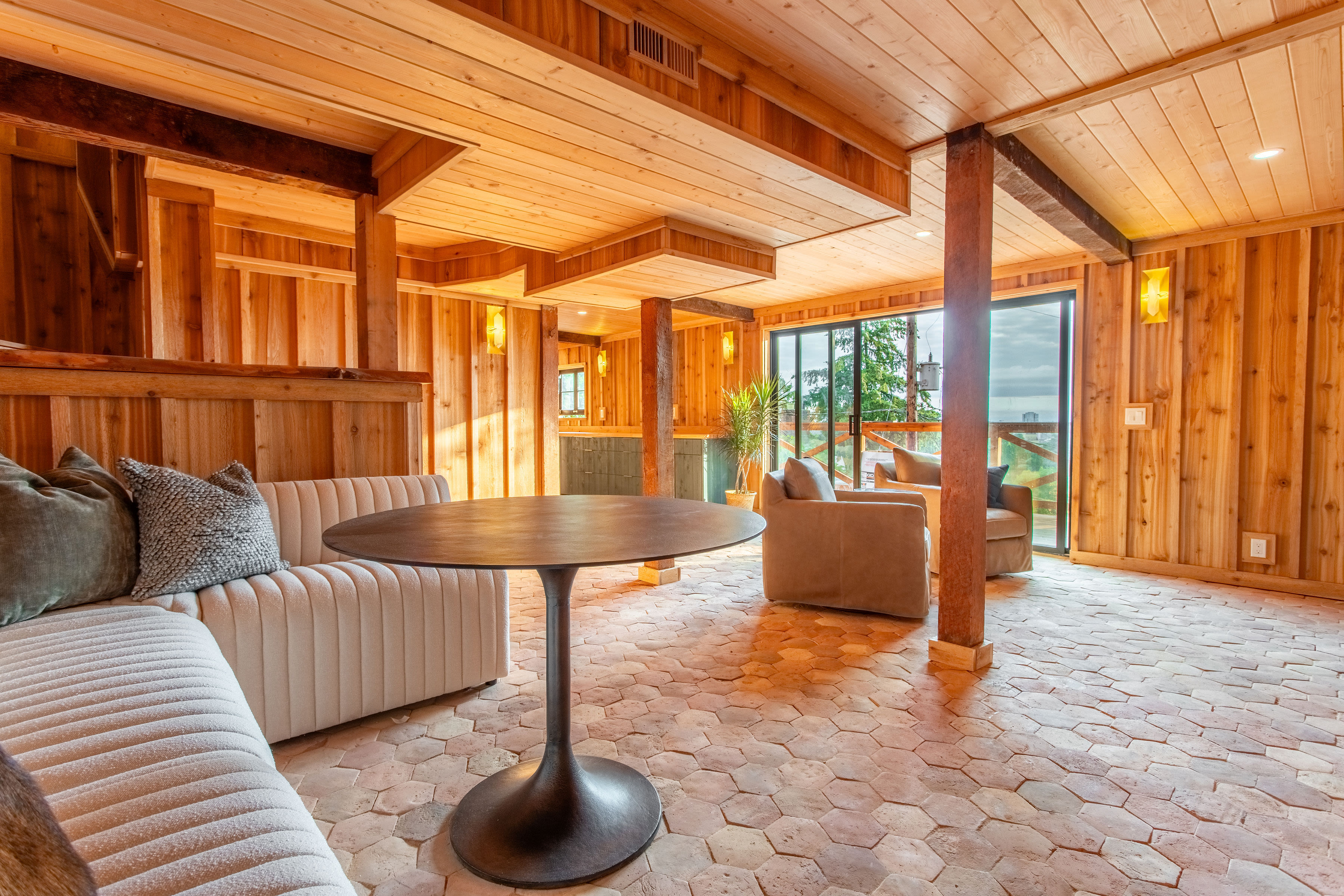
Nowhere is this more true than in the 834-square-foot basement flex space, currently outfitted as a podcast studio. There, find a polished concrete floor, half-bath, and cozy conversation corner wrapped in sound-dampening foam. Of course, the next buyer can continue to use it as such, or turn it into any other business venture they can dream up: restaurant, office space, retail, perhaps even a modern-day apothecary, aka a weed store.

Image: Courtesy Gage Grund
Listing Fast Facts
- Address: 1708 SW Columbia St, Portland, OR 97201
- Size: 2,804 square feet/5 bedroom/4 bath
- List Date: 6/8/2026
- List Price: $1,550,000
- Listing Agent: Dylan McNerney, Kingfisher Properties
Melissa Dalton is a freelance writer who has focused on Pacific Northwest design and lifestyle since 2008. Contact Dalton here.
Editor’s Note: Portland Monthly’s “Property Watch” column takes a weekly look at an interesting home in Portland’s real estate market (with periodic ventures to the burbs and points beyond, for good measure). Got a home you think would work for this column? Get in touch at [email protected].