Multnomah County Retrofits Its Libraries for the People

Viewed from NE Knott Street on a fall afternoon, the recently remodeled and expanded Albina Library looked much like it did upon opening in 1912: a Spanish Renaissance–style beauty with a terra-cotta roof and arched windows. Except, remarkable for 2025, it was full of people. Across the block, even more people streamed through its modern glass- and brick-clad addition, which connects at the back, placing the new main entrance on NE Russell. But more than changing where you enter, the renovations reflect a radical shift in what exactly libraries are for.
Inside, an English as a Second Language class filled a community room big enough to host line dancing classes on other days. Afternoon light poured through a two-story glass wall and onto the open staircase. Mostly gray-haired patrons filled the reading room upstairs, where beneath an exposed-timber ceiling dozens of bookshelves gave way to comfy seating, art-filled walls, and views over residential rooftops. Nearby: a dedicated space for teens, with beanbags and video-game consoles; a maker space with 3D printers, sewing machines, and art supplies; and a children’s area filled with rounded play structures mirroring the historic windows.
“The building was envisioned as a living room for the community,” says Thomas Robinson, founder of Lever Architecture, the project’s designer. It’s more like a house—including a yard. The lobby opens onto a courtyard filled with native plants like Oregon sunshine, friendly to native butterfly species, and an abstract mural by Portland artist Daren Todd devoted to local histories of displacement and recovery: Shapes reference Oregon leaves and trees, emphasizing a connection to land, and a river and a road symbolize the Vanport Flood and I-5’s early-’60s construction.
Todd’s mural was inspired by interviews conducted during nearly 70 meetings Lever and Multnomah County Library (MCL) held with residents to formulate the redesign. It’s part of the county’s broader commitment to design justice, a practice that involves historically marginalized communities in the design process.

Albina Library is one of 18 branches being remodeled, built, or rebuilt across the city thanks to a $387 million bond Multnomah County voters approved in 2020. Since construction began in 2022, four other branches (North Portland, Midland, Belmont, and St. Johns) have completed or are undergoing expansions. Two others (Northwest and Holgate) have been rebuilt, and an entirely new flagship East County Library in Gresham is set to open later this spring, with the entirety of construction planned to finish by this summer.
In a time of decreased federal funding, the public investment reflects the metro area’s love of its libraries. MCL’s circulation ranks fifth in the US, ahead of even the New York Public Library. “The most recent fiscal year, there were 17.5 million checkouts or circulations of materials,” explains Multnomah County director of libraries Annie Lewis, adding that more than 6,000 people visit a branch every day. If you count online visits? “Over 30,000 per day,” Lewis says. “That’s pretty staggering.”
Before these bond-funded projects, the MCL’s overall footprint was, given this heavy usage, small. Combined square footage across 20 branches was less than Seattle’s 11-story Central Library by itself. Yet the bond’s goal wasn’t to create more room for books—nearly the opposite.
“A lot of our buildings were just row after row of six-foot, eight-foot shelves, and maybe a couple of long tables where patrons were crammed together,” says Rod Madison, MCL’s materials movement administrator. Now, bookshelves are shorter, for both customer service and security, and books have given way to more spaces to hang out. “But we also promised bond voters the 1.6 million–item collection wouldn’t be reduced,” Madison adds. The fix? “Change the distribution.”
Built in a former Safeway on NE 122nd Avenue, MCL’s new operations center fundamentally changes the system. More than 400,000 books await rides on the automated warehouse’s conveyor belts, which filter them into color-coded crates destined for various branches. Average wait times for customer holds have been reduced (by 24–48 hours), as has the burden on individual branches to store books.

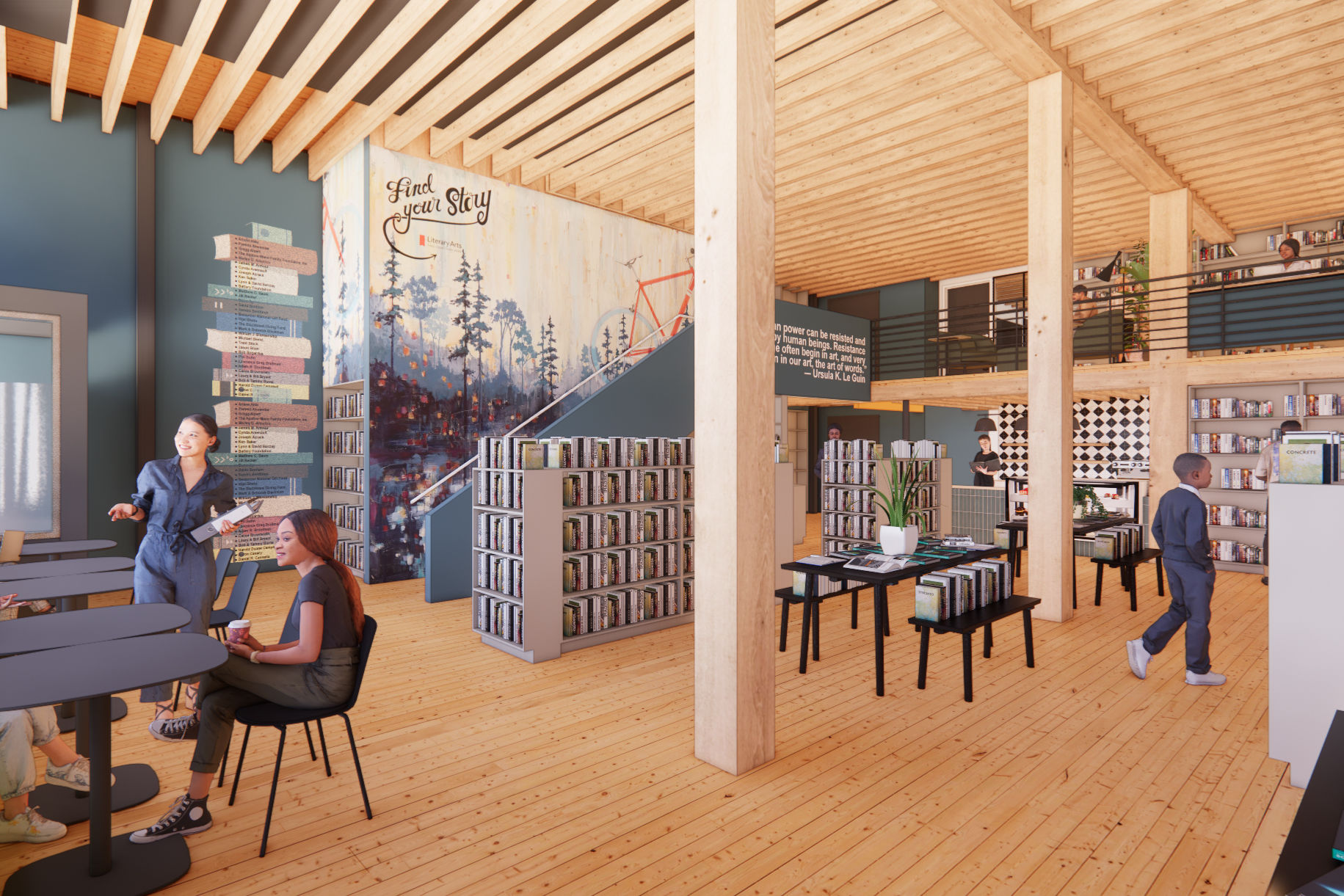
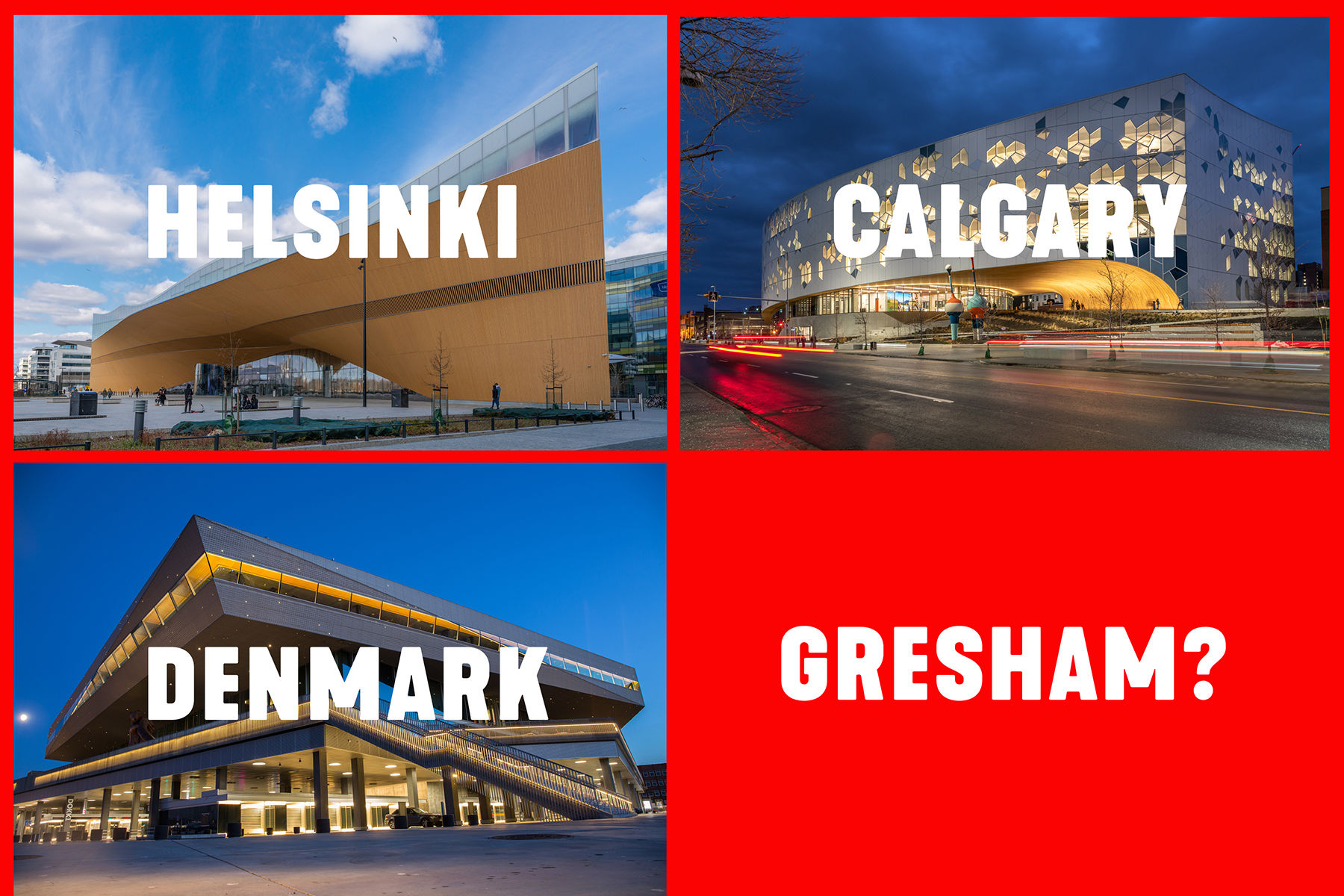
Gresham’s new East County Library is the bond’s crown jewel. It’s essentially a companion to downtown’s historic Central Library, a second flagship created as a hub for those living east of I-205. Portland’s Holst Architecture designed it in partnership with British Ghanaian architect Sir David Adjaye, known for collaborating on the Smithsonian’s monumental National Museum of African American History and Culture in Washington, DC. (Adjaye left the project in 2023 after being accused of sexual misconduct, though plans were largely finalized by that point.) With entrances from NW Division Street and the adjacent Gresham City Hall MAX stop, the library’s towering timber columns give the impression of a grand civic building, comparable to Portland International Airport’s new terminal. Yet it retains the sensibilities of the smaller branches, what Holst creative director Brittany Shreiner calls a “dual feeling of awe and accessibility.” Comfy seating is never far, and a range of commissions from local artists lend a rooted and informed sense of place, like the site-specific artworks by Klamath Modoc artist Ka’ila Farrell-Smith covering two walls of the building’s “central living room.”
The East County plan came out of the same community collaboration that gave rise to Albina’s courtyard. Patrons guided choices from content (such as books available in Spanish, Chinese, Arabic, and Vietnamese) to the way these modern libraries act as community centers.
Colloqate, a New Orleans architecture firm that helped renovate the Midland Library, on SE 122nd a half mile from the operations center, is known nationally for its design justice work, and its influence spread through much of the bond project. Karim Hassanein, codirector of the firm’s Portland studio, describes libraries as sites for “integration into the social fabric for newcomers,” and as educational resources. “When I think about Portland as a library culture, I think about libraries as social hubs that help folks break out of isolation, like elders who live in a care facility, or folks who are not primarily English speakers,” Hassanein says. “We’ve had numerous conversations with folks who said, ‘The library was my connection point to becoming a Portlander.’”