How a Pandemic-Era Dance Party Grew Up

On a Wednesday evening in May 2020, Mitchell Hartman walked up to Mount Tabor’s Reservoir 5, where views sweep west over Portland. He placed his iPhone on a small tripod, wrapping its bendy legs around the wrought iron fence that circles the artificial lake that once supplied drinking water to the city. Then he signed into Zoom and began to dance.
Hartman was tuned into a live streamed DJ set by Anna Dale, a fixture in the local ecstatic dance scene. For years, Dale had run a “Mindful Meltdown” dance on Wednesdays. When the pandemic hit, she moved it online. Hartman, a 64-year-old economics reporter for public radio, first tried bopping along in his living room and then in his backyard. “It was even worse than not dancing,” he says, “because there was no one.”
There was not no one at Tabor. There were dog walkers and bike riders and sunset seekers. They noticed Hartman. Some of them joined. Word spread. A then-27-year-old pharmacist named Michael Bui heard about it from Noah Lindner, a friend he’d made slacklining at Laurelhurst Park. “Mitchell’s wild,” says Bui, who soon joined a cast of regulars. “He’s like, I’m just gonna move how I want to move, and I’m not here to impress anyone. It’s inspiring to see.”

Hartman bought a powerful Bluetooth speaker, and by July others were contributing playlists. Bui often handled intro announcements. He’d climb the five steps of the reservoir building and shout, welcoming people to this volunteer-run event and asking them to pick up after themselves. He encouraged pandemic precautions. Most people wore masks. Chalk circles assisted with social distancing.
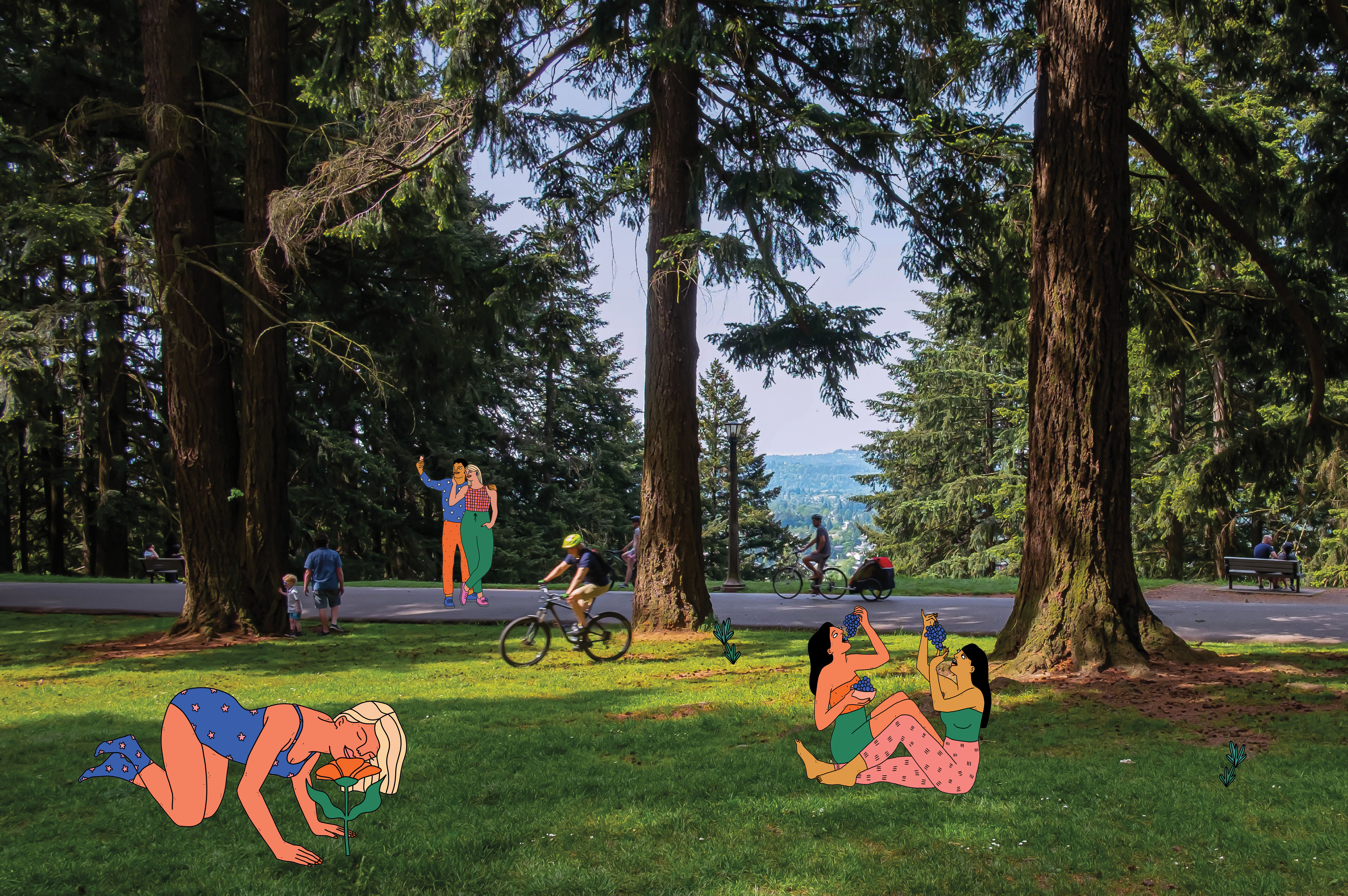
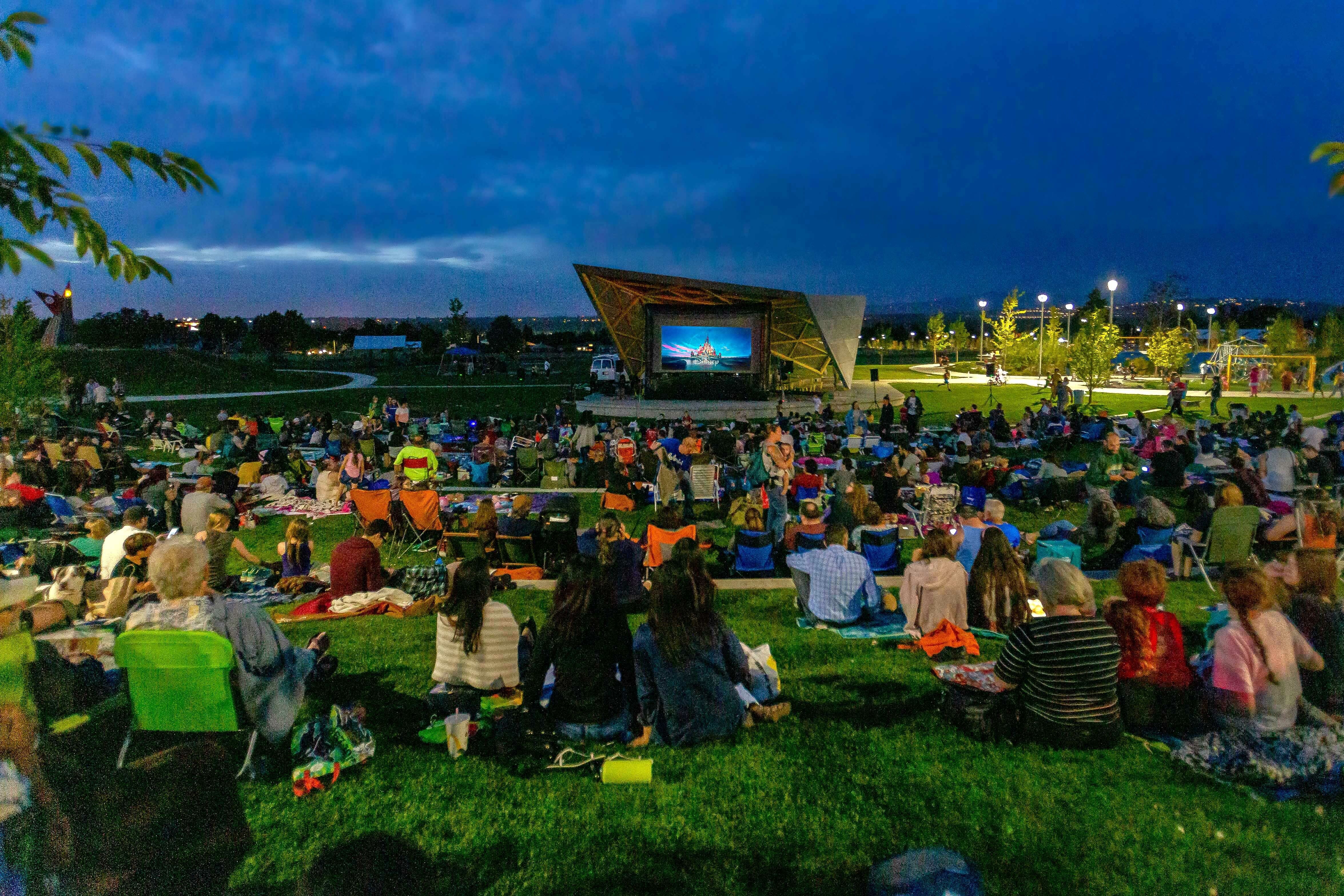
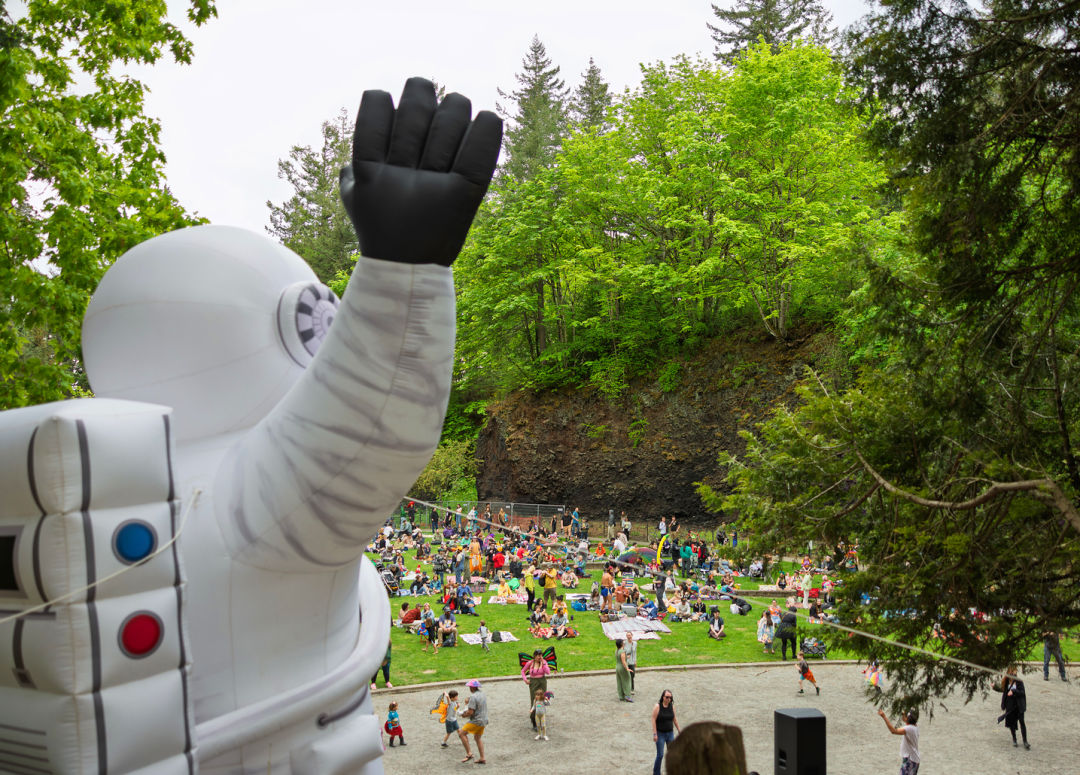
Some evenings, dozens—maybe as many as 50 or 100—danced till dark. Amid the uncertainty and fear of that first pandemic summer, dancing provided release, connection, a way to witness fellow humans and be witnessed in return. Dances kept growing in 2021, even as the delta variant surged. And today, amid an enduring buffet of horrors, Tabor Dance has become a full-blown pop-up festival, sometimes drawing upward of a thousand to near-weekly parties, which rove to parks beyond Tabor and go indoors in the offseason. They come to move their bodies, to twirl poi, to blow giant bubbles, to show off their most outré outfits, to picnic and to people-watch. DJs spin on a high-quality sound system. Hula-Hoopers in clown makeup and teenagers in hot dog costumes mingle alongside linen-clad boomers and normcore millennials with babies on their hips. You might see backflipping breakdancers, or contortionists, or light nerds playing with lasers. It is, in the words of a Reddit user, “our own local urban forest-rave.”
A party is both a container and a compact: shared space, shared responsibility. Many of the things that make Tabor Dance great—free, all ages, at a public park—also make it hard to regulate. There are no bouncers, just volunteers acting as safety patrol. While they can’t make people leave, they can encourage them to, say, put away their beers.
But Tabor Dance’s come-one-come-all ethos also means that a whole lot of strangers get to tumble around together. It’s a sort of mutual surrender to celebration, which is what struck me most when I finally made it out last summer. In June at Peninsula Park, I kicked off my sandals and joined a sea of dancers, damp grass underfoot, giving ourselves over. By the end of the evening, a joyful mass of us packed the bandstand.
A week later: a flash mob and fashion show at Cathedral Park. Then: late August, back at the namesake volcano. A friend had recently bought a parachute, one of those huge rainbow ones you know from elementary school PE, and we did that thing where you loft it in the air and then bring it over yourselves like a dome. At some point I realized we’d attracted three children, who giggled delightedly in the polychromatic glow. We sat on the perimeter and they darted about, then crouched shyly by us. The parachute wilted, and we went again.
Eventually, moms appeared. “They’re starting kindergarten tomorrow,” one told me. “Pandemic babies.”
I couldn’t stop myself: “Does it show?”
She paused. “They’re still learning to read social cues.” (They’re 5, I thought to myself.) “And they’re obsessed with hand sanitizer.”
Tabor Dance has done its own growing up. In 2023, it incorporated as a nonprofit, in part to be able to raise money for things like permits (events are fully sanctioned) and porta-potties (the single greatest cost). One day organizers may receive pay, but for now events remain entirely volunteer-run, from the core production team to the DJs to the people picking up trash at the end of the night. The collective effort is enormous. So is the collective gift.