The Fire’s Return Fans the Flames of Portland Women’s Basketball Culture

Image: Molly J. Smith
sunday, 1994, Skyline Elementary, on sloping courts warped by years of puddles. I’m 9 years old, haven’t crested five feet, can’t dribble with my left. Heading for a layup all the same. My mom, all of five-foot-two, basketball coursing through her Polish-Filipino veins, blocks my shot, knocking me to the ground. She chases down the ball, races to the other hoop, hits the layup, then celebrates with a little “woo!” My mom isn’t usually so cruel. “When you’re small, you have to be tough,” she tells me, scooping me and my newly skinned knee off the ground. My shock cracks open the meaning behind her words: We’re the underdogs. Never give up, even when they knock you down. She smiles devilishly, and we play again.
Being the underdog. Being tough. That describes women basketball players the world over. They’ve been banned, dissed, dismissed, underpaid, and undercovered by the media. But ever since James Naismith put two boxes on poles and dreamt up the sport in the 1890s, they’ve never stopped scooping each other up and running it back. In 2026, we’re living in a watershed year. The WNBA is undergoing enormous growth and change, with a $2.2 billion media rights deal over 11 years that will give players a platform unlike any they’ve had before. At ESPN, Sunday-night baseball is out and “Women’s Sports Sundays” is in; the network will air WNBA and National Women’s Soccer League games on nine Sundays in prime time.
Thanks to trenchant bargaining by the players’ union during marathon contract negotiations that concluded in March, just two months before the May 8 season tip-off, WNBA players are earning more than ever before. This season’s minimum salary (between $270,000 and $300,000, over four times the previous minimum) is more than last season’s supermax. On average, WNBA players will earn nearly $600,000. For the first time, veteran stars will bring home millions. The players’ additional nonnegotiables included housing for the youngest and lowest-paid players, greater benefits and considerations for players with children or who are family planning, and payments for retired players who spent at least five years in the league.
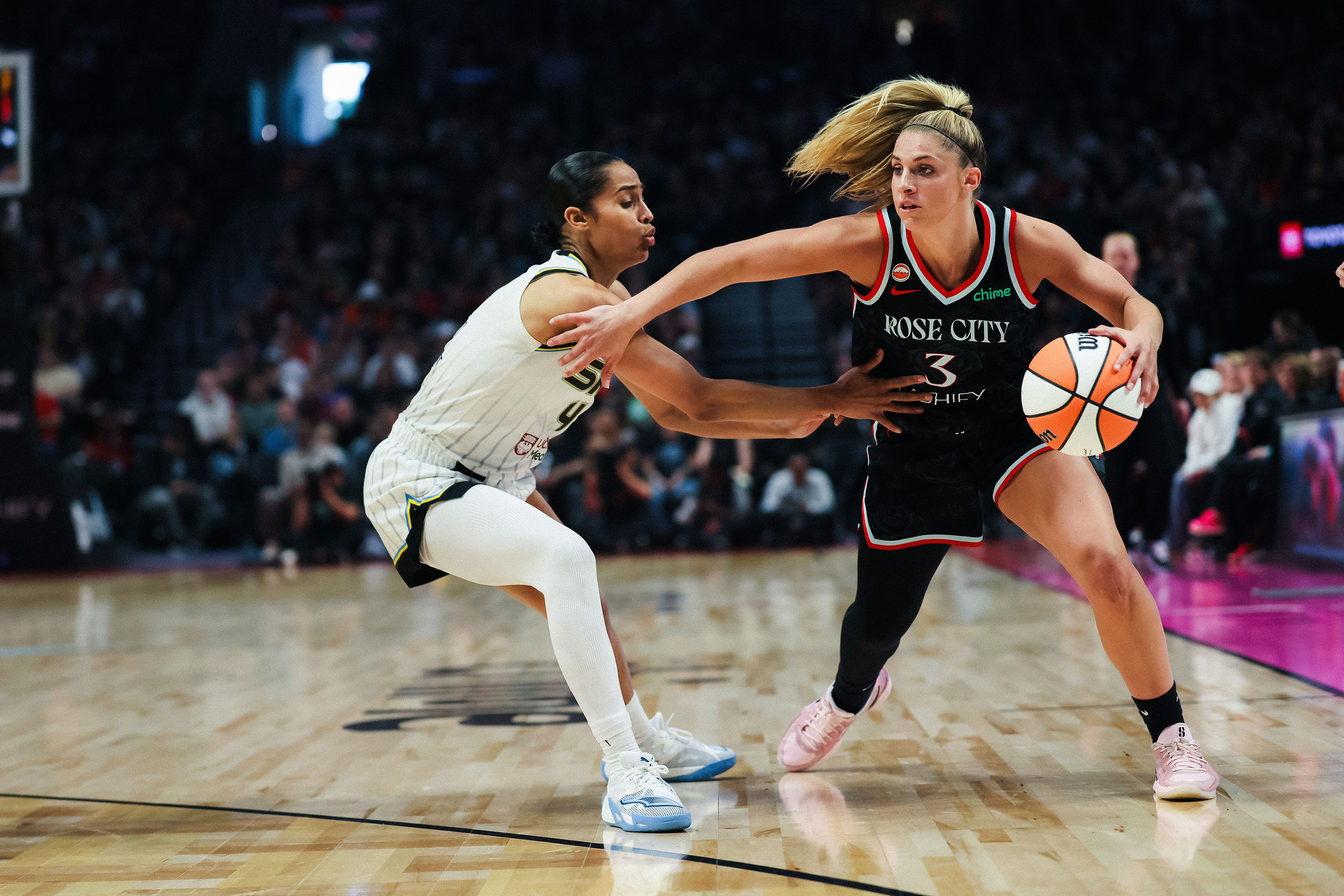
With the return of the Portland Fire, a team that played for three seasons in the early aughts, our city has a front-row seat to this transformative era. The initial rollout didn’t look so hot. The team’s first hire, president of business relations Inky Son, left after only three months. The name and branding were impressively delayed, and when they finally dropped, boos were audible throughout the digital arena. Online commenters lamented the connotation of Oregon’s now-devastating wildfires. Personally, the gothic font and logo of a flaming rose reminded me of Twilight fan fiction. Yet none of that doused the fervor. Before the team had a roster, about 17,000 people put deposits on season tickets. And franchise owner RAJ Sports, which also owns the Portland Thorns, broke ground on a massive joint training facility in Hillsboro, signaling investment in the athletes’ care and development.
For more than a decade, I’ve played in a Portland women’s rec league. My team is called the Big Worms, a nod to our common love of the red wigglers in the soil and of the movie Friday and its classic antagonist, Big Worm, hair in curlers, cruising up in a hydraulic Spalding-orange drop top. Last winter, when Rach, our three-point specialist, showed up in a Fire sweatshirt, I had to grin. The nascent pro team joins a robust local culture of women, trans, and nonbinary players and fans. The WNBA’s virtuosos are at the far end of a continuum of skill, but women hoopers everywhere share underdog rebelliousness and a community mindset. We’re not looking to sports to dull or distract us from an inhumane world. We’re here to defy patriarchal and racist conventions and embody our collective power. The ascent of the Fire feels inseparable from our own. Although my friends and I play differently than our paragons, our games all build worlds.

Image: Molly J. Smith
Twenty people circle up on the courts at Charles Jordan Community Center in North Portland. We grab pennies, count off, split into four groups, and begin half-court four-on-four. The squeak squeak of sneakers bounces off floor-to-ceiling glass windows and mixes with ’90s hip-hop. When I sub out, I watch a tall woman one court over drive to the hoop like she’s floating in slow motion. There’s no way she’ll beat her defender, I think, but then she buries them. I nickname her Lady of the Lake.
This weekly run, called Ball Out, evolved from Dyke Hoops, a pickup community that started at Irving Park in 2022 for everyone who’s not a cis man. Among us: cis women, trans men and women, and nonbinary players. Ball Out welcomes beginners, but this Saturday run is for more advanced hoopers. The main organizer, Lilah Sciaky, isn’t tall, but she plays big, with a high release she can get off no matter how thick the defense. She’s always looking for a game. “I live right by Peninsula Park,” she says. “I’ll bring a broom, clean the court. The guys are grateful. They’ll come up, like, ‘This is really good,’ and then, ‘Can you unlock this bathroom?’ I’m like, ‘Oh, I don’t work here.’”
Thanks to Sciaky, Charles Jordan reserves Saturdays from 2 to 4 for “Queer/Women’s Basketball.” The vibe is impeccable—kids and partners cheering from the bench, players celebrating, and just the right amount of trash talk. Sciaky’s cohost is Ay Lowry, a defensive pest and thrilling teammate who carries the unassailable authority of years reffing the Vanderbilt frat league during college. A few years ago, Lowry was going through it, breaking up with a long-distance girlfriend while fasting during Ramadan. This was the loving community they needed. Ball Out is one of several runs that aren’t for cis men: the women’s Round League in Beaverton, another in Vancouver, a revived group that met for years at Grant Park on summer nights, and secret games I’m not privy to, not to mention all the youth leagues.
The Big Worms play in a rec league every Monday night, all year long, on courts deep in the suburbs. Most of us are undersize shooting guards who play with the finesse of familiarity. We call our fans “The Worm Bin,” and by fans I mean my teammates’ kids who wriggle their homemade worm signs, cut from pink construction paper, and an occasional parent or partner. When she’s visiting town, my mom loves to shout cheers she invents in real time: “Get dirty, Worms!” “Decompose them!”
Sarah, who founded the Worms, often drives a carpool from Northeast in her family van with a broken fuel gauge. While we coast west on 26, then slow-march into the gym, pull on jerseys, and braid each other’s hair—Sarah’s so wispy it can barely stay in a hair tie—we have lots of time to check in on each other. On court, Lei skips rope; Nell marches like a toy soldier, swinging her legs to touch her hands; Lilah and Liz shoot jumpers. In the right weather, Rach swaggers in their tracksuit, “Worm Blooded” printed across the back, a 50th birthday gift from the team. PK, who’s always late, laces her shoes double-speed.
I’m often nervous before games, but I can’t resist choosing the best guard on the other team to defend. I want the challenge of attuning to their movements, like a shadow meeting its body. On offense, I always know where to find Sarah as she streaks wide down the sideline and then cuts along the baseline. Countless times, I’ve thrown her a pass exactly where she wants it and watched her midrange jumper fly true—a definite bucket before it’s even sluiced through the net. In my highest moments, I feel like a genie with endless wishes to give.
There’s intimacy in the physical proximity basketball requires, but the most vulnerable aspect of the game is letting people see your earnest desire to impress. Every week, I amaze and disappoint myself, again. Every week, I see my friends do the same. The Worms rarely win (though who’s counting?), but I’m never actually playing for the W. I’m here to connect with myself and my friends and to feel flashes of poise and power. When the chemistry clicks and our minds meld, we become a collective body, the bouncing basketball our shared arrhythmic heartbeat.
Our connectivity doesn’t dissolve after we’ve slipped off our high-tops and walked in the dark to our cars. When my dad had a bad fall, Sarah made him cream biscuits and came to his apartment to entertain him. Her mom, who works in hospice, counseled me on elder care. When Sarah and SB, both union representatives at their respective public schools, needed extra hands to prep materials for the looming strike, we joined. When I threw my first dancehall party, the Worms filled the floor all night long.

Image: Molly J. Smith
From 1996 to 1998, when I was in middle school, a pro women’s team called the Portland Power played in the short-lived American Basketball League. My dad took me to a few games, the rain on our coats vaporizing in the human heat and filling the Memorial Coliseum with steam. I remember snacking on electric-yellow popcorn and jumping onto my folding chair for a big play. The WNBA launched in 1997, and the two leagues briefly coexisted—one in the summer, the other in the winter. When the ABL folded, the Power were at the top of the Western Conference.
The Portland Fire arrived in 2000. Initially, the NBA owned WNBA teams, and NBA team owners operated them. Unlike the Power, the Fire played in the gargantuan Rose Garden. On average, Fire games brought out 8,000 people. The fan base wasn’t large, but Rachel Modica-Russell, then a middle schooler, remembers it as “dynamic and invested.” She’s saved all three “BALL KID” badges from her summers working as a lackey for the Fire. She recalls fans lining up after games to catch a shoe autographed by Sylvia Crawley, famous among those in the know for winning the ABL’s slam dunk contest in 1998 while blindfolded.
When the league offered tech billionaire Paul Allen the chance to buy the Fire for
$10 million, he declined, leading to the team’s demise. After the Fire were extinguished, letters poured into The Oregonian. “I am absolutely sick at heart,” lamented a season ticket holder who’d brought her family. “This is a great loss,” said the president of the Portland Fire Booster Club. “I actually cried,” wrote an 82-year-old who’d attended games as a reprieve from caregiving for her dying husband. Portland’s women’s basketball fans lost two pro teams in five years.
Sandra Yokley grew up in St. Louis, far from the Portland Fire. A cheerleader in high school, she fell in love with the game from the sidelines. When she found the WNBA in 2019, it was the first time she saw athletes who looked like her. “Black women, queer women, unashamedly leading, winning, and dominating,” she says. She moved to Portland five years ago, and many of her new friends shared her passion for women’s ball. They’d meet at bars, where they’d beg to switch from baseball or football to women’s basketball. “For years, it was fans who kept the energy up,” she says.
When the Sports Bra, which shows exclusively women’s sports, opened on NE Broadway in 2022, it was an immediate media darling, garnering national coverage from reporters who recognized in this packed 40-seater a symbol for the changing era. As the WNBA expands—with new franchises in Portland and Toronto this year and Cleveland, Detroit, and Philadelphia next year—Sports Bra owner Jenny Nguyen is keeping pace. Five new franchise locations across the country are on the way. Once, I mentioned an NBA player to Nguyen. She pantomimed exasperation. “My brain is too swollen with female athletes to have any room for male athletes,” she answered.
In 2024, the women’s NCAA basketball finals drew nearly 19 million viewers, four million more than the men’s equivalent. The media whipped fans into a frenzy over Caitlin Clark, maestro of the deep three and precision assist. The next year, Yokley and her friends formalized their watch parties under the name the Backcourt Collective. At bars around the city, including the Sports Bra, Jackie’s, and Spirit of ’77, they gather for WNBA, college, and Unrivaled games; the last is an offseason three-on-three league founded by WNBA players. In January, they live streamed the Unrivaled finals at the Tomorrow Theater to 130 fans, and at a recent quarterly women’s sports mixer they hosted 150 people to mingle with members of local semipro women’s teams.
Nationally, Backcourt Collective has become an alliance of women’s basketball fans with two ongoing networks: the Loop, for organizers who host watch parties, moderate online forums, and build a sense of belonging for fans; and the Coop, for the podcasters, artists, designers, writers, and anyone creating media to establish fan culture. Members hail from 24 states and counting. “The culture I love deserves to grow alongside the game, not disappear under its expansion,” Yokley says.
Women and queer fans and former players are also building their own ecosystem of sports media. Portland-made standouts include Click Clack, a podcast cohosted by former WNBA guard Jacki Gemelos, and Play Like a They, a podcast cohosted by Ball Out regular (and former Trail Blazers marketer) Monica Schrock. “Our goal is to create this vacuum of joy around queer sports, women’s sports, trans and nonbinary sports,” Schrock says. They wear their hair buzzed short, and recently it was dyed pink in a nod to the StudBudz, the nickname for WNBA guards Courtney Williams and Natisha Hiedeman. The StudBudz created a viral Twitch channel during the 2025 All-Star Weekend and live streamed for 72 hours, taking 65,700 followers inside their world. At its worst, this level of direct access between players and fans brings troll armies and harassment. At its best, they celebrate each other with unabashed bravado. In the case of the StudBudz, their lust for life rocketed out like pink champagne from a freshly popped bottle, aimed directly at the waiting cups of fans, no gatekeepers in sight.
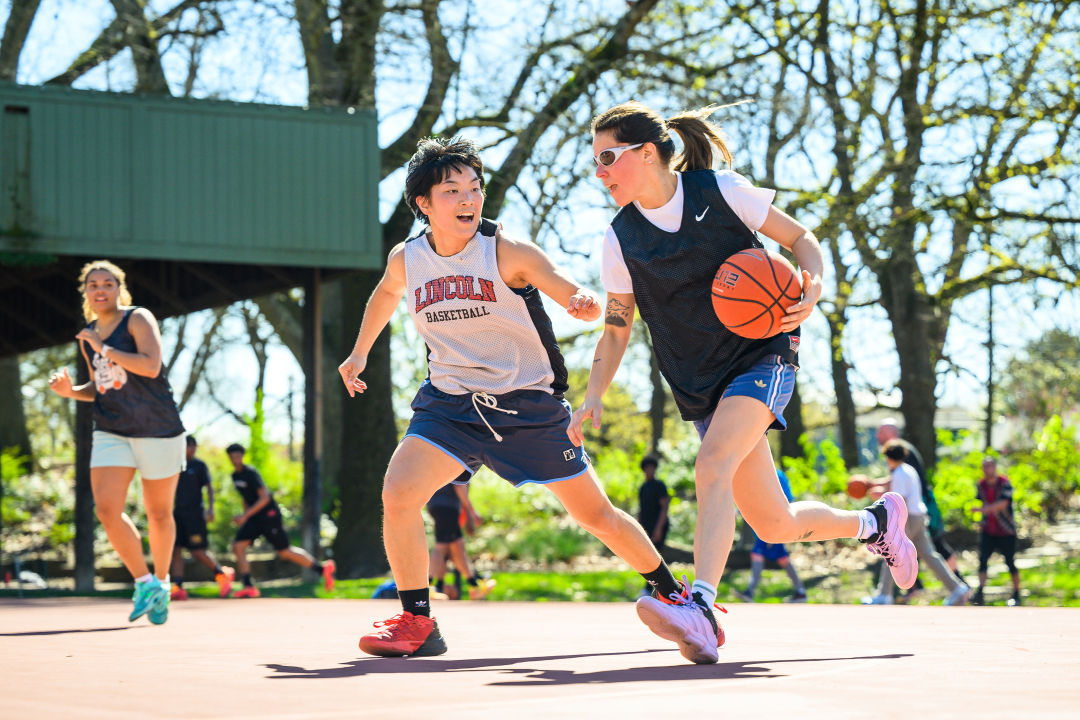
Image: Molly J. Smith
Before the roster was set, the Fire franchise had at least three prominent strengths: a galvanized fan base, the future training complex for the Fire and Thorns, and former players in staff leadership roles. In August, RAJ Sports selected Vanja Černivec as general manager. Černivec played professionally in Slovenia and worked for the Golden State Valkyries, an expansion franchise that started play in 2025. She recruited Ashley Battle to lead scouting and roster construction. Battle won three rings at powerhouse UConn, played five seasons in the WNBA, and recently scouted for the Boston Celtics. In June 2025, three months before Sylvia Fowles—two-time champion with the Minnesota Lynx, two-time finals MVP, league MVP, four-time Defensive Player of the Year, and WNBA all-time rebound record holder—was inducted into the Naismith Basketball Hall of Fame, an article in Women’s Health about her “life after basketball” detailed her plans to become a mortician. In December, she joined the Fire as an assistant coach.
Debilitating injuries ended Battle’s playing career: two bulging discs in her back, two hip labral tears, and a wrecked ankle. Černivec also suffered career-ending injuries. On a Zoom call in March, both talked about their personal and professional commitments to player health and longevity. “How can we add two or three years to your career, even if you leave us and you go play for another team?” Černivec asked, as if I were one of her players. “Are you still able to play with your kids when you retire?”
In April, less than a month from tip-off, the Fire finally landed a roster, and it looked both inchoate and promising. The expansion draft—a rogue process in which both Toronto and Portland could poach one player from each team, after those teams designated five players who were off-limits—ensured that the bulk of the new roster was made up not of stars but of developing talent who now have heightened opportunities to capture the spotlight. At the Moda Center on college draft night in mid-April, fans lined up to take photos with expansion draftees Sarah Ashlee Barker and Haley Jones. “Do you know who they are?” asked a jovial older man assigned to shepherd us through the line. “’Bama and Stanford!” he continued, naming their colleges rather than their recent WNBA teams. A confused silence descended when the Fire used the seventh pick on little-known Spanish point guard Iyana Martín Carrión, who won’t suit up until next year. But when 10 young dancers from Self Enhancement Inc., a Black-led nonprofit based in North Portland, strutted onto the court to the swaggering bass of hip-hop supergroup Mount Westmore, we erupted in cheers.
A few weeks earlier, the weather had been balmy, and Sciaky announced that rather than playing indoors, Ball Out would commandeer two courts at Irving Park on Saturday. Sun poured through the two-story trees hugging the courts. Families set out picnic blankets, friends chattered boisterously, and DJ Deadpan played R&B jams from a station at center court. The music, the warmth, the connected passes and daring drives—it felt like being inside a translucent bubble that showed the world in bands of beautiful colors. At some point, a woman next to me, a tall center with the equanimity of a low-key star, eyed my jersey. “I didn’t know the Worms were ‘Big,’” she said. “Yes,” I answered, tilting up my head to meet her eyes. “We’re Big.”