Could a Waterfront Park Makeover Revitalize Portland?

Image: Michael Novak
On an overcast Tuesday after-noon in August 1969, a few hundred adults and kids gathered with balloons and sack lunches on a barren strip of land on the west bank of the Willamette River. Wedged between two four-lane roads, the group staged what Oregon Journal columnist Doug Baker described as a “consciousness-raising picnic.” They opposed plans to widen one of those thoroughfares, Harbor Drive, which ran directly along the water. The Willamette’s west bank, wrote Baker, “should not be allowed to become, like the east bank, one of the Oregon State Highway Commission’s concrete mystic mazes.”
As far back as 1903, Portland’s park plan had called for a downtown waterfront green space. But since the construction of Harbor Drive in the early 1940s, west-bank river access had been completely blocked. The 1969 picnic signaled a turning of the tides: Harbor Drive was decommissioned in 1974; four years later, a grassy expanse called Waterfront Park opened in its place.
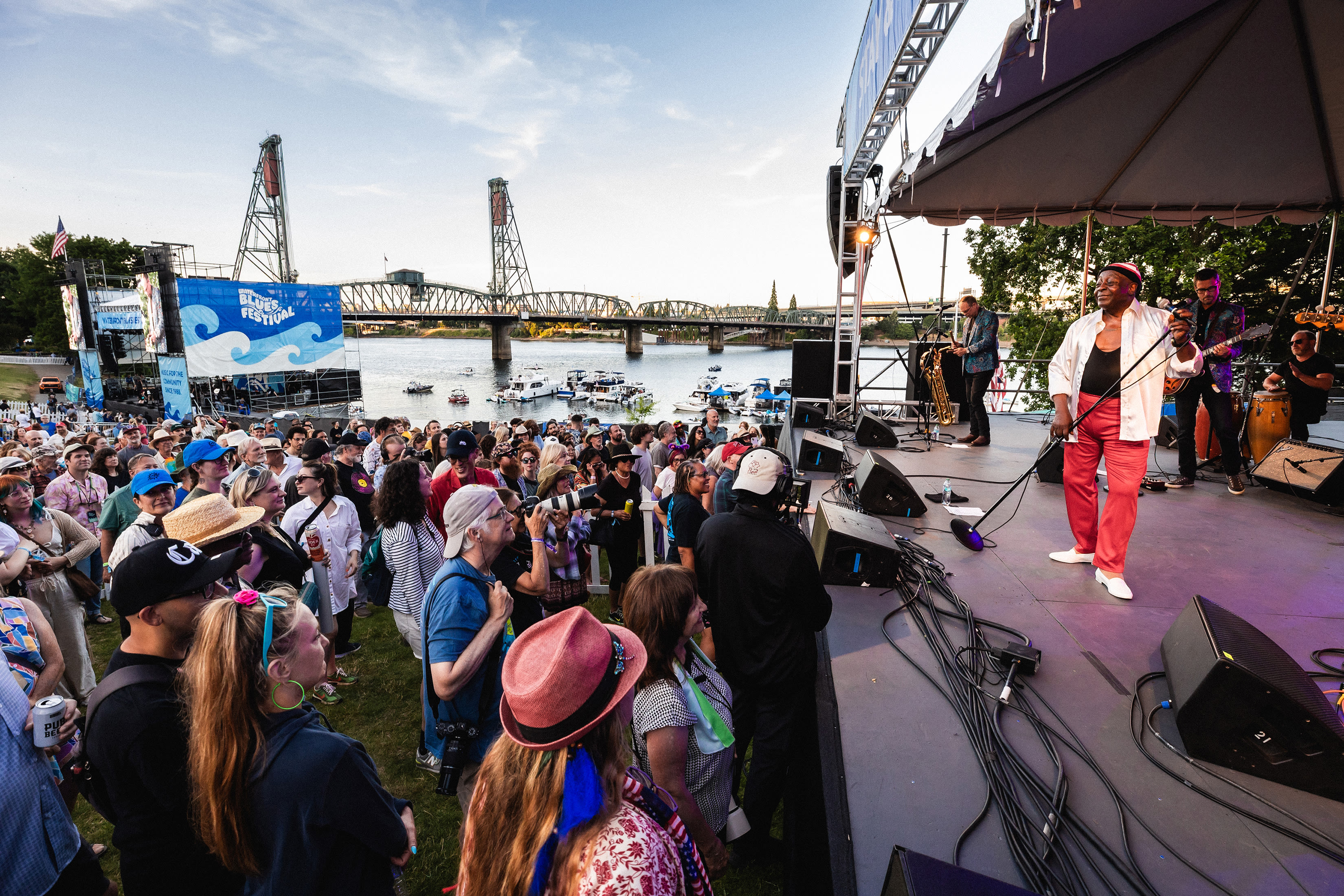
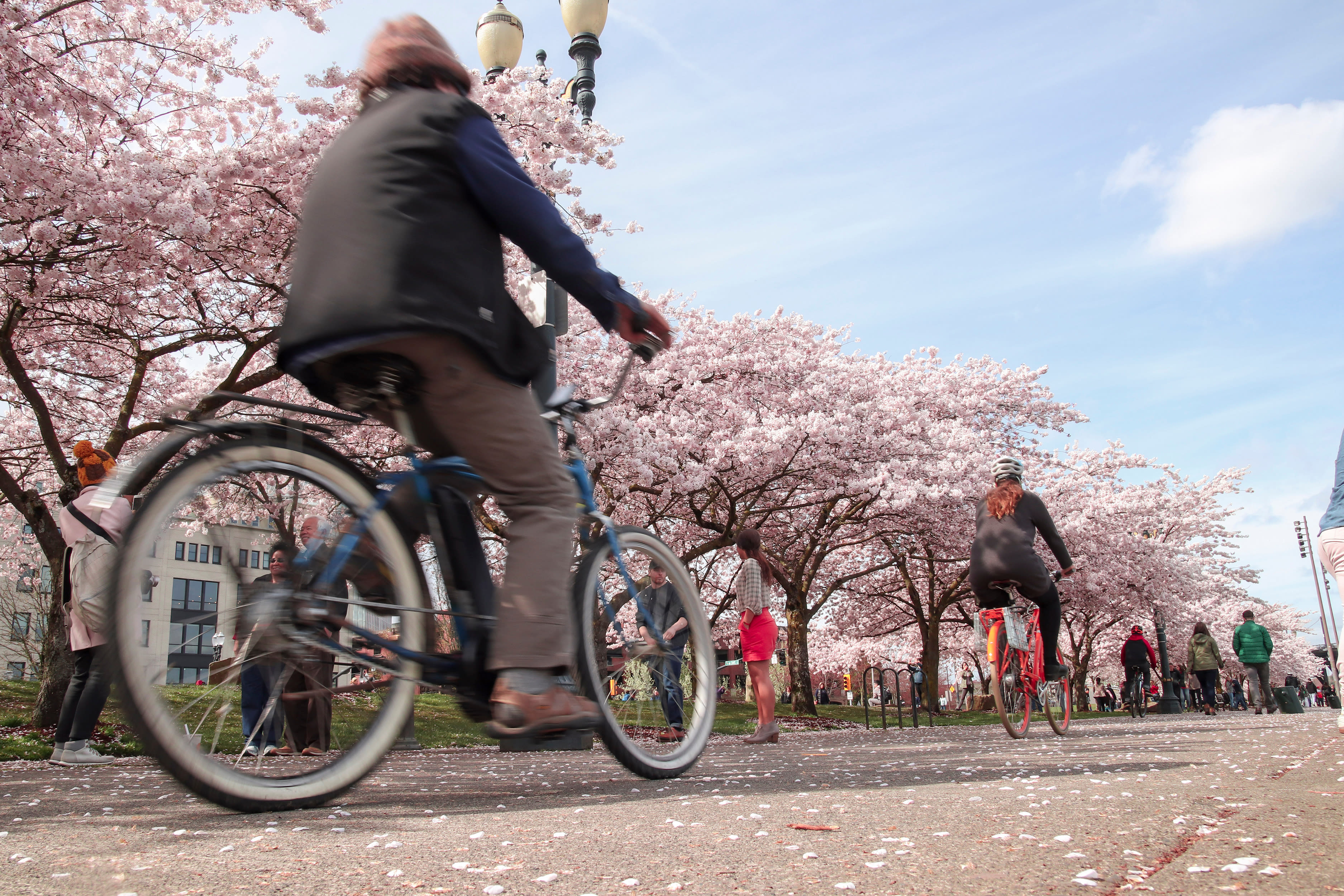
Over the years, the park gained new attractions. The Salmon Street Springs fountain opened in 1988, and two years later the north end added 100 cherry trees, which draw huge crowds for their annual spring bloom. Today, the 37-acre Gov. Tom McCall Waterfront Park (renamed in 1988) has times of bustle: the Rose Festival, Cinco de Mayo, the Waterfront Blues Festival. Some spots, like Salmon Street Springs and the plaza that hosts the Saturday Market, are consistently busy. But swathes of the park—including its vast central lawn, intended as a blank canvas for events—sit empty much of the time. Portland Metro Chamber president Andrew Hoan, who runs here daily, calls it “a Canadian goose landing strip.”
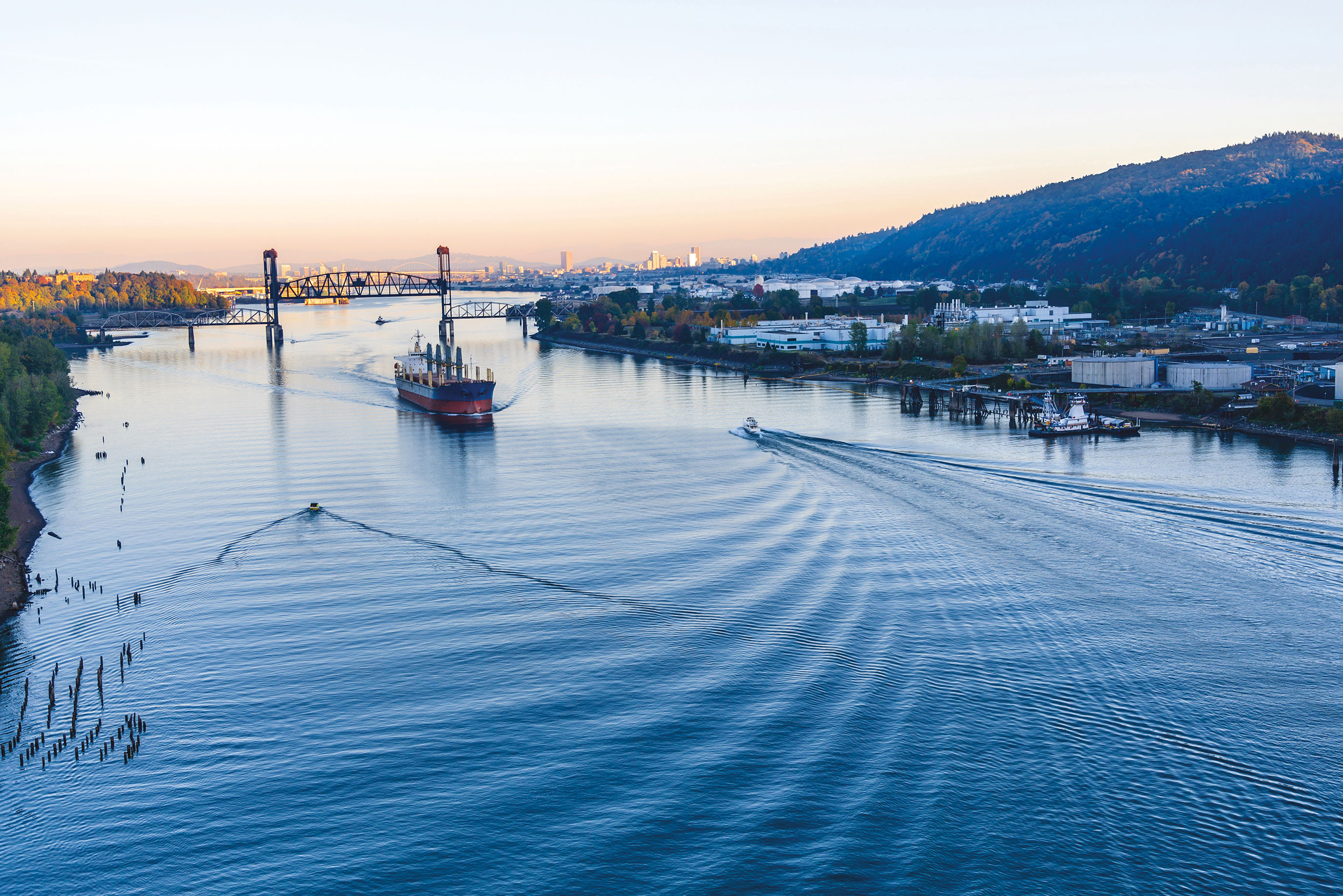
Yet Hoan sees as much potential in the waterfront as those picnickers did in 1969. In fact, going to the river is for many the way to revitalize the city’s public spaces. Even the mayor is on board. “We are a river city,” says Keith Wilson, who’s often biked to city hall through Waterfront Park since taking office in January 2025. “Our future vibrancy and our economic future is tied to the river.” But ideas for embracing our central waterway vary dramatically depending on whom you ask.
On tours of other waterfront cities, Hoan has seen beer gardens (Milwaukee) and hammocks suspended above the river (Philadelphia). “Why can I not get a slice of pizza and a glass of wine [at Waterfront Park]?” he asks. The key, Hoan says, is that these parks in other cities are managed by nimble nonprofits instead of slow-moving city bureaucrats. Pioneer Courthouse Square and Director Park, both programmed by nonprofits, are local examples. “During the holidays you can sit around a fire with hot chocolate and s’mores,” he says of those spaces. “In summertime you can go to yoga classes or listen to a DJ over lunch.”
But shifting programming requires physical infrastructure to support smaller-scale events. While large festivals can afford to erect stages and fences, pop-up yoga classes and s’mores hangouts cannot.
Some projects are already underway, such as the Steel Bridge Skatepark along the Waterfront Park’s northern border, slated for completion in 2029. Portland Parks & Recreation, meanwhile, received a $750,000 grant from Metro to hold a design competition for a redesign of the grassy bowl south of the Hawthorne Bridge. The revamped bowl would include an outdoor stage and terraced seating, which would double as a daytime gathering spot, with market kiosks running along the edge, plus a beachfront. Semifinalists will be selected this fall, with a final report due to city council in late 2027. No construction timeline has been set, nor have funds been committed.
As a precursor to the competition, Portland’s Bureau of Planning and Sustainability commissioned a design study from local landscape and urban design firm Mayer/Reed. Among its ideas: a playground, picnic areas, pop-up markets, a viewpoint jutting into the river. It considered a “Bloom Loop,” expanding on the popular cherry blossoms to include new plantings of magnolia and gingko trees. One suggestion involved removing portions of the seawall, erected in the 1920s to prevent flooding, to enable kayaking, swimming, or even a water taxi that could carry passengers to Sellwood, Milwaukie, or St. Johns. “People want a more varied relationship to the river itself,” says Mayer/Reed principal Shannon Simms, who co-led the study.
The city’s design community is also thinking beyond the bowl. Last year, architect William Smith and architecture writer Randy Gragg (a former Portland Monthly editor) organized an exhibit of architectural models pitching potential futures for downtown called “City of Possibility.” In January, under the banner Design Portland, the group exhibited ideas from University of Oregon and Portland State University architecture students, drawing from Mayer/Reed’s study. A canal could cut past the seawall, bringing water into the park. What if the park extended west, all the way to Third Avenue? “Incremental thinking is not gonna get us there,” says PSU architecture professor Jeff Schnabel. “The bigger ideas are the ones that capture people’s imaginations.”
Because new park attractions would take space reserved for events, Mayer/Reed’s study played with converting Naito Parkway into festival grounds, temporarily closing it to car traffic. The Morrison Bridge’s circular ramps could be removed, allowing a continuous Parisian-style promenade. East-west streets like Harvey Milk and Ankeny have also been eyed as multipurpose spaces. Art Pearce, the Bureau of Transportation’s deputy director of projects, describes the ideological shift as prioritizing placemaking over vehicle storage and circulation, asking, “How can we use streets to anchor place?”
This appetite for change brings Portland full circle, with public space on the riverfront once again presenting opportunity to uplift a downtrodden downtown. Between the 1970s and ’90s, central-city housing construction quadrupled. Downtown employment increased by 73 percent and leasable office space doubled. Shopping boomed at the Galleria mall, then at Pioneer Place and the Portland Farmers Market.This was not all thanks to the new riverside green space. Nor can it be credited solely to other public spaces built in the era, like the Keller Fountain and Pioneer Courthouse Square. But establishing Waterfront Park was key to Portland’s last period of regeneration, and it seems a pretty good place for another watershed moment.