The Creativity Comeback
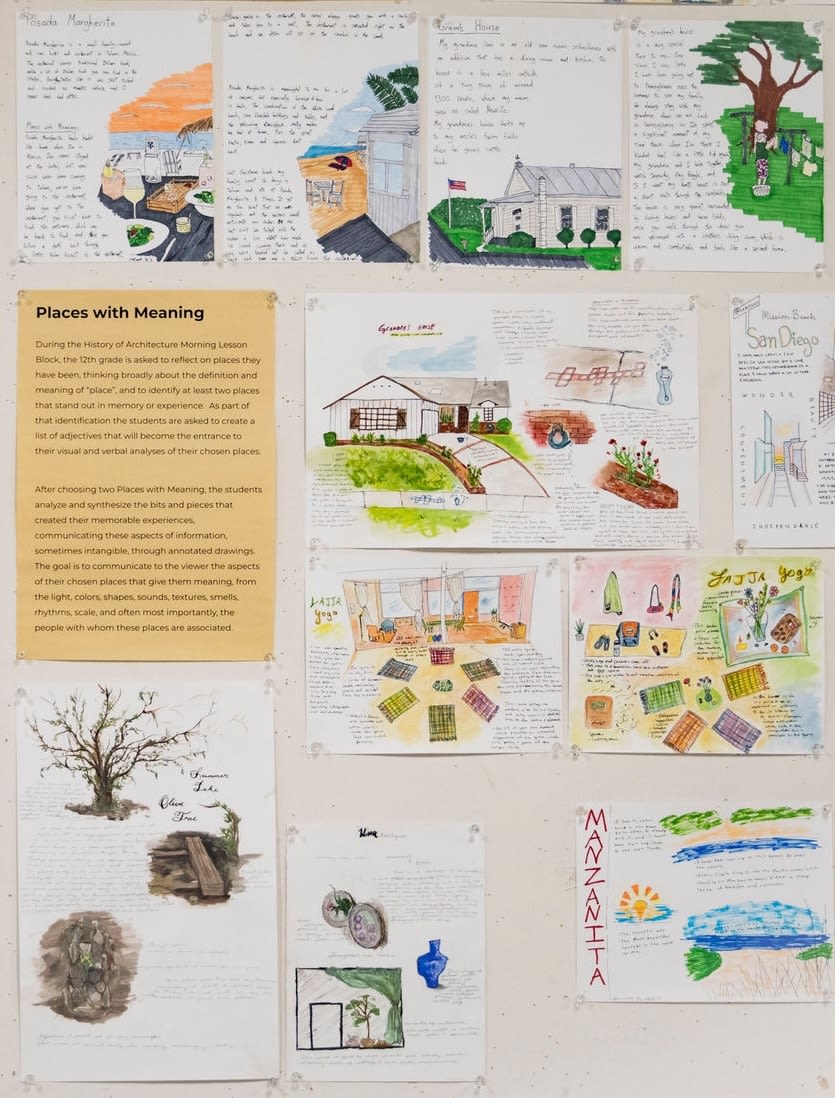
Lately, an unexpected trend has been gaining quiet momentum. Young people are packing “analog bags”—small collections of sketchbooks, novels, knitting projects, watercolor sets, journals, and colored pencils they can grab before leaving the house. The idea is simple: instead of reaching for a phone, reach for something that asks more of you.
It’s one example of a broader cultural shift. Across the country, people are rediscovering activities that invite creativity rather than consumption. Knitting, journaling, gardening, and tabletop games are finding new audiences. In a world overflowing with information, we’re increasingly drawn to experiences that require imagination.
At Waldorf schools, imagination isn’t simply a charming feature of early childhood. It remains central to learning as students grow, right through high school graduation.

For generations, Waldorf educators have recognized that young children first meet the world through images, stories, movement, and feeling. Before they are ready to analyze abstract concepts in the older grades and high school, they build understanding through vivid experiences that engage both head and heart.
Walk into Waldorf classrooms, and you’ll notice that lessons often begin with a story. Whether students are learning mathematics, language arts, history, or science, ideas are first introduced through rich imagery and narrative. Imagine twenty students listening to a story. They all hear the same words, yet no two picture exactly the same forest, castle, or brave traveler. Each young person quietly creates an entirely unique world within their own mind. That invisible act of creation is imagination at work.
Far from being make-believe, imagination is one of our most important cognitive abilities. It allows us to picture possibilities before they exist. Every architect imagines a building before drawing plans. Every scientist imagines a hypothesis before conducting an experiment. Every inventor pictures a solution before building it.

Every great innovation begins as an act of imagination.
Research increasingly supports what Waldorf educators have long observed: learning is strengthened when we form meaningful mental images and emotional connections to new ideas. Stories capture attention, deepen memory, and foster empathy, curiosity, and flexible thinking. Rather than memorizing isolated facts, students build an inner relationship with what they are learning.
Those qualities don’t disappear as children and adolescents grow. They become the foundation for creative problem-solving, scientific discovery, artistic expression, and thoughtful leadership. As one recent high school graduate reflected, “Our knowledge has limits, but our curiosity is unbound.”
That distinction feels especially relevant today. Artificial intelligence can summarize information, generate images, and answer questions in seconds. But curiosity, imagination, and the ability to envision something entirely new remain deeply human capacities.
This doesn’t mean Waldorf students learn less academic content. They arrive at the same mathematical principles, scientific concepts, and historical understanding as students everywhere. The difference is the path they take. They first experience ideas before analyzing them, allowing knowledge to become something personally discovered rather than simply delivered.
Perhaps that’s why so many adults are reaching for sketchbooks, knitting needles, journals, and gardens. We instinctively recognize that creating something ourselves feels different from consuming what someone else has made. Waldorf education has long recognized that this creative work isn’t an enrichment—it’s an essential part of how we learn.

For generations, Waldorf classrooms have intentionally cultivated the imaginative life of childhood—not as an escape from reality, but as preparation for engaging with it. The best way to prepare young people for tomorrow may be to give them the freedom to imagine possibilities no one has yet seen.
In a rapidly changing world, that may be one of the most practical gifts an education can offer.
Interested in learning more?
Portland Waldorf School and Cedarwood Waldorf School offer Waldorf education from early childhood through high school, each with its own unique community and traditions. Explore their programs, attend an admissions event, or schedule a tour to see Waldorf education in action.
Learn more or schedule a tour at cedarwoodschool.org or portlandwaldorf.org.