The Movies We’re Actually Going To
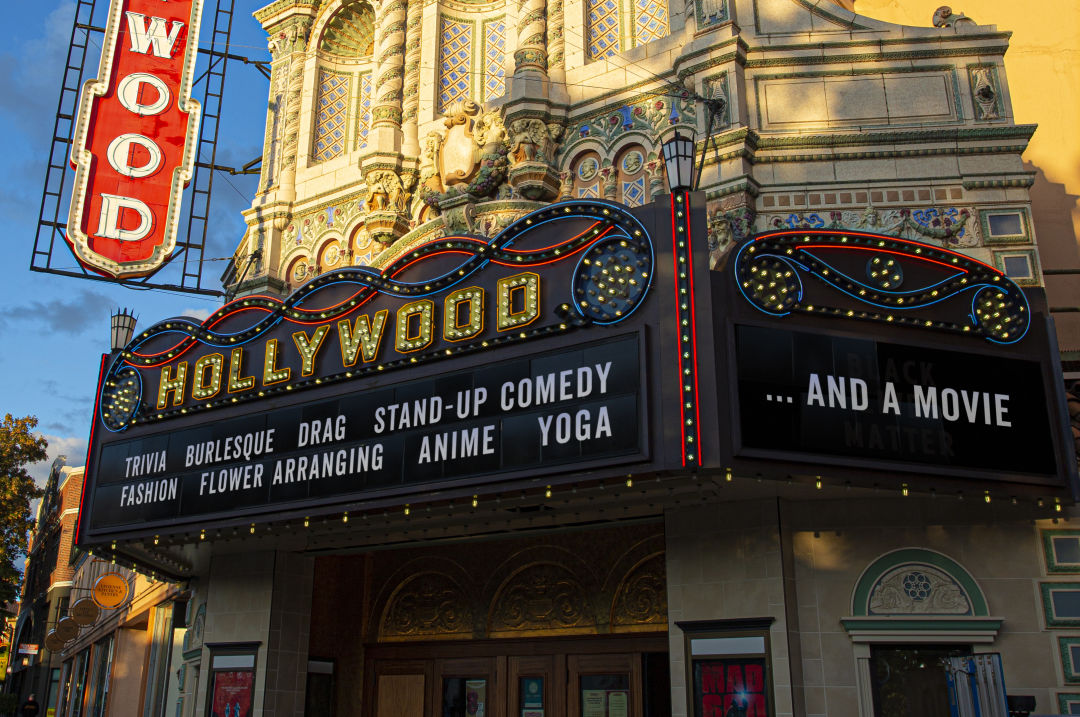
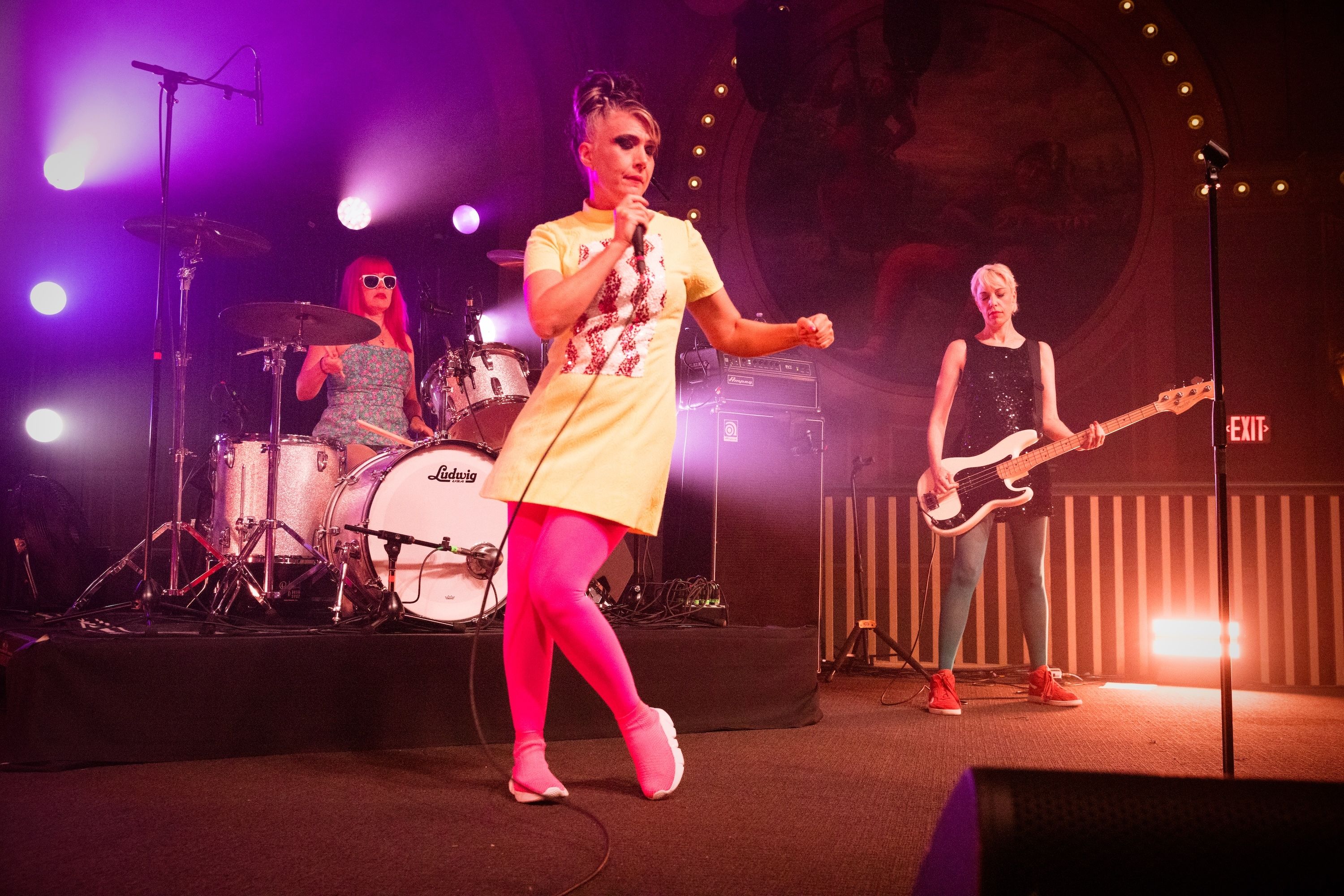
Nearly every other month since 2015, Carla Rossi has hosted a movie screening at the Hollywood Theatre that’s also a drag show. The event, called Queer Horror, helps explain why The Ring is a “lesbian-coded ode to unwanted queer kids” and contextualizes Hellraiser’s “outrageously horny injection of iconic ’80s queer horror.” If Rossi’s intro alone doesn’t forever change your relationship to the night’s movie, the on-theme drag performances—burlesque, lip-syncing, acrobatics—certainly will. Far from the generic experience of seeing the latest wide release at a Regal, Queer Horror is an especially social, live affair. There is no waiting for it to hit Netflix.
A movie that’s also a show is a fixture of many subcultures. Just look at the Clinton Street Theater’s five-decades-running Rocky Horror lollapalooza or all the folks who line up at Cinema 21 to rewatch The Room whenever Tommy Wiseau is in town. (He's back this March.) But as of late, the formula seems to be reaching wider audiences. And it’s proving an effective means of getting butts back in seats.
Nationally, the movie theater business has not returned to pre-COVID numbers. Ticket sales plateaued in 2024 after steadily rising year-over-year following lockdown, which seems to signal a lasting cultural shift. Barbie teased a potential return of monocultural $100 million blockbusters in 2023, but nothing has caught quite so much fire since. Locally, a more personal approach, something closer to showing a new friend your favorite movie, is proving most effective.
Anthony Hudson, who performs in drag as Carla Rossi, is also one of the Hollywood Theatre’s programmers. His job is to plan extracurricular screenings like Queer Horror and find other hosts with the chops to hold a room. “A programmer needs to be a carnival barker,” Hudson says. “You need to hit the audience with facts, with trivia, with comedy.”
The Hollywood runs dozens of series, each with its bespoke ringmaster. Alongside Hudson, comedian Elizabeth Teets cohosts Isn’t She Great, a series about women in comedy that opens with stand-up sets. AniMayhem, programmed by Chris Henager, includes a preshow art market and centers classic anime films from Japan, screening many of them in the US for the first time. Former PoMo style editor Eden Dawn runs a series called Fashion in Film, talking about costume design ahead of Clueless or Legally Blonde. “At A League of Their Own, everyone was dressed up like lesbian softball players from wartime,” Hudson says. “It was fantastic.”
Across subject matter, starting with a talk sets a tone. These screenings are as much about connecting with people who like the same movies as they are about watching movies. A similar ethos guides the Tomorrow Theater on SE Division, perhaps an exalted version of it.
“We don’t think of ourselves as a movie theater,” says Amy Dotson, director of the Portland Art Museum’s cinema and new media branch, the Center for an Untold Tomorrow, which runs the theater. “It’s a one-night-only venue. We don’t do things twice.” Its flashiest productions come out of the Carte Blanche series, which invites artists like Miranda July, Julio Torres, and David Byrne to program not just what’s on the screen, but really anything they want: an art installation in the lobby, what the concession stand is serving. July’s performance involved her swapping clothes with several audience members. Robby Hoffman recently put iced red wine on the menu.
The Tomorrow also hosts collectives like the Smartphone Orchestra, an Amsterdam-based theater group that turns audience members’ phones into instruments. Gosh Darn Delightful, a scrappy Portland troupe, has performed interactive, “4D” versions of Home Alone and Twister as a Rocky Horror–style shadow cast. While no movie there simply rolls between previews and credits, the place does function more like a regular cinema some nights. Perhaps there’s a free, advanced screening of the next A24 movie, or an encore of the banned-books documentary The Librarians plus a Q&A with local librarians. A Portland studio has hosted premovie yoga. The florist Colibri put on a flower-arranging demo ahead of Marie Antoinette.
Yet these lower-stakes screenings hold the same affecting potential as the soup-to-nuts takeovers by celebrity artists. Both inject a personal touch into a setting that’s grown distinctly impersonal, the way a stranger’s smile can make your day. “They’ve brought their love or passion or art or music or comedy, whatever that thing is, to elevate the film and create a new experience with it,” says Joanna Sokolowski, the Tomorrow’s head of programming. This something extra, this thing, she says, is “the future of going to the movies.”