How I Fell for the Portland Fire

Image: Courtesy Portland Fire
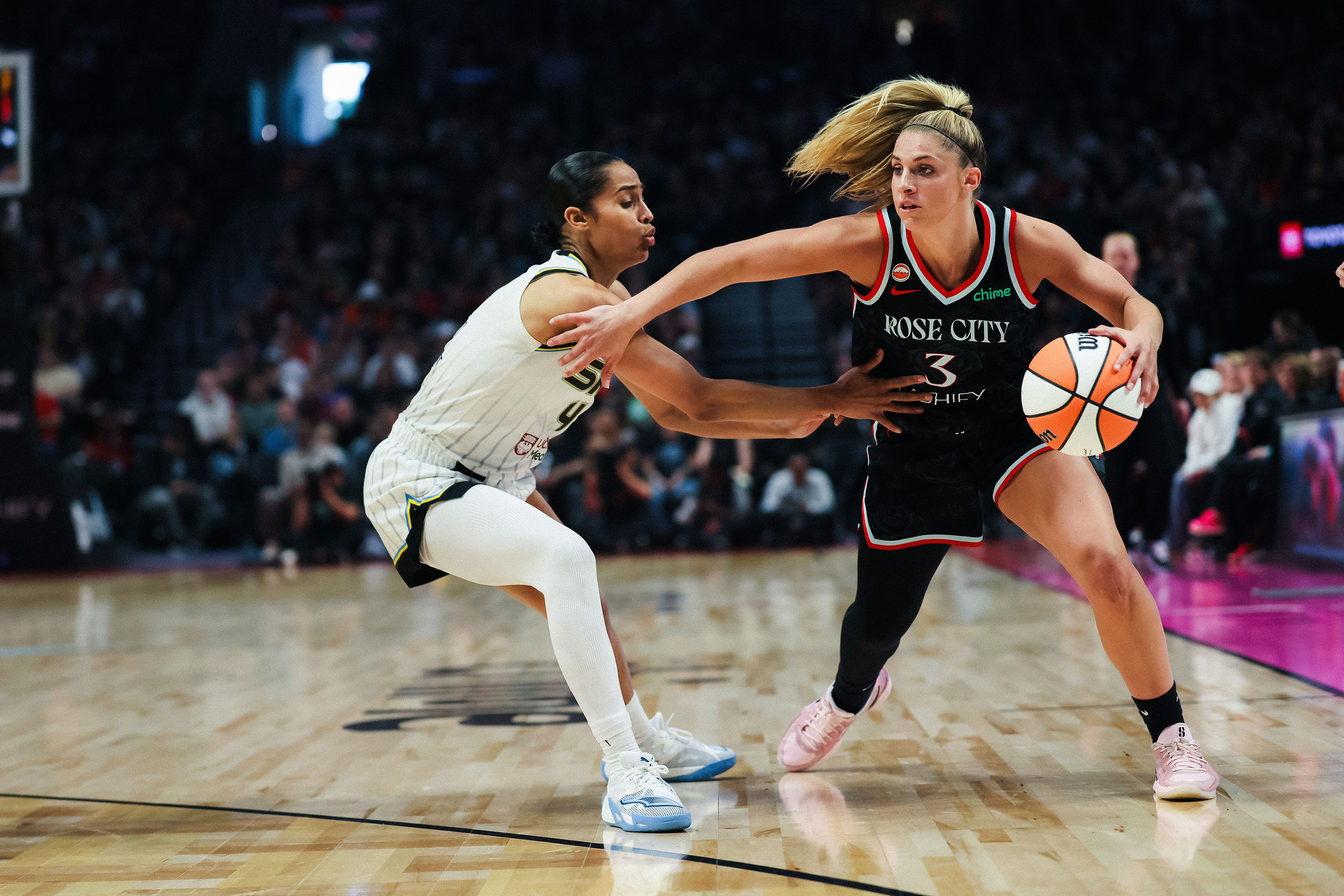
The Portland Fire season opener was, by all measures other than the final score, lit. (The Fire fell to the visiting Chicago Sky 98–83.) The game, held earlier this month at the Moda Center, marked the return of the WNBA to this city after a 24-year absence. It featured pyrotechnics, a halftime performance by Ashanti, and a sold-out arena, nicknamed the Fire Pit. Deafening cheers soundtracked much of the game. Skylar Diggins, a 14-year WNBA veteran and point guard for the Sky, told reporters afterward that it was so loud that she missed a ref’s whistle. With 19,335 seats sold, the game set the attendance record for an expansion team’s home opener, and it was the second-largest crowd for a home opener in the 30-year history of the WNBA.
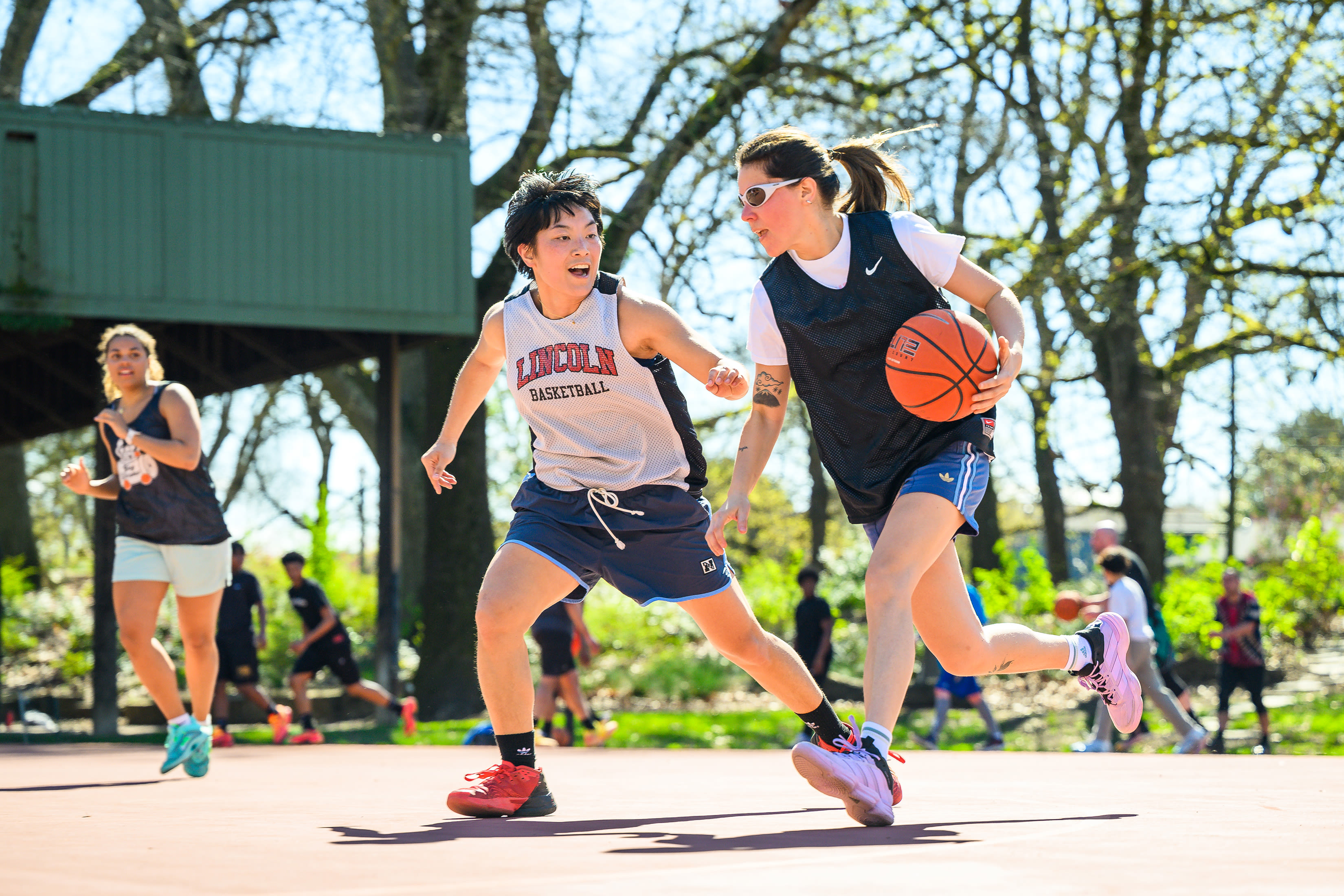
It was impressive, though not exactly a surprise in a city famously supportive of women’s sports. What surprised me, as I scrolled clips online after the game, was my own quickening pulse. I’ve never been much of a sports person. As a kid, I was bad at ball sports; I danced instead. As an adult, I’ve been to one Thorns game, one Timbers game, and one Trail Blazers game. But watching these women slice and spin and shoot—and hearing the crowd roar back at them? Suddenly, I found myself wanting in.

Image: Courtesy Portland Fire
A couple of days later, I show up at the Moda Center for the Fire’s second game of the season. Entering the arena feels like undergoing a gentle baptism. Smiling employees greet me as I mill among a multigenerational, mixed-gender crowd decked out in merch. Little kids and blue-hairs alike wear fat faux gold chains, the Fire logo—a somewhat convoluted rose erupting in flames—dangling across their chests ($29 at the team store). I buy a beer and ask the cashier how things have been so far. She practically swoons. “So nice,” she says. She worked Fire games back in the early aughts, she tells me, and she’s delighted to have the team back.

Image: Courtesy Portland Fire
After a pregame proposal (congrats to the happy couple!), flames shoot from the backboards, and I feel the heat from my seat in the 200-level. Then the game—tonight the Fire face the New York Liberty, winners of the 2024 league title—is off. The first quarter passes in a blur. By the second, my eyes begin to adjust. By the third, I’m rapt—which isn’t to say I always understand why a whistle blows. To my left, I hear my friend Megan, a former basketball player and season ticket holder, say things like “in the lane,” and it’s clear I still have much to learn.
But even a novice can tell it’s a tight game. Each time the Liberty make a move, the Fire counter. With less than two minutes left, it’s tied, 94–94. Everyone in the arena is on their feet. With 27 seconds left, it’s tied again, 96–96. Fire forward Bridget Carleton takes a three and misses, but before the sigh can fully sweep the crowd, guard Sarah Ashlee Barker nabs the rebound and hits the layup, falling onto her back as the buzzer blares and the crowd explodes. Barker’s teammates pile on top of her. Streamers shoot from the rafters. Megan throws an arm around me. “I love sports!” she squeals. I turn to the stranger to my right, and we put up our hands for a high five before going in for a hug instead. My body hums all the way home.

Image: Courtesy Portland Fire
That was two weeks ago. In the time since, I’ve watched games from my couch and from the Sports Bra, the bar on NE Broadway that shows exclusively women’s matchups. I’ve studied the schedule and made plans to attend games with friends, with my sister-in-law, with my mom. I’ve downloaded the WNBA app, followed every Fire member on Instagram, and subscribed to a half-dozen new podcasts. I’ve browsed Reddit threads about Fire head coach Alex Sarama, a 30-year-old Brit who last week drew attention for having the team practice in socks. (Sarama says he took inspiration from a book by Wolfgang Schöllhorn, a German sport scientist who researches biomechanics and motor learning.)

Image: Courtesy Portland Fire
What’s hooked me? In part, it’s that my rookie fandom feels welcome with a new team in town. In part, it’s that games are fast and fun, and that something borderline primal runs through me when I watch these women chest-bump each other after making powerful plays. But this is also the WNBA’s first season under a landmark collective bargaining agreement. Signed after marathon negotiations in March, not two months before the season tipped off, it brought major (though still incomplete) gains. Thanks to resolute bargaining by the players’ union, these athletes are finally making serious money. This season’s minimum salary of $270,000 is more than last season’s supermax. (Last season’s minimum: $66,079.) The average is $600,000, and 31 players are making more than a million—including Portland’s Carleton, for whom the pay jump amounts to nearly a 1,000 percent raise.
The union also negotiated the first comprehensive revenue-sharing model in women’s professional sports, with players set to receive roughly 20 percent of gross revenue (from ticket sales, TV rights, merch, and so on). While that figure remains far from the near 50 percent share that NBA players receive, it’s significant because it ties player compensation to league growth. And the WNBA is in a boom era, with a massive media rights deal, rapidly rising attendance, and skyrocketing team valuations. Turns out that watching athletes put their bodies on the line hits different when they’re benefiting in big ways.

Image: Courtesy Portland Fire
Plus: While everyone expected Portland fans to show up for the reborn Fire, few thought the team would play all that well. In preseason rankings, nearly every outlet—The Athletic, ESPN, the WNBA itself—put the Fire at the bottom. But eight games into the season, the team has notched five wins, including two on the road. While the Fire lack an obvious superstar, the roster is stacked with high-energy players willing to put in the work. Last year, on the Minnesota Lynx, Carleton averaged only 6.5 points per game. So far this season, she’s averaging 15.3. Forward Emily Engstler, a linchpin of the Fire’s scrappy defense, is tied for the league lead in blocks per game. Carla Leite, a French player in her second WNBA season, is a spark plug, bringing speed and confident shooting; in Monday’s game, again against the Liberty, the five-foot-nine guard hit a late-game three-pointer over two-time WNBA MVP (and six-foot-four) Breanna Stewart. She scored 18 points in that game and 20 in the next. Barker, also in her second season, has proven absolutely clutch off the bench. In addition to the buzzer-beater that delivered the Fire their first win, she made a game-sealing layup against the Connecticut Sun on May 18 and went on a fourth-quarter scoring run in Monday’s Liberty game. "S-A-B" has already become a popular Moda Center chant.
Even Cheryl Miller, one of the most decorated basketball players of all time, admitted she’d been wrong about the Fire during a postgame broadcast on Monday. “When I saw this roster in preseason, I’m like, What in the heck are these kids gonna do? What’s going to be their identity?” the basketball legend said. But she’d been convinced. “To see [Sarama’s] vision in these last seven games, and this mindset of this Fire team—whether they’re 20 up, 20 down, they don’t play the score. They just continue to grind it out.”
The season remains early. The heat could hold. The flame could flicker. Last week, the team waived contracts for three Black players, prompting discussion about the roster's racial makeup and the growing influence of international talent. I hope the front office is also having that conversation. But I like it here in the Fire Pit. Consider me along for the grind.