Psychedelic Rock Posters and Fashion of the 1960s Celebrated at the Portland Art Museum
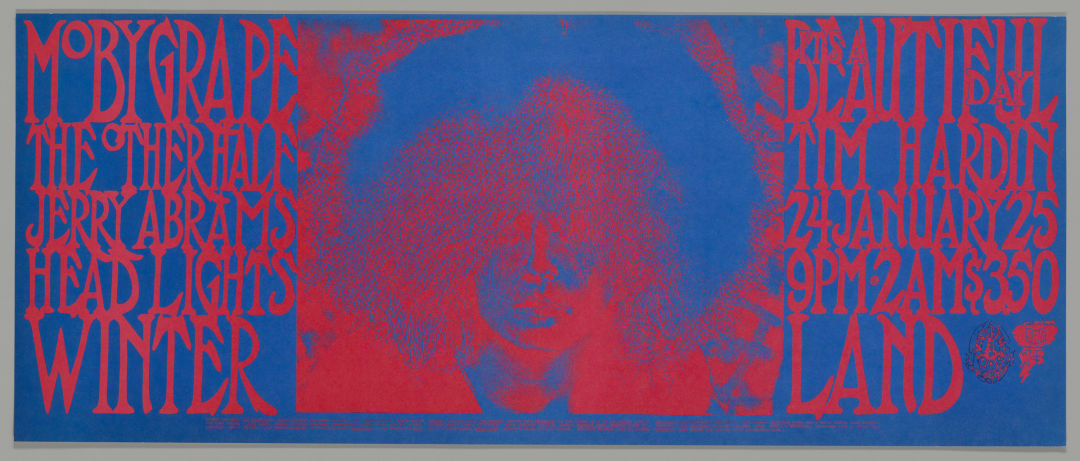
When you think of museum collections you may not necessarily think of 1960s-era rock posters, but for Mary Weaver Chapin, Ph.D., Curator of Prints and Drawings at the Portland Art Museum, they are among some of the most intriguing lithographs in the collection. Chapin loves their eclectic style, incorporating sources as varied as Edwardian formalwear, Art Nouveau lettering, and psychedelic cats. Psychedelic Rock Posters and Fashion of the 1960s, on view now, explores this new design language of rock posters. We asked Chapin to tell us about what to expect at this exciting new exhibition.

Mary, you list a number of intriguing sources for these posters, but let's start start with the cats.
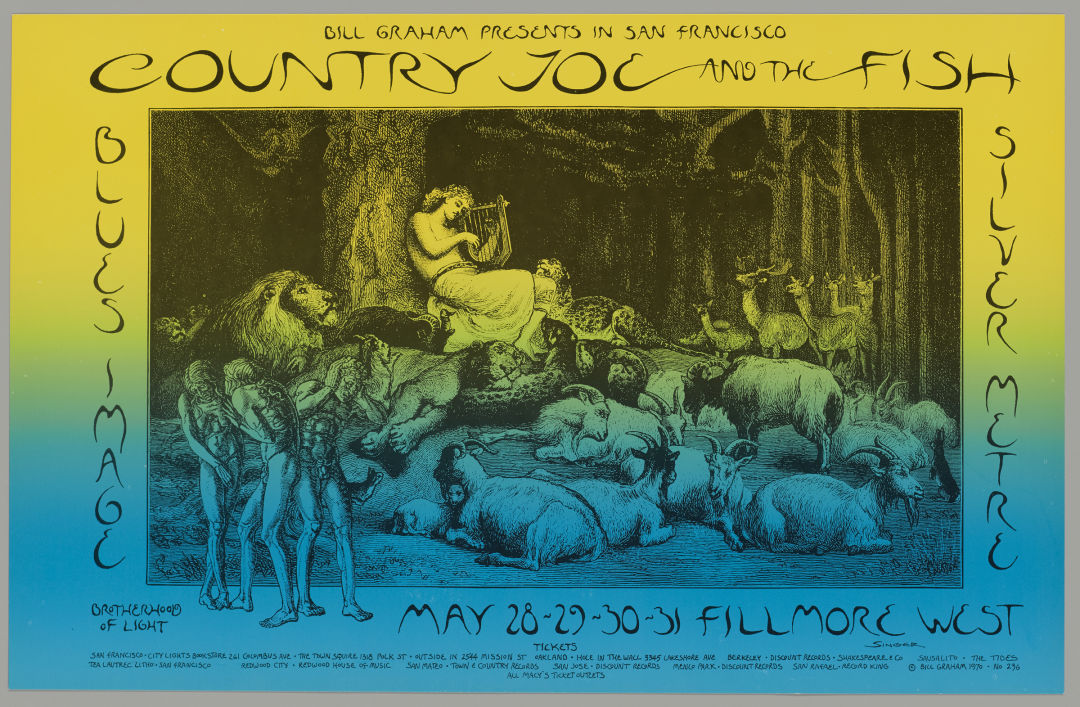
Mary: An excellent place to start! As the exhibition began to take shape, I sorted the images by various themes and I was struck and delighted to discover the number of cats that appear in the rock posters, mostly in the work of Robert Fried and David Singer. I’ve had the pleasure of corresponding with Singer, and he agrees that cats are the most psychedelic of all creatures, as they seem to be peering into realms unseen. Visitors can expect numerous trippy kitties and tigers in this show.
And the Edwardian cowboys?
Artists and musicians were looking to forge a new style on the cheap. Thrift stores and granddad’s closet provided new looks at the right price. The Charlatans, a highly influential band of this period, dressed in retro cowboy attire to signal their status as part of the new wild west taking shape in San Francisco. Artists did likewise, borrowing motifs from wanted posters, old-fashioned currency, and turn-of-the-century styles to enliven their posters.
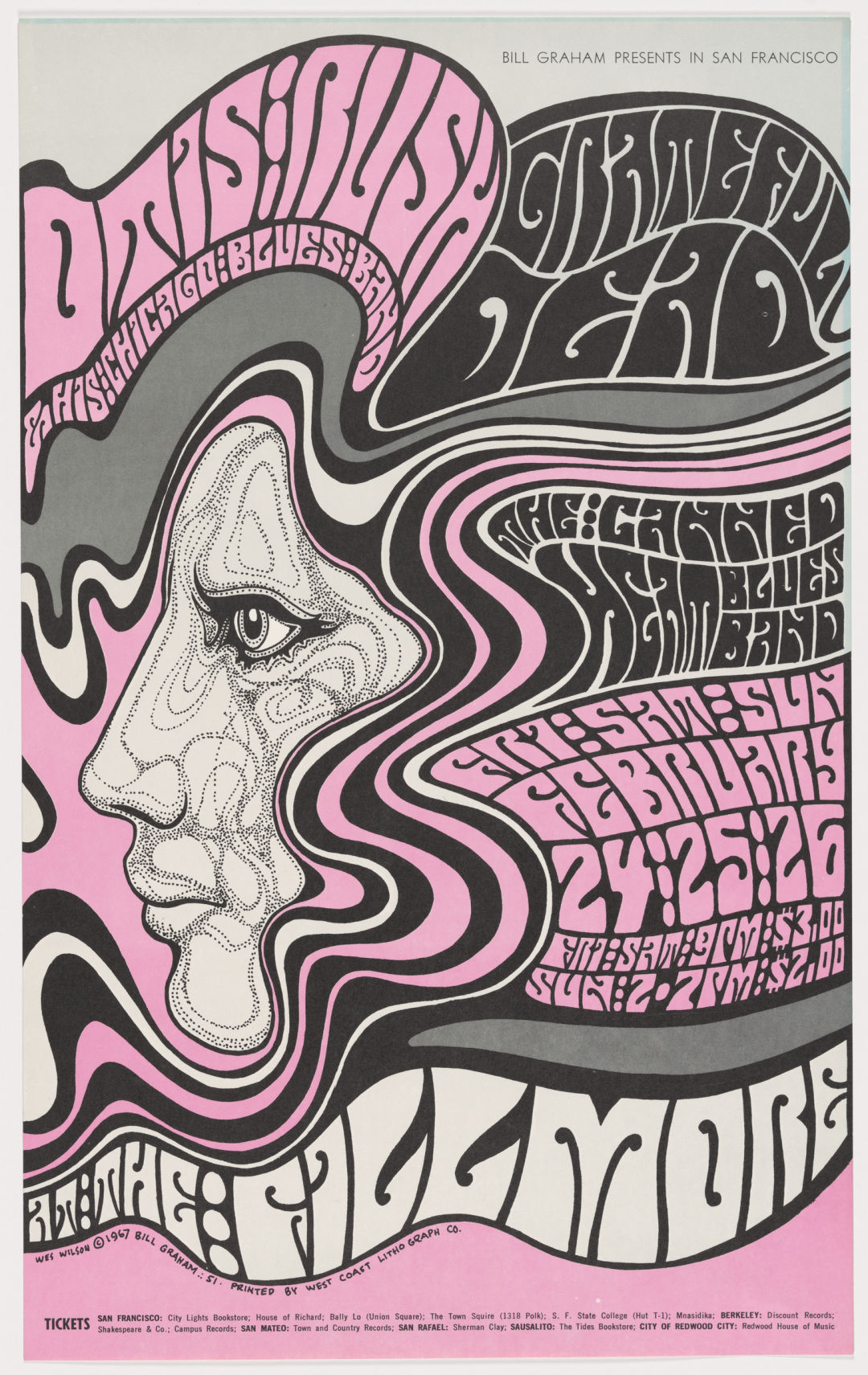
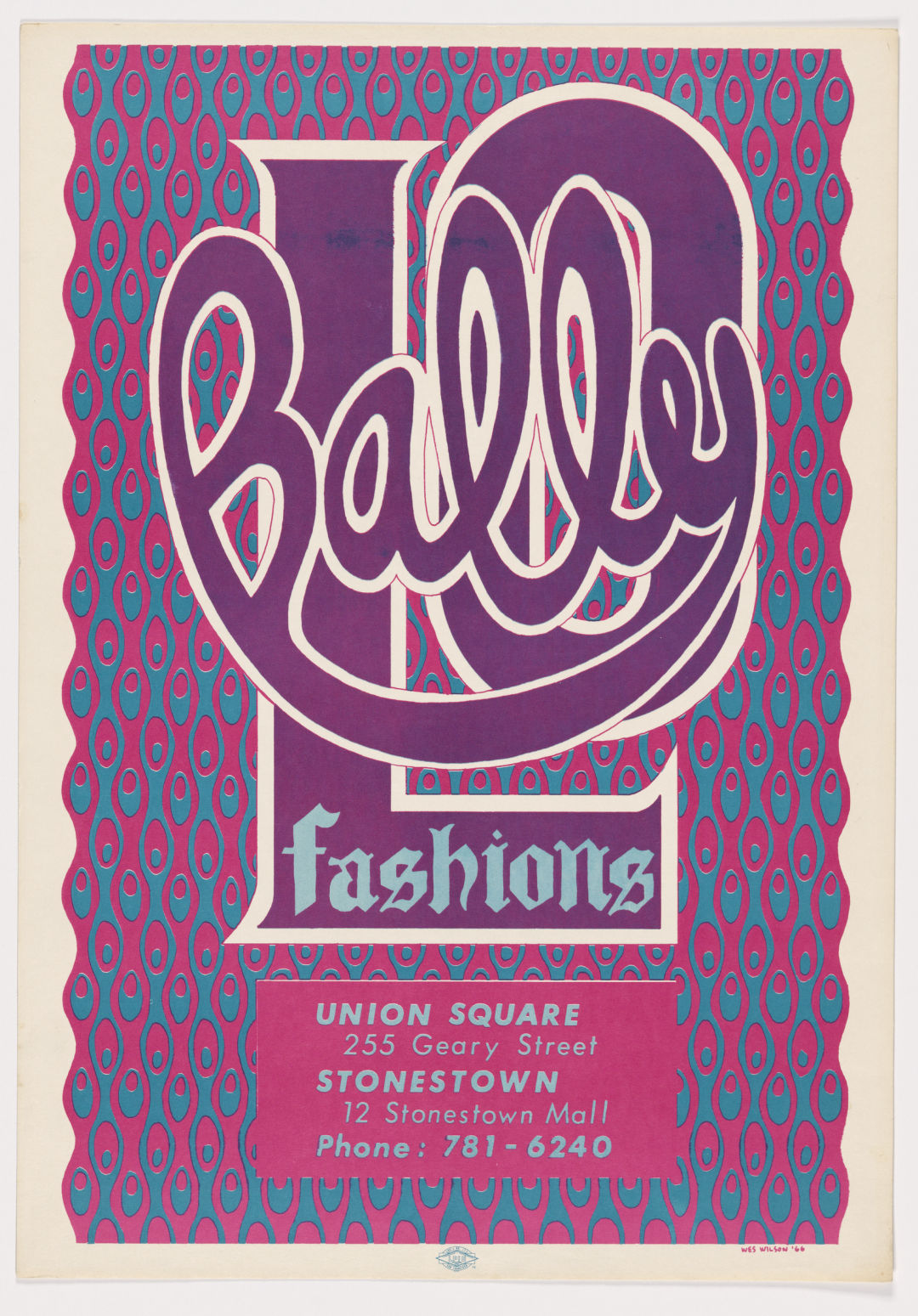
What about the groovy lettering on posters? Was that new?
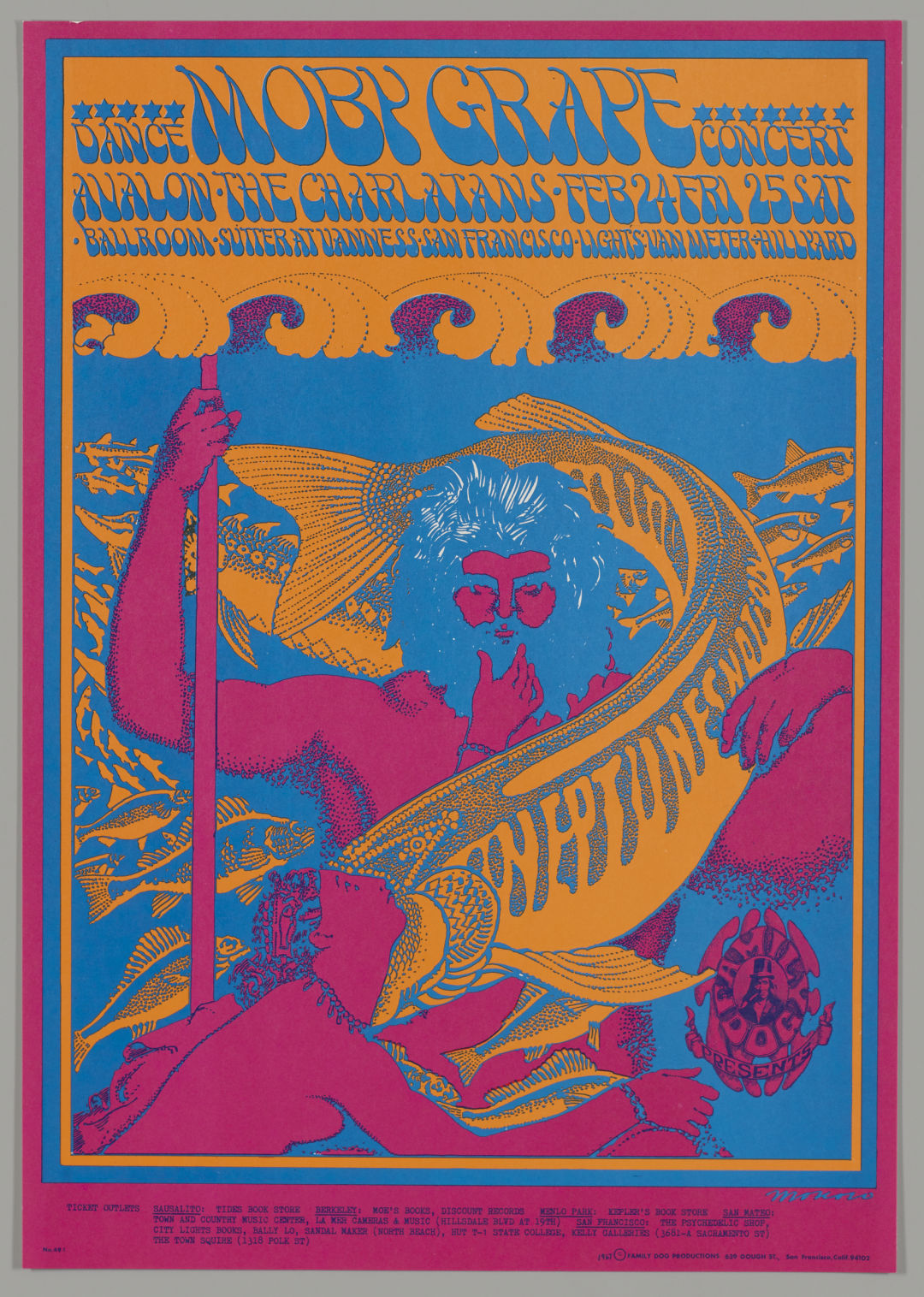
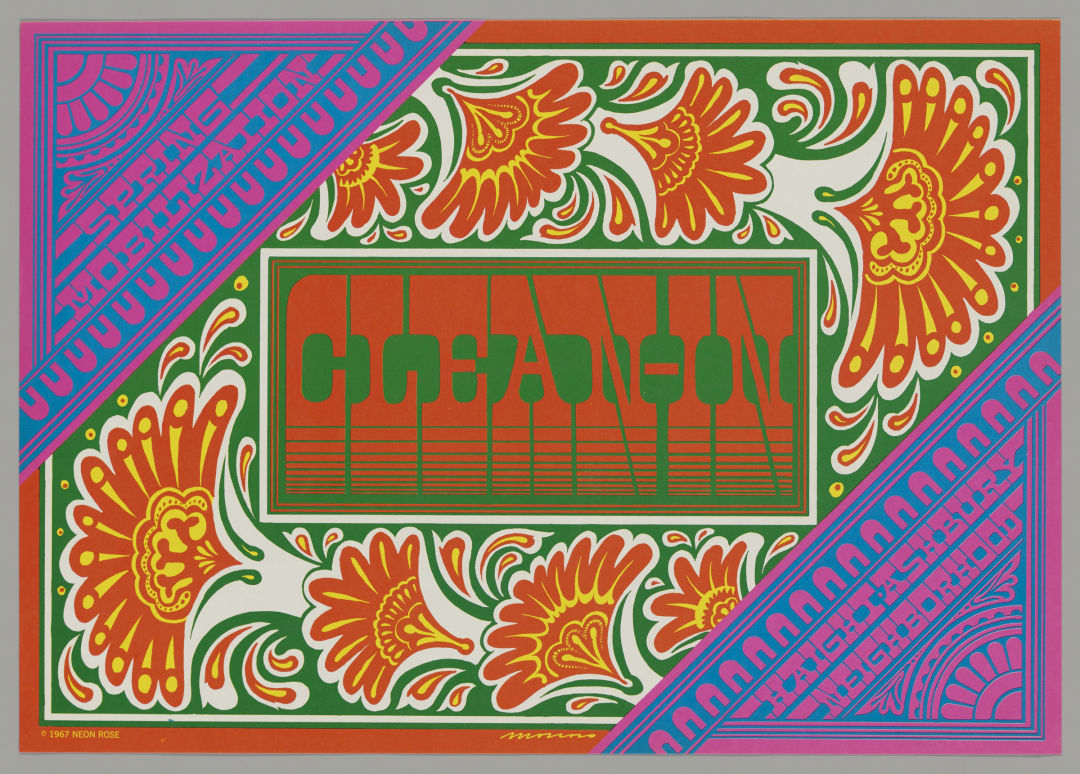
Inventive lettering, one of the hallmarks of psychedelic posters, was both new and old. Wes Wilson is largely credited with launching a new style, but his inspiration came from Alfred Roller, an Austrian poster artist working around 1900. Wilson began by emulating Roller, then took his free-spirited lettering to an entirely new realm, which other artists adopted and adapted. Artists also mined old type manuals to find ideas. It is important to remember that all of these posters were hand-lettered. There were no drop-down font families, as we have today on our computers!
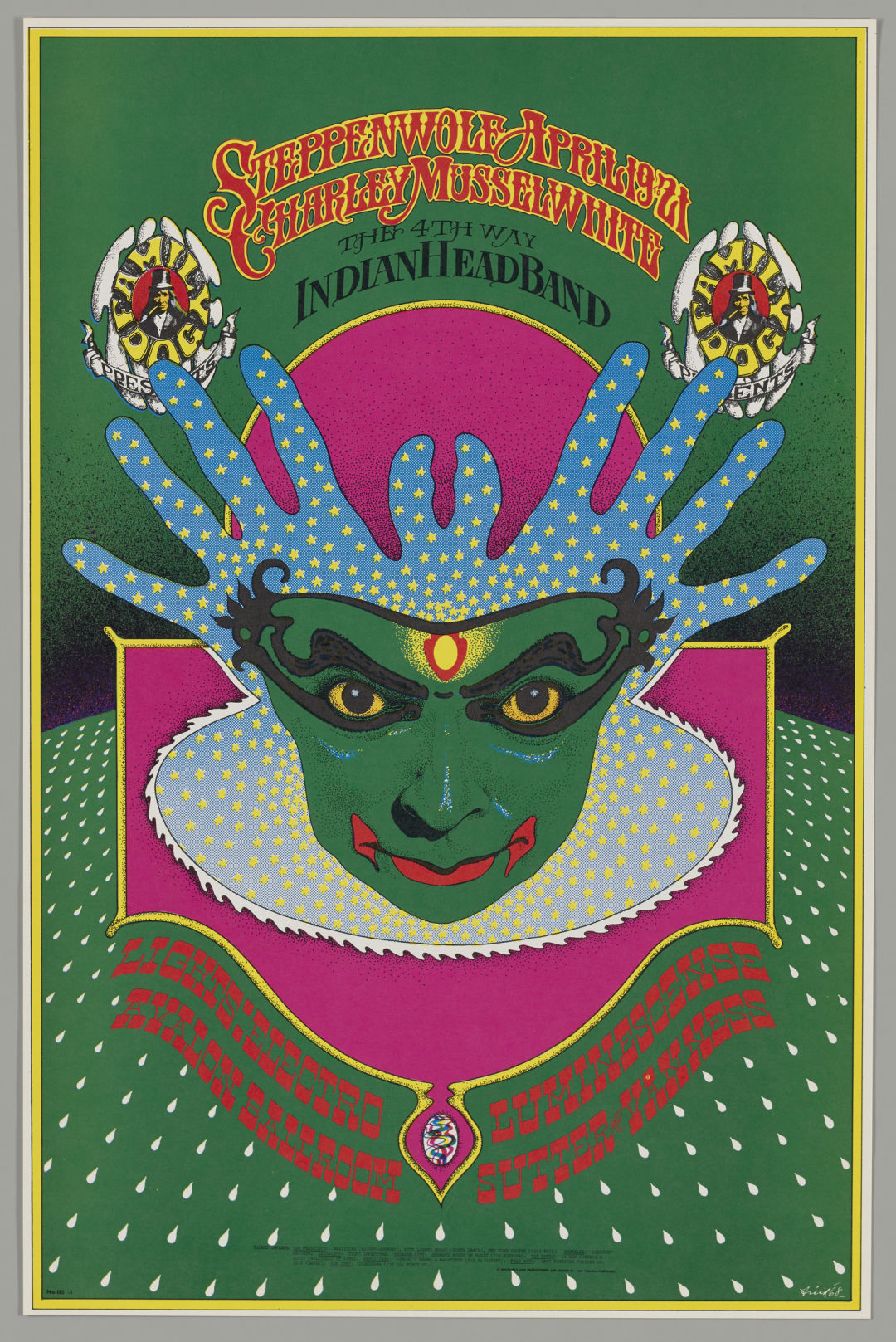
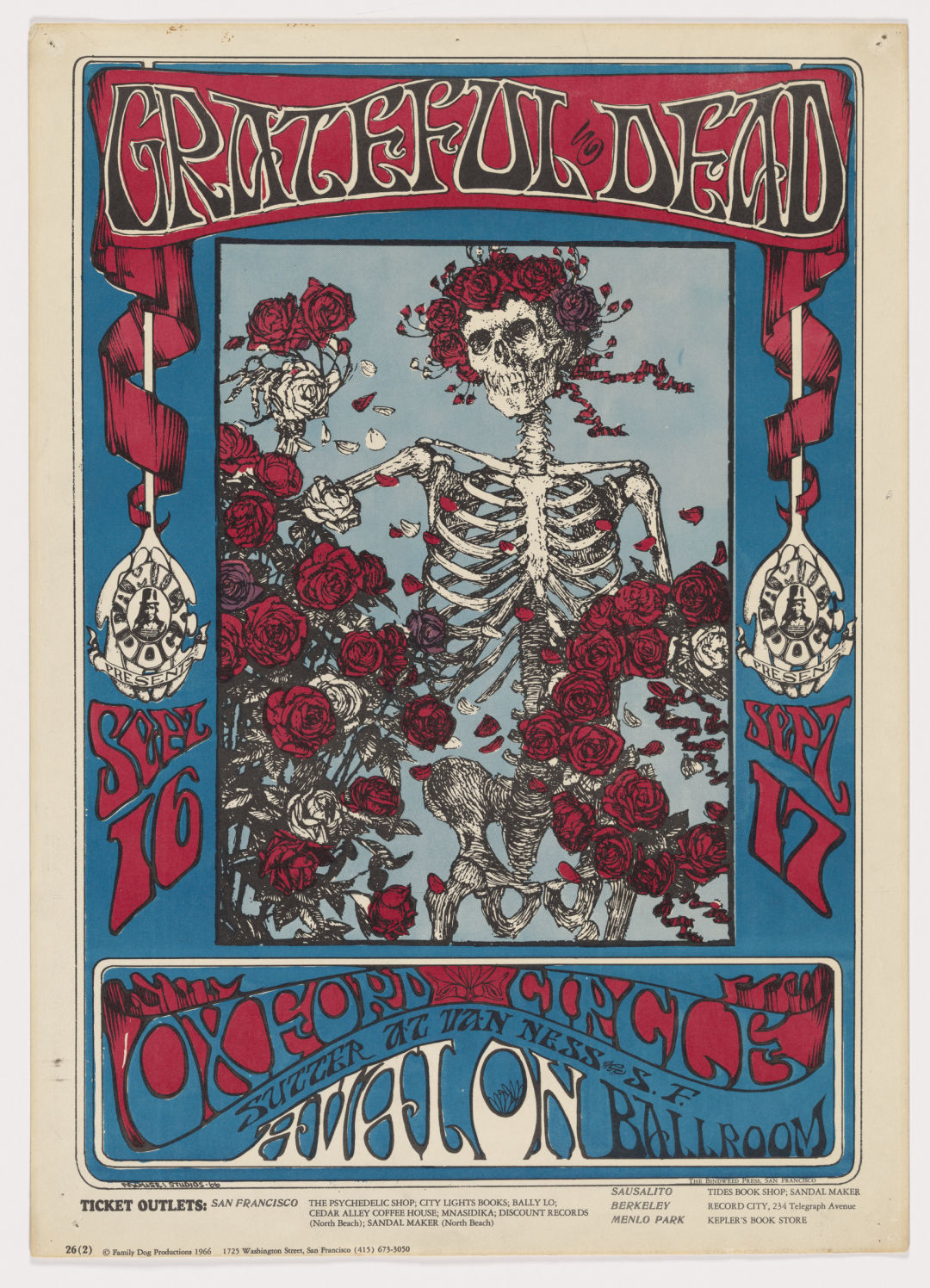
How did artists represent the psychedelic experience?
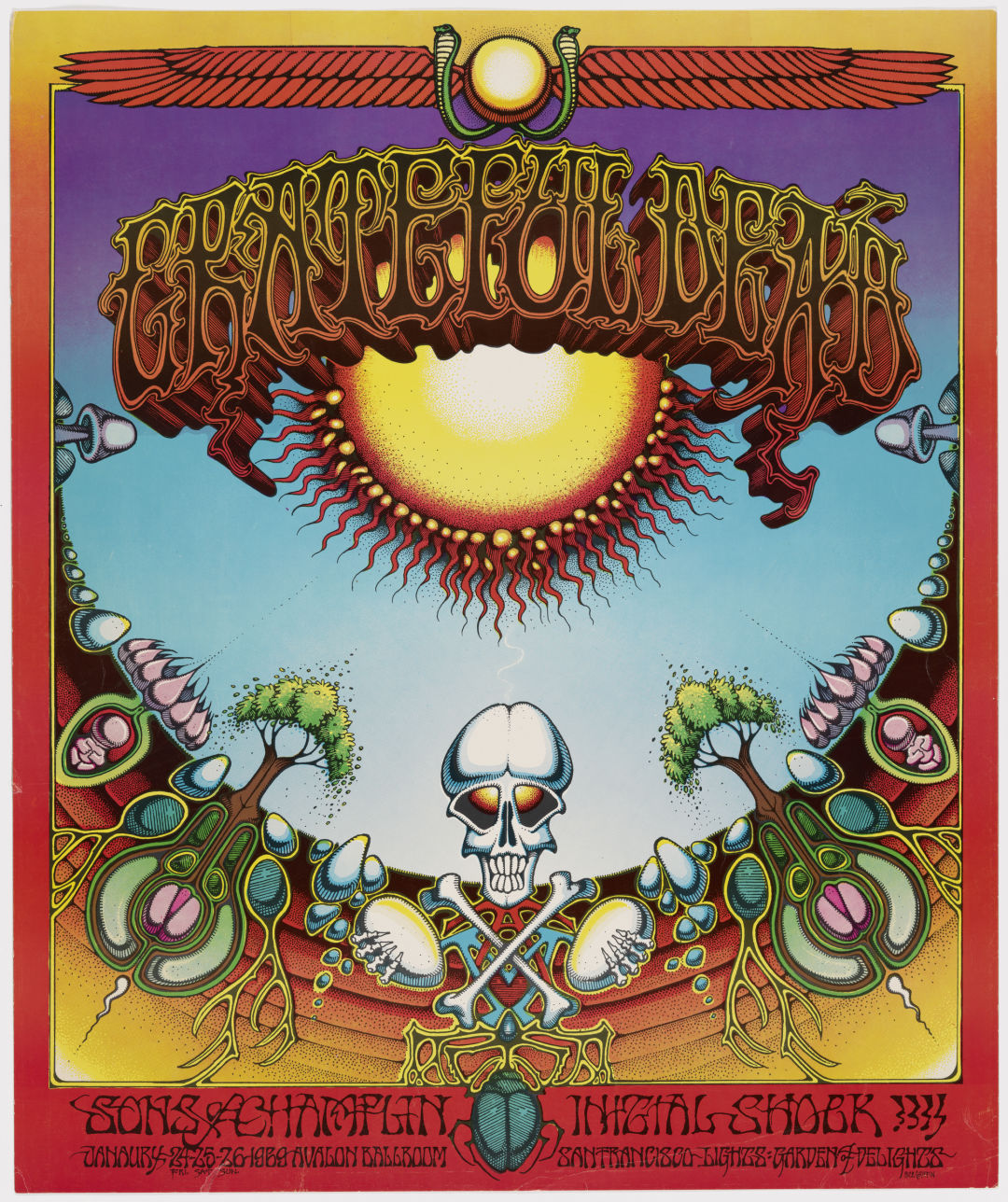
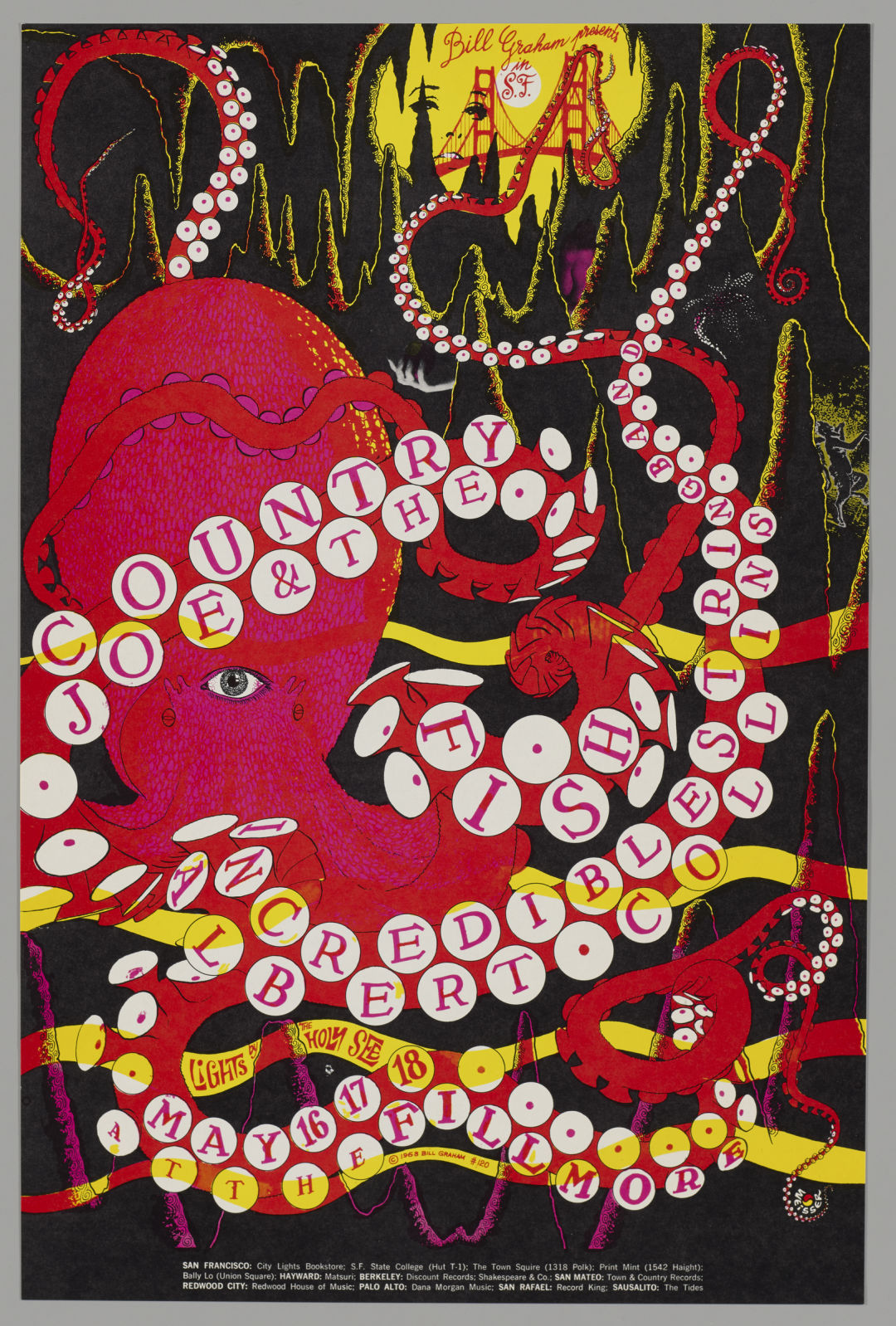
That was quite a challenge! Visitors will see that while artists borrowed existing imagery from Eastern religion and Christian symbols to suggest a mystical state, they had to push their own imaginations to define something even more mind-altering. Rick Giffin fashioned flying eyeballs; Wes Wilson, Bonnie Maclean, and San Andreas Fault (Tad Hunter) depicted expanding, morphing, mind-bending heads; and Stanley Mouse and Alton Kelley created their iconic “Skeleton and Roses” poster for the Grateful Dead to suggest a realm beyond the living. The list goes on.
Anything else?
Yes, lots more! I’ll leave it to the visitor to discover more at the exhibition, but I can’t conclude without mentioning the dynamic cross-pollination between art and fashion. We couldn’t resist adding 20 outfits that reflect the dialogue between streetwear and poster design. Enjoy!
VISIT
Hours: Wednesday to Sunday - 10 a.m. to 5 p.m.
Free First Thursdays 10 a.m. to 7 p.m.
Tickets
Free | Members
Free | Children 17 and under
$25 | Adults
$22 | Seniors 62+ and college students
Free First Thursdays –Visit for free on the first Thursday of each month.