Fat Cyclist Marley Blonsky Won’t Leave You Behind

Image: Molly J. Smith
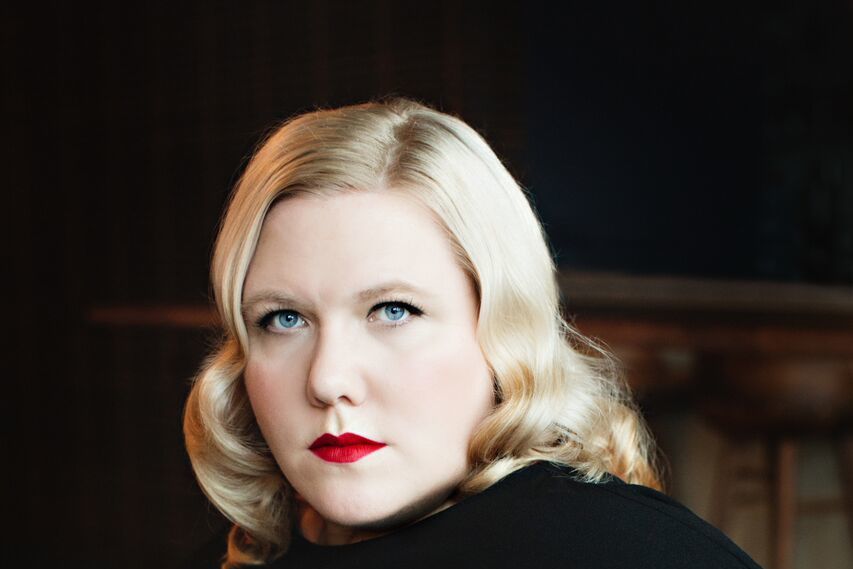
As a child, Marley Blonsky didn’t see herself as particularly athletic. Never mind that she played volleyball and softball and swam. She just encountered too few athletes who looked like her. “I’ve always been in plus, extended sizes…like, Lane Bryant queen as a 14-year-old, business casual,” says Blonsky, who recently moved to Portland from Bentonville, Arkansas, after stints in Texas and the Northwest. “Now I have a clothing sponsor. I get paid to ride my bike and be in photo shoots.”
Blonsky and fellow fat cyclist Kailey Kornhauser—the two fangirled over each other on Instagram before meeting in person at a 2019 bike summit—cofounded a nonprofit called All Bodies on Bikes with the goal of making the bike world friendlier to fat riders. With 15 local chapters nationwide, the group leads rides and retreats, educates first-timers on the basics of bikepacking, and has worked with brands to expand size ranges for bike shorts and rain jackets. In February, the second documentary about All Bodies on Bikes, We Are Cyclists, premiered at the Portland coworking space Kiln, ahead of its March 18 release on YouTube. In April, Blonsky's children’s book, The Ragtag Best Friends Bicycle Club, will hit bookstores around the country. And she can be seen in ad campaigns for bike clothing brand Shredly. “My cellulite is out and my stomach is out,” she says. “I’m just proudly standing there with my body on display.” As told to Brooke-Jackson Glidden
I grew up in Texas in a suburb. Bikes were the great leveling factor. I was probably the youngest kid in the neighborhood, but [on] bikes, we could all play together. We moved to Spokane when I was in sixth grade, and it wasn’t the same neighborhood vibe. I stopped riding my bike.
Bikes became an afterthought until my late 20s, living in Seattle. My ex-wife and I had gone on a couple rides together, and I always thought it was the hardest thing. I was on this city cruiser, and I was like, “I’m gonna die, this is not fun, I don’t know why anybody does this.” Then we got divorced.
I eventually got onto a road bike. That was the first time I rode more than five miles at a time. I did 60 miles in one day and was like, “Holy shit, I’m good at this.”
I started going to group rides, and I would get left behind and just get frustrated. And then, you know, the more you get into something, you want to look the part. I could never find [clothes] in my size. I’ve always been about this size, anywhere between a 16 and a 22—mid-small fat, whatever. I couldn’t find a raincoat, couldn’t find pants, couldn’t find shirts, couldn’t find anything. I started telling my story on Instagram—just like, “I went on this adventure this weekend”—and I was blogging at the time. Eventually people started asking me, like, “Oh, what clothes are you wearing?” I was like, “Well, Old Navy, Target.”
My relationship to my body didn’t get positive until I started riding bikes, finding power and endurance. Realizing how much faster I could go downhill than other people, realizing that I loved going downhill, I started to see my body in a different light. “OK, this is annoying that I can’t fit into those clothes. But also I’m not freezing cold when we’re bikepacking, and all my other friends are shivering.”
It really changed when I met my [All Bodies on Bikes] cofounder, Kailey. I was doing size acceptance work and size inclusion work, but I wasn’t familiar with other fat activists. I started reading Roxane Gay, Lindy West. Before I wouldn’t ever say the word fat. I was always trying to make my body smaller. Hearing Kailey, hearing these other proudly fat women, I was like, “I have nothing to apologize for.”
We put on a workshop together in Vernonia, and a bunch of industry folks were there. The overwhelming feedback was, “We need to learn more.” We had no intentions of turning it into a movement or a nonprofit or anything.

Image: Molly J. Smith
Around that time, (Japanese manufacturer) Shimano heard our story, and was like, “Hey, we want to make a film about the work you guys are doing.” We were like, “Oh, OK, let’s go bikepacking, and you guys can tag along, and we’ll talk about being fat and riding bikes.” In 2021, All Bodies on Bikes came out as a [short] film. People came out of the woodwork to say, Can you please give a talk to my bike club? Can you be on this podcast? Can you consult for our organization? Seventy percent of the US is in a bigger body. If you’re not making products for us or showing us in your ads, you’re just missing out.
I started working with Shredly, who primarily used to make mountain bike clothing, and now they make other cycling clothing as well, and they are super, super committed to making everything in 00 through 24. We go to a big cycling expo, and people come up to the booth and say, like, “Thank you so much, this is the first time that bibs have ever fit me.” Or, “I walked into your trailer and tried something on and cried because I’ve never been able to buy something off the shelf.” I’ve always been adamant that you can ride a bike wearing anything. In the [All Bodies on Bikes] film, I wore dresses. You don’t have to look like a spandex warrior, but if you want to, you should have that option available to you.
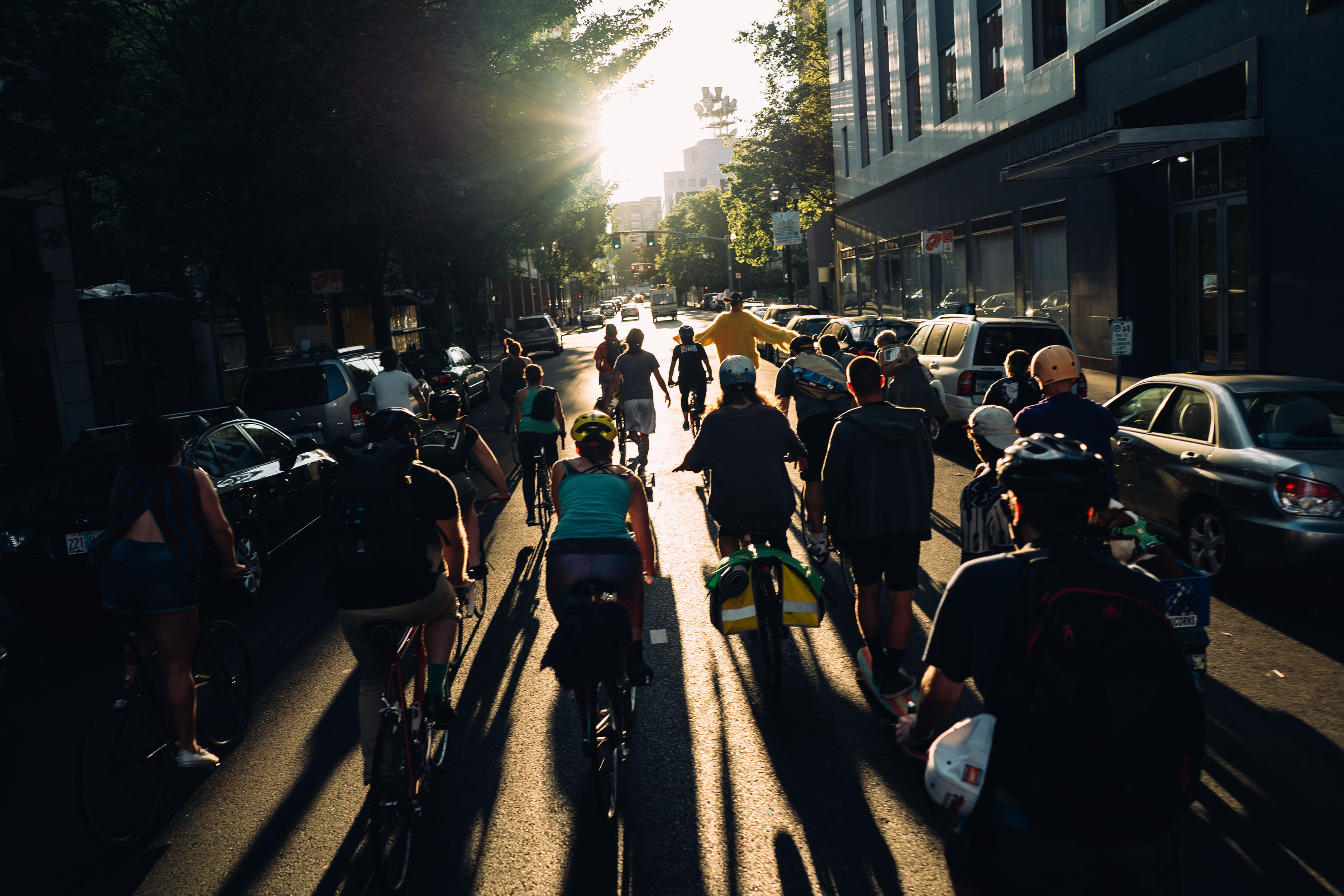
There was nothing inherently magic about what we were doing, leading inclusive rides. We put out a call for folks who wanted to start their own chapters. We had a retreat, and it was so powerful to have other community leaders in bigger bodies in the same space, talking about what this future could look like.
“No drop” means literally nobody is getting left behind. We try [to] explain that as clearly as possible at the beginning [of rides]. Being left behind on group rides, it never feels good. Even when they say they’re not going to leave you, and then it takes you twice as long to get up the hill, and you get up to the top and they’re gone. I’ve been digging into where that need for inclusion comes from, and I think it comes from my childhood: I was always the little tagalong sister, just wanting to be included. A lot of folks out there want to be included. By saying we are a no-drop ride, it makes it a little easier to show up. I also make it clear, like, “If we start riding, and you’re not feeling it anymore, it’s OK to stop.” I try to make it adventure by choice.
So many folks, especially as kids, felt left out or felt too slow or too fat or just too different. That’s really the gist of the book. It’s definitely based on my life. Little Sister really wants to ride bikes with Big Sister, and Big Sister’s like, “No, you’re too slow. You’ll slow me down.” So Little Sister’s feelings are hurt. And then she’s like, “Well, I’m gonna go have my own fun anyway.” And she ends up gathering the Ragtag Best Friends Bicycle Club. I never was fast enough to keep up. I’m still not fast enough to keep up with the cool kids, but it’s like, “OK, I’m just gonna go do my own thing.”
The bike community [in Portland] is unlike anywhere else, so unique and so welcoming. Bentonville is, like, a ski town, but for bikes. There was a lot of focus on performance and what you’re wearing and how fast you’re going, and that just never resonated with me. Here, the whimsy and the joy, it’s really refreshing. If I had lived in Portland, All Bodies on Bikes might not have happened, because there’s so many rides around here that are already inclusive and make sure nobody gets left behind. But I didn’t have that in Seattle 10, 15 years ago.
We’ve been very intentional from the beginning: We don’t talk about health, we don’t talk about weight loss, we don’t talk about any of that stuff that, frankly, people want us to talk about: “Oh, you use bikes as a way to lose weight or as a way to get healthy.” If that’s what motivates you, awesome, but we’re not going to talk about that. I ride 100 miles on a fairly regular basis. That is an athletic endeavor. But for me, it’s always been more about the fun. I don’t want to be on varsity. Like, put me on the C squad. I just want to play. I want to make friends.