What’s the Deal With Those Mirror Cabins All Over Airbnb?

Depending on where you stand, the four mirrored cabins at Two Capes Lookout reflect the very essence of the Oregon Coast—the peaks and curls of the Pacific, the dark silhouettes of the forest, the shifting shapes of the clouded sky, and you, there to take it all in. Set high on a Sitka spruce–covered hillside above Tierra del Mar between Cape Kiwanda and Cape Lookout among the campground’s cluster of 15 geodesic domes, they evoke an Oregon Tatooine: a meeting of futurism and raw landscape.
“They’re almost otherworldly,” says Portland interior designer Max Humphrey, who worked on the mirror cabins at Two Capes Lookout. “The second you see them, your phone comes out, but you kind of disappear into them when you look at them.”
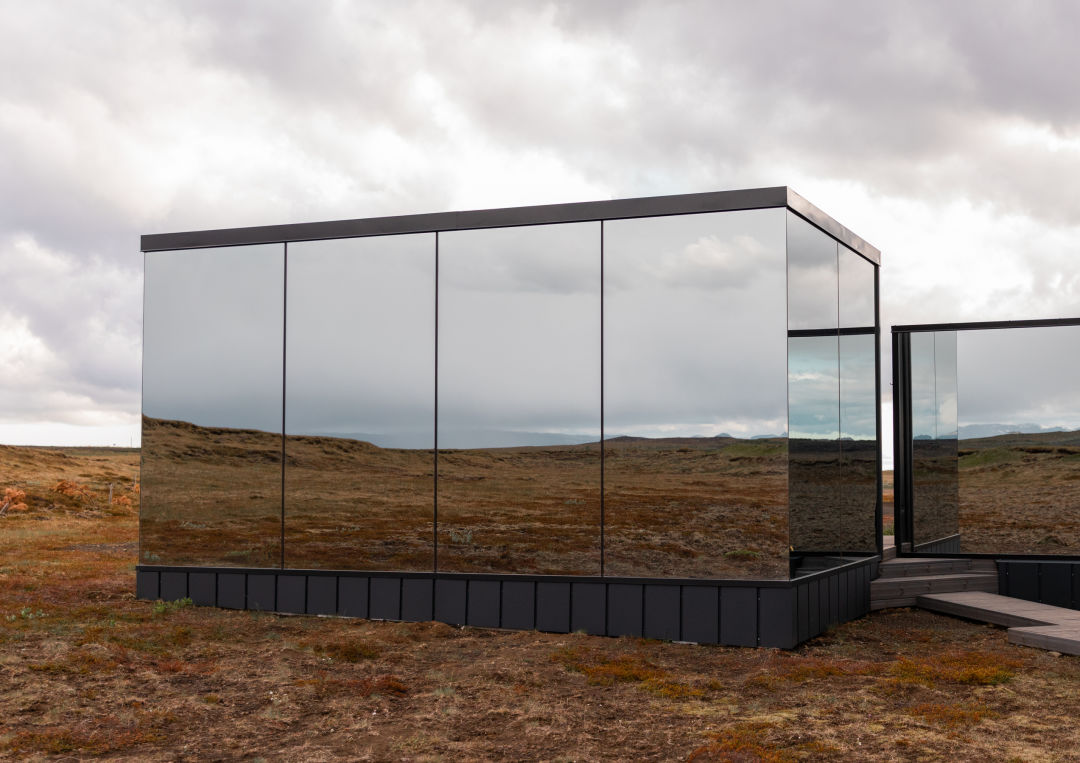
Small, mirrored glass dwellings like these, made by the Estonian company ÖÖD House, have been popping up around the world as vacation cabins, set amid craggy volcanoes in Iceland, rolling hills of Scotland, and Tuscan farms and vineyards. At roughly $300–500 per night at US locations, they are a few steps up from glamping, often exceeding the cost of a midlevel hotel or an overnight at an Airbnb. Private investors love them for upscale campgrounds and as add-ons for existing hotels because they attract travelers who want their escapes luxurious and nature-driven, says ÖÖD president Antonio Gonzalez, who joined the company when it fully entered the US market in 2023. Oregon currently has the highest number of them in the country: 12 in Southern Oregon at Tu Tu’ Tun Lodge, an adults-only resort on the Rogue River, and four at Two Capes Lookout, on the Oregon Coast. More may be coming to Bend and Eugene. “These houses print money,” Gonzalez says. “People want a unique experience and design matters.”
One part Louis XIV roughing it, another part Thoreau-for-the-selfie-era, mirror cabins offer a visual sleight-of-hand, reflecting the viewer back to themselves while capturing them within the changing atmosphere and landscape. Regardless of what direction the cabins face, they represent a mystifying mix of Instagram-readiness and suggested seclusion, a chance to feel like you are part of nature but with the added visual reverb of a man-made funhouse mirror. Standing in front of them is like gazing into a live painting where the setting melds with the subject. In other words, they’re trippy as hell.

“These buildings bring aesthetic excitement and novelty,” says Keith Eggener, professor of architectural history at the University of Oregon College of Design. “But they certainly speak to a narcissism within ourselves and a heightened sense of self-consciousness within the culture.”
Mirrors and mirrored surfaces have traded on symbols of wealth and vanity, technology, and spirituality since their emergence 10,000 years ago. They found their way to the exterior of buildings with the Eero Saarinen–designed New Jersey project Bell Labs Holmdel Complex (1962), a tech laboratory and research hub designed to mirror its surroundings while serving as a contrast to them (today it’s a multiuse tech and design hub with retail and dining). Bell Labs also serves as the oppressive and stultifying filming backdrop for Apple TV’s dystopian corporate satire Severance.
By the 1980s, mirrored exteriors went mainstream, especially in the construction of corporate buildings and hotels, standing as a shorthand for technological advancement, polish, modernity, and the future. At the same time, they aligned with a cultural creep into the hubris, cold self-involvement, and wealth of the 1980s—think the opening sequences of the television series Dallas and the shiny exterior of Trump Tower, completed in 1983.

Image: Courtesy Lisa Esposito/ÖÖD
But in the twenty-first century, the context, again, shifted. In 2010, Swedish architects Tham & Videgård showed the world just how well a cabin with a mirrored exterior can merge visually with a forest when they debuted their viral Mirrorcube. The four-meter-by-four-meter mirrored box set aloft in a pine grove in northern Sweden is now part of a treehouse resort called Treehotel. “Like an architectural magic trick, it almost disappears into the foliage, so sharply are the surrounding trees reflected in it,” wrote Rhiannon Batten for The Guardian.
Today, architects have all the qualities of exterior mirrored glass at their disposal. They use it for spectacle and contrast, for movement, for drama, and to make a structure recede within its setting. That approach—disappearing architecture into its environment—was a guiding principle behind ÖÖD House, which went all in on mirror dwellings in 2016 and which manufactures mirror cabins for the US market at its factory in Houston. A decade after their creation, ÖÖD cabins are darlings of the design press, with mentions in Condé Nast Traveler, Architectural Digest, Dwell, and Wallpaper. “We spend $0 on PR,” says Gonzalez.
The cabins avail themselves of long-available two-paneled mirrored glass technology that presents as a mirror from the outside while allowing anyone inside to see outdoor surroundings without impediment: I see you but you don’t see me. As with office buildings, that effect flips in the evenings, when viewers outside can see into the interior spaces (at Two Capes, you can drop some shades for privacy at night).

“They really have that wow factor,” says Kevin Gindlesperger, who owns Two Capes Lookout. “Reflecting nature with a touch of luxury was really what we were trying to do.” Gindlesperger first saw the ÖÖD cabins at the Glamping Association of America’s annual conference. They appeal especially to older couples less likely to go the traditional camping route and young people drawn to the lifestyle elements, he says.
Inside, campers find a three-walled tiny home with a bed, kitchenette, toilet, and small shower, all of which came prefabricated in the Texas factory. For the soft touches, Humphrey, a designer known for his Pacific Northwest–meets–Americana style, layered a bit of the rustic into the interiors with National Park lodge–inspired chairs, as well as custom throws made with recycled fibers by Portland’s Seek & Swoon. Outside, some of the experiences of camping remain, like the shared firepit, secluded setting, and campground community.
But the vibe is really built around the mirror moment, especially when the mirrors are paired with a built-out patio or deck with seating: The views shift from the viewer’s own visage to the swirling sky to the gnarled trees to, in some cases, a double reflection from a neighboring mirror cabin. “They are wild,” Humphrey says. “You’re definitely not going to be checking your hair or doing your makeup.”
The World Is a Mirror
ÖÖD stays around the world
Bajo Estrellas, Mexico: Perched above a vineyard in Valle de Guadalupe, this mirror cabin comes with pool access and tasting tours within the wine cellar. Starting at $107 per night.
FarAway Pond, New Hampshire: By October, New England forests are flush with auburns and golds, which makes it one of the more colorful times to visit this lakefront hideaway in the White Mountains. Starting at $350 per night.
Aura Retreat, Iceland: The austere beauty of Iceland’s mountainous southern coast surrounds this cabin duo, where visitors soak and sauna under the northern lights. Starting at €555 (roughly $640) per night.
Editor's note: This story has been updated with the correct spelling of Two Capes Lookout owner Kevin Gindlesperger. Portland Monthly regrets the error.


