In Search of Seclusion on the Olympic Peninsula

Image: Courtesy Adam Simon
Adam Simon has lost his train of thought. “Look at that!” he points out over a bluff, down at the trees surrounding two brackish ponds on the coast of the Olympic Peninsula. A bird glides over the water, swooping across the estuary before it follows the wind-worn coastal treeline north. “An eagle! Wow. Do you see it?”
He’s showing me around Aliya Preserve, his 25-acre private campground near Kalaloch, Washington, but he keeps cutting himself off. He crouches to look at a wall of moss and licorice ferns along one of the campsites. “All these ferns, they just all, like, created this incredible natural buffer, right?” he says. “We don’t do anything to it.”

Image: Courtesy Adam Simon
Before Adam and his wife, Sara Simon, purchased this property in 2018, a global hospitality corporation had planned to build dozens of cabins here for a resort. The Simons instead kept things simple: five campsites, two cabins left by the previous owners, and two “AliyaPods,” 150-square-foot wooden boxes with temperature control, electricity, robin’s-egg blue minifridges, comfortable beds, and induction burners—but no plumbing. They put in an outdoor shower with a view of the Pacific and added a few outhouses and dishwashing stations. The rest they tried to keep as wild as possible, yanking out gargantuan knots of invasive Himalayan blackberries and uprooting thickets of alder trees to promote biodiversity.

Image: Courtesy Adam Simon
Near the woodshed or porta-potty, I can hear trucks and RVs rumbling down 101, but they fade as I follow a moss-lined, pedestrian-only path. Lush rainforest gives way to estuary, and I continue along a natural trail of smooth stones, the old bed of a bygone Queets River tributary. Squat shore pines and hemlock grow through here, stunted by vigorous coastal winds, as well as patches of salal and huckleberry and beach strawberry sprouting up among the rock. I scramble over a fortifying barrier of driftwood and there’s the Pacific, lapping against a gray sandy beach.
“We can’t go out for a short walk, because every walk brings us to a new place and to a new event that’s unfolding that season or that day,” Adam says. “I have never been to the beach where there’s not something brand-new that occurs there, whether it’s a new species that gets washed up, or the spotting of a whale or porpoises, or seeing an eagle and a coyote dancing together.”
What I don’t see is people—not really, at least. The amenities are communal, yes, but with so few people on the property at any given time, there’s an innate seclusion to the place. Within a meditation circle between the campsites, carpeted in squishy moss that invites a barefoot stroll, a sign requests guests stay silent.
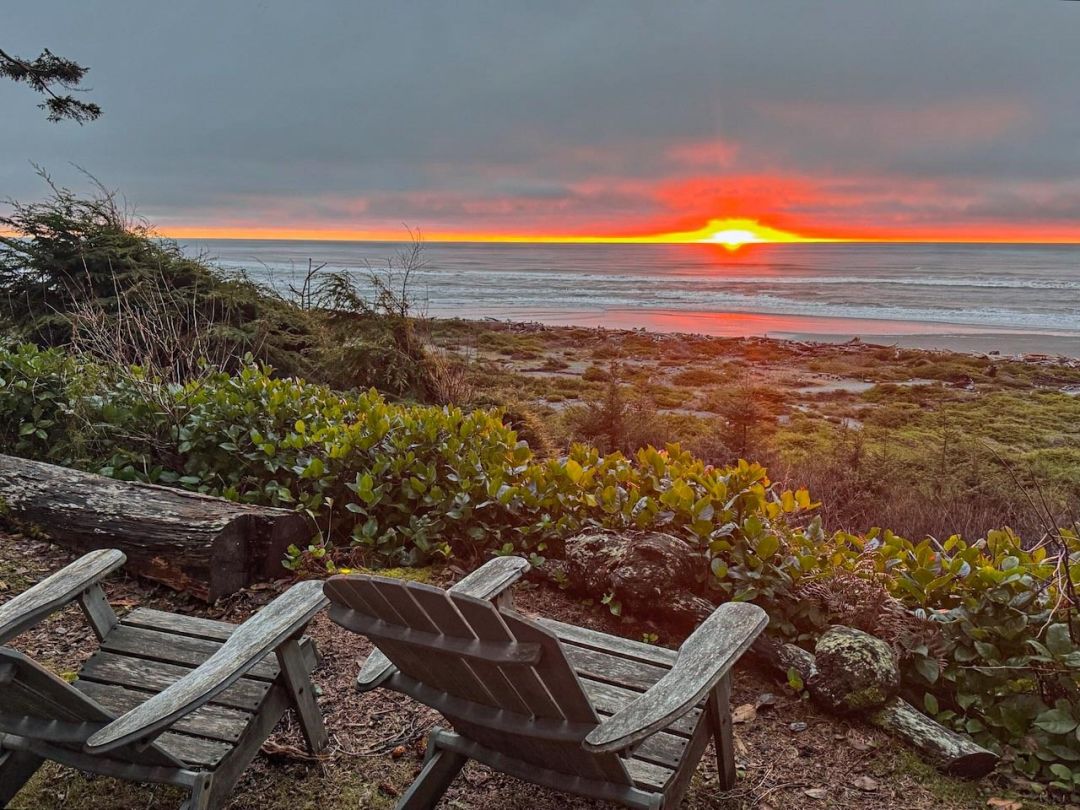
Image: Courtesy Adam Simon
A five-minute drive north, Kalaloch Lodge attracts tourists year-round, even in the wet, cold winter. At low tide, crowds form around the internet-famous Tree of Life, a Sitka spruce balanced over a grotto in the sandstone, its roots suspended in midair. A few miles north, Ruby Beach’s parking lot fills as tourists take pictures of its dramatic sea stacks. Try to go to the emerald green Hoh Rain Forest, an hour inland, or the snow-dusted peaks of Hurricane Ridge, across Olympic National Park, and you may wait hours just to get in. In 2024, Olympic was the US’s eighth-most visited national park, and traffic can be congested in popular tourist spots. Lodges and hotel reservations in nearby Port Angeles disappear quickly in the summer.
That’s not to say you can’t find serenity on the Olympic Peninsula—you’ll just have to work for it. No roads cross the interior of the park; they reach tendrils in from the sides, dead-ending at trailheads for hikers and backpackers. Much of the peninsula remains wild. If you’re willing to bounce down a loose gravel road, you can find some tucked-away car campsites, but don’t expect to pop into a general store for firewood or snacks. At the national park’s more accessible, developed campgrounds near noteworthy landmarks, like Fairholme on Lake Crescent or Hoh Rain Forest Campground, reservations are required during the peak season. Available six months in advance, they disappear soon after they’re released on recreation.gov.
To accommodate the masses, privately owned campgrounds have emerged around the peninsula, just outside the boundaries of the park: The five-acre Shangri La Push, the seven-spot Hoh River Campsites near a bend in the eponymous waterway, the whopping 102-acre Weekend Warriors campground near Port Angeles. Most advertise on sites like HipCamp, a private campsite booking platform founded in 2013 that’s ridden a pandemic boom. Its user base grew by 450 percent between 2019 and 2022, and it added 250,000 campsites in 2025.
Meanwhile, Japanese camp gear brand Snow Peak and glamping chains like Under Canvas have expanded their footprints in Washington, with new campgrounds in Long Beach and White Salmon, respectively. While Olympic Peninsula spots tend to play up their seclusion, these properties emphasize amenities. Snow Peak Campfield sites sit close together in a field, kitted out with the company’s $2,000 tents and $500 high-tension cots; campers roast s’mores after a visit to the bathhouse and a sweat in the hinoki cypress sauna. At Under Canvas, tents have king-size beds and flush toilets and gas fireplaces, and guests begin the day with morning yoga sessions and traipse to the lodge tent for dinners of wild king salmon and steaks marinated in red wine and miso.
Janice Wilson, an avid camper, once stayed with her husband, Mark Zawistoski, at a glampsite near the Smoky Mountains, along the Tennessee–North Carolina border. The property had tents packed into close quarters, plus bathrooms with pull-chain showers and on-site communal dining. She wasn’t into it. “The land was completely [shorn] of vegetation,” she says. “When you looked outside the tent, you saw a sea of white canvas.”
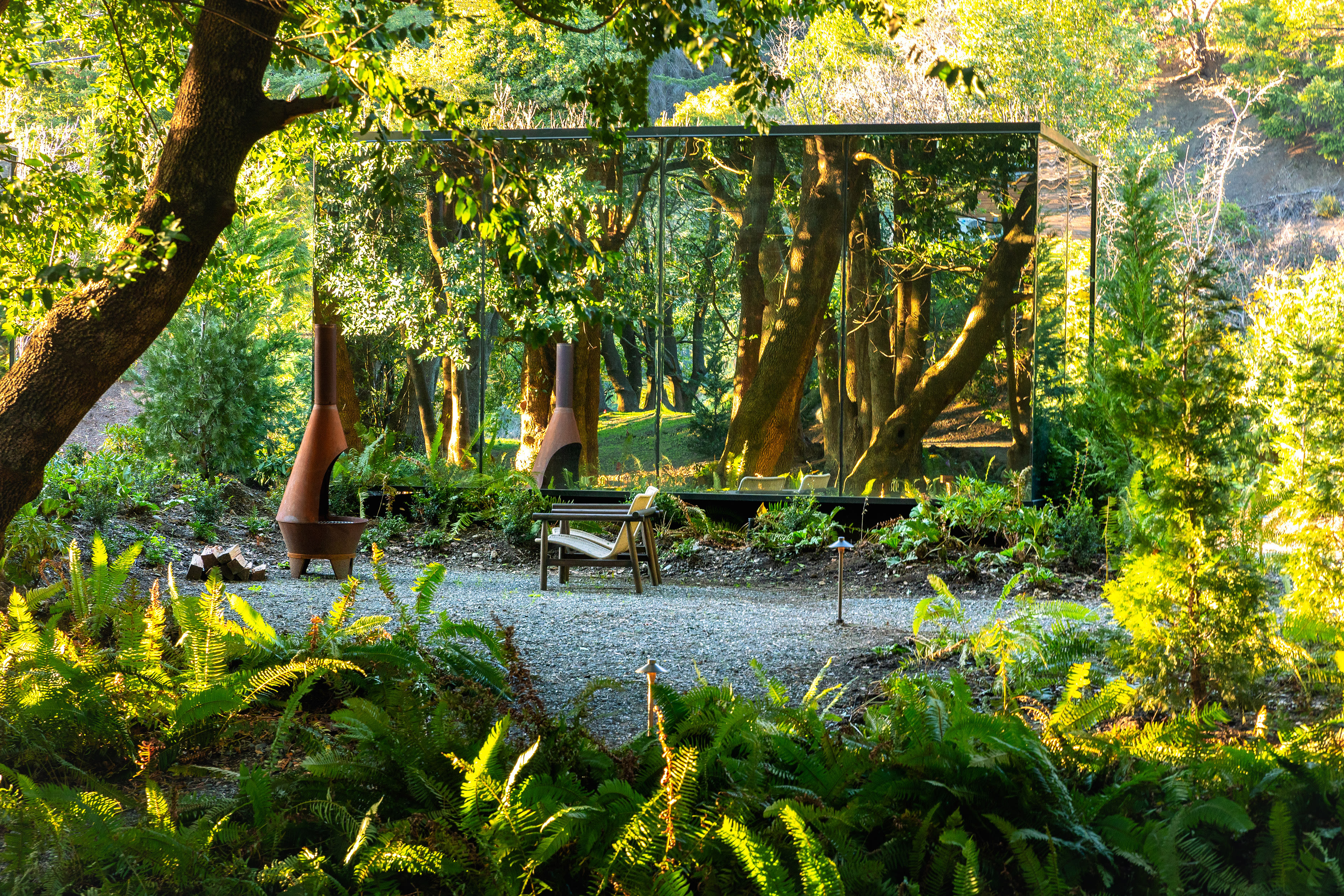
The couple’s courtship involved lots of backpacking and dispersed camping, and they were used to rolling out sleeping bags in rugged corners of the wilderness (though, Wilson says, “the toilet situation has always been problematic for me”). They started scheming: What would their ultimate campsite look like? It would need its own bathroom, Wilson insisted. But also a view—maybe on the Olympic Peninsula, an area Zawistoski had frequented for years. It’d be adults-only and private, designed for couples or solo travelers. “We got more and more buck wild with it,” she says. “First it was a proper bathroom, then it was a proper bathroom with a sauna overlooking a body of water.”

They bought 10 acres of land near Joyce, Washington, on the north side of the peninsula, for $375,000, to build Menizei, a luxury campground with only three sites. They designed their own blackout tents, meant to keep the sunlight out so visitors can sleep in undisturbed. They hired Seattle architecture and design firm GO’C (which designed the earthy-sleek tasting room and winery of COR Cellars in the Columbia River Gorge) to conjure up the bathhouse, with heated floors and a bidet, and the private saunas, with windows that stare out over the Salish Sea. And there are at least 200 feet between each site. In the summers, many weekends are minimum two-night stays, at more than $700 per night.
“That makes it far more expensive than any other campsite in the area, right?” I ask. “So….”
“How do I sleep at night?” Wilson says with a laugh. She and Zawistoski are not rich, she says; they’re still working full-time jobs in tech and real estate. They funded their campsites with the help of an Indiegogo campaign. But schlepping king-size beds and sauna-building materials to a cliffside over the Strait of Juan de Fuca isn’t cheap. Neither is space. “There is a big infrastructure cost to have those tents 200 feet apart,” Wilson says. “You know you’re going to pay a certain premium for a certain number of feet.”

Image: Courtesy Menizei
This is Menizei’s first true season; it opened to backers over the past two years. Based on feedback and the number of repeat visits, the owners are hopeful. More than offering a campsite for lake-splashing and family weenie roasts, Menizei is meant to be, in Wilson’s words, a “forest cocoon.” Their site is close to Lake Crescent and Salt Creek—two major draws to the peninsula—but most visitors have spent their entire stays on-site. “There is this need to get off-grid, off of the doomscrolling,” she says. “In general, grown folk are tired of performance, the ‘Hey, snap a picture of me.’ They’re after genuine intimacy.”
On another recent visit, I drive from the oft-photographed landmarks
of the area—Rialto Beach, Ruby Beach—south, along the coast. I pass the Tree of Life, Kalaloch Lodge, and Aliya Preserve, down to the edge of the Quinault Reservation. Down here, resorts and lodges are scarce. So are gas stations, houses, and general stores.

Image: Courtesy Menizei
I follow 101 inland and detour to Lake Quinault, on the border of the park and the reservation. A few rustic lodges and vacation rentals circle the lake, notably the historic Lake Quinault Lodge, built in 1926, and Lochaerie Resort, with its charmingly creaky lakefront cabins sporting fireplaces, retro wood paneling, and quilt-draped double beds. (“We make NO secret that the cabins are old” the latter’s website warns. “If you feel like you might be the kind of person to call us after you check-in and complain…this is definitely not the right place for you.”) The gas station is closed when I drive up, midday on a January Friday. I make eye contact with a man in a rusted 1970s pickup truck pulled up to the pump next to me, who signals the gas station’s closure with a pantomimed slit of his neck.
About a year ago, the road I’m driving, Quinault South Shore Road, suffered a washout that is still only partially repaired; the county government says it doesn’t have the money to fix it. “It’s just beyond our capacity to do that without federal help,” Jefferson County commissioner Greg Brotherton told SFGate in October 2025. “It’s been tough with the new administration and also a lot of turnover at the Washington State Department of Transportation. Both the state and federal funding sources have kind of dried up.” Tourism, one of the county’s only forms of revenue, has suffered as a result.
But you can still access the lake, glassy and serene; you can still walk to the world’s largest Sitka spruce and press your hand on the 1,000-year-old trunk, cool to the touch. I pull into the mostly empty parking lot at Quinault Rainforest, just as emerald green and mossy as Hoh to the north. I walk the fern-lined trail and listen to the static of Willaby Creek. There’s more trail ahead, but I crouch to check out an ochre-capped mushroom, growing out of the roots of a fallen tree. I’m alone, and there’s plenty of room to marvel.