We Took the Bus to the Oregon State Fair in Salem

Image: Courtesy Oregon State Fair
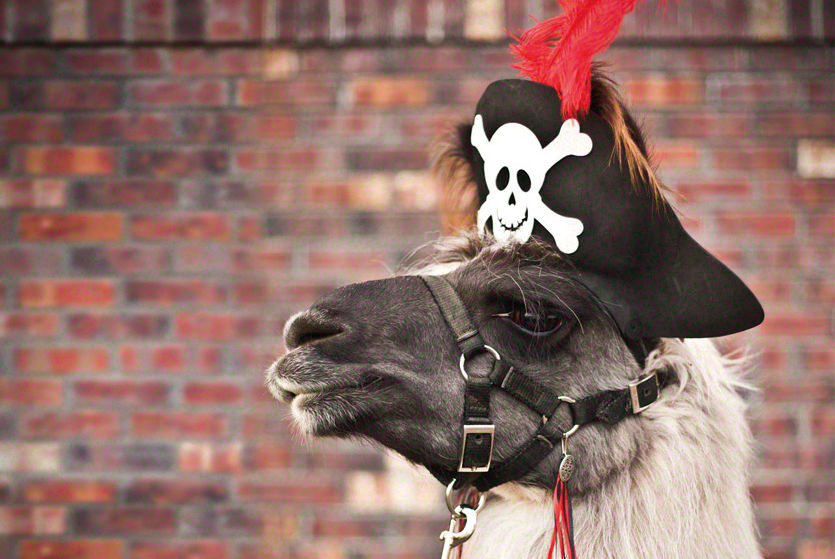
“My biggest concern is scrotal development.” The voice comes from behind me, while I’m watching a teenage girl coax a llama through an obstacle course involving pink flamingos and a tinsel curtain. I’m too riveted to the llama—who has to walk backwards, get in and out of a trailer, and then duck under an inflated archway/sprinkler—to turn around in time to see the underdeveloped scrotum in question in the cattle judging that’s happening on the other side of the fence. But the Oregon State Fair judge’s words have stayed with me, popping into my head as I read the news and find myself wishing certain people would, you know, grow some balls.

Image: Courtesy Oregon State Fair
In the Livestock Pavilion a few hours earlier, I encountered another highly quotable judge, who described one sheep contestant as having “a nice broody body…that can go lay down and have lambs.” Looking at another, he said, “As we move in on top of her, I’d like to open the two corners of her hip up.” He ranked a dozen neatly shorn lambs as “Freebird” played on the pavilion PA, the anticipation building as the song sped up and the field narrowed to the final five.

Image: Courtesy Oregon State Fair
For cityfolk like me, the state fair is a window into another world, one with sick FFA (Future Farmers of America) corduroy jackets and belt buckles, draft horse shows, a champion New Zealand rabbit named Furlicious, and ice cream served by a Columbia County Dairy Princess. There are also carnival rides, each one with its own competing sound system blasting a different dance remix, a rather disappointing beer selection (all Anheuser-Busch InBev? In Oregon?), and lots and lots of fried food.

Image: Margaret Seiler
For $12 admission ($10 for ages 6–12, $3 for age 65 and up, and free for age 5 and under), a fairgoer can play Pong outside the Stranger Things attraction, get recruited by the US Army, pose for pictures with an anthropomorphic sunflower or a stilt-walking Lady Liberty, load up on swag from the Oregon Department of Fish and Wildlife, hear a band at a rooftop bar follow a cover of “Choosing Texas” with a mashup of “You Can Call Me Al” and Smash Mouth’s “All Star,” meet a corn snake and a Madagascar hissing cockroach, enjoy multiple massage chair demonstrations, and answer two questions to learn whether they’re going to heaven. But that’s only if they can tear themselves away from the drama that seems to be constantly unfolding in the Livestock Pavilion, Historic Poultry Building, 4-H/FFA Barn, Historic Horse Stadium, and Beef Barn.

Image: Margaret Seiler
After jotting down several more judges’ comments that have serious romance-novel potential, thanking one animal tender for including a “Daily Dose of Dolly” on her whiteboard, and then spending a great deal of time next to a pigpen in awe of Daisy B, a Berkshire cross sow nursing her own 12 piglets plus three adoptees, I am eventually able to tear myself away. For $60 ($70 on weekends), I could get a ride bracelet for the day, but the bracelet doesn’t work on the ride I most want to take: the Fairlift. Essentially a ski lift with no hill, the two-seat chairlift ($7 one-way, $10 round-trip) takes riders over the midway to get the lay of the land. From above I spy dueling corn dog stands (after some research, I think I prefer the freshly hand-dipped Fat Schlags to West Coast Weenies), a pool with giant turtles, a person in an inflatable duck costume (maybe they were heading for a poultry competition), a petting zoo, a free concert stage in addition to the adjacent amphitheater, a Wahlburger in the distance, and a few rides I might take.

Image: Margaret Seiler
Never a fan of parking at giant events, I took the bus to the Salem fairgrounds, getting a ticket on Amtrak’s website for the Oregon Point bus from Union Station and then connecting to a Cherriots local route. At $10 each way for the Point and $1.60 for Cherriots, it was cheaper than driving for a solo traveler (and no need to pay $5 to park at the fair, or $10 on weekends and holidays). Since the fairgrounds is on the north side of Salem, though, it’s not a very efficient route. The Amtrak station is just south of downtown Salem, so my ride on Cherriots was all doubling back. Fellow Portland Monthly editor Rebecca Jacobson, who also claimed a press pass for the day and also left Portland at 10am, has already been at the fair for nearly an hour by the time we meet up. That evening, after I catch a Cherriots no. 3 bus to downtown and then connect to an 8 to the train station, my northbound Point bus passes right by the fairgrounds but has no stop there. A tease!

Image: Margaret Seiler
Two days later, I bring my daughter and a friend to the fair, and we drive. Parking (which could have been free if I’d made a purchase at a Wilco store and gotten a pass there) is smooth and well organized, and I’m a little disappointed that we’re so close to an entrance that we don’t get to ride the cute shuttle that circulates through the lots. We enter near the Livestock Pavilion, so I take the kids to meet Daisy B. The sign above her has been changed to note that she is now nursing only 11 piglets plus three adoptees, offering a quick lesson in farm life.
I hadn’t been to the Oregon State Fair in 22 years, and my chief memory from that earlier visit was not the animals but the next-level nitpicking of the judges in the table setting competition, which I mentioned in a 2004 Willamette Week. (A current WW staffer found a juicy story at this year’s table setting competition, too.) The bar is as high as ever, it seems, though this time there are at least some encouraging comments—claiming the judges “would be happy to eat at this table,” for example, before they launch into the lack of a bread plate, a tumbler with no corresponding menu item, or incorrect utensil placement.

Image: Courtesy Margaret Seiler
The table settings are on display in the Creative Living building, where fairgoers can also admire quilts, pies, cookies, felted articles (including a stunning Dude from The Big Lebowski, wearing his Pendleton sweater and sitting on a felted orange bowling alley bench), very decorated dollhouses, and 3D pop-up greeting cards. At an Oregon authors table, I meet William Sullivan, who’s written so many Northwest hiking books that I sometimes forget he’s a real person and not the name of an outdoors publishing house. The Creative Living building also houses an amateur radio info table, Lego displays, and a cribbage tournament.
Another building just to the north, past the fair’s food cart food court (where the lines tend to be shorter and the prices often cheaper than at the midway stands), is filled with a similar artistic and culinary output, only the work here is all done by kids in 4-H. Knot displays, fishing lures, flower arrangements, decorated cakes, original art (including a Dolly Parton portrait—such timing!), woodworking items, baked goods, sewing projects, and more.

Image: Courtesy Oregon State Fair
Between the two arts-and-crafts halls is a smaller building packed with scarecrows (including one dressed to look like Weird Al Yankovic, who plays in the amphitheater on Labor Day), beekeeping exhibits, prize flowers, and produce judged in categories ranging from Biggest Fruit–Tomato to Nature’s Oddities–Most Misshapen.
I’m relieved these phrases are nowhere near the Livestock Pavilion, where the judges’ awards go to the FFA members who have raised sheep, cattle, pigs, or goats that most exemplify their breed. Maybe someday I’ll submit something for judging. I have no agricultural experience (nor do my children—Multnomah County’s relationship with 4-H programs is best described as on-again, off-again, but mostly off) and I can’t make a Dude out of wool, but I do bake a mean apple pie. Can I work up the nerve to enter, though? What if I get dressed down by a table setting–caliber judge? Maybe my biggest concern, too, is scrotal development.