45 Years of Elizabeth Leach Gallery
You’re reading a past edition of our weekly Things to Do column, about the concerts, art shows, comedy sets, movies, readings, and plays we’re attending each week. Read the current installment. Sign up to receive it in your inbox.
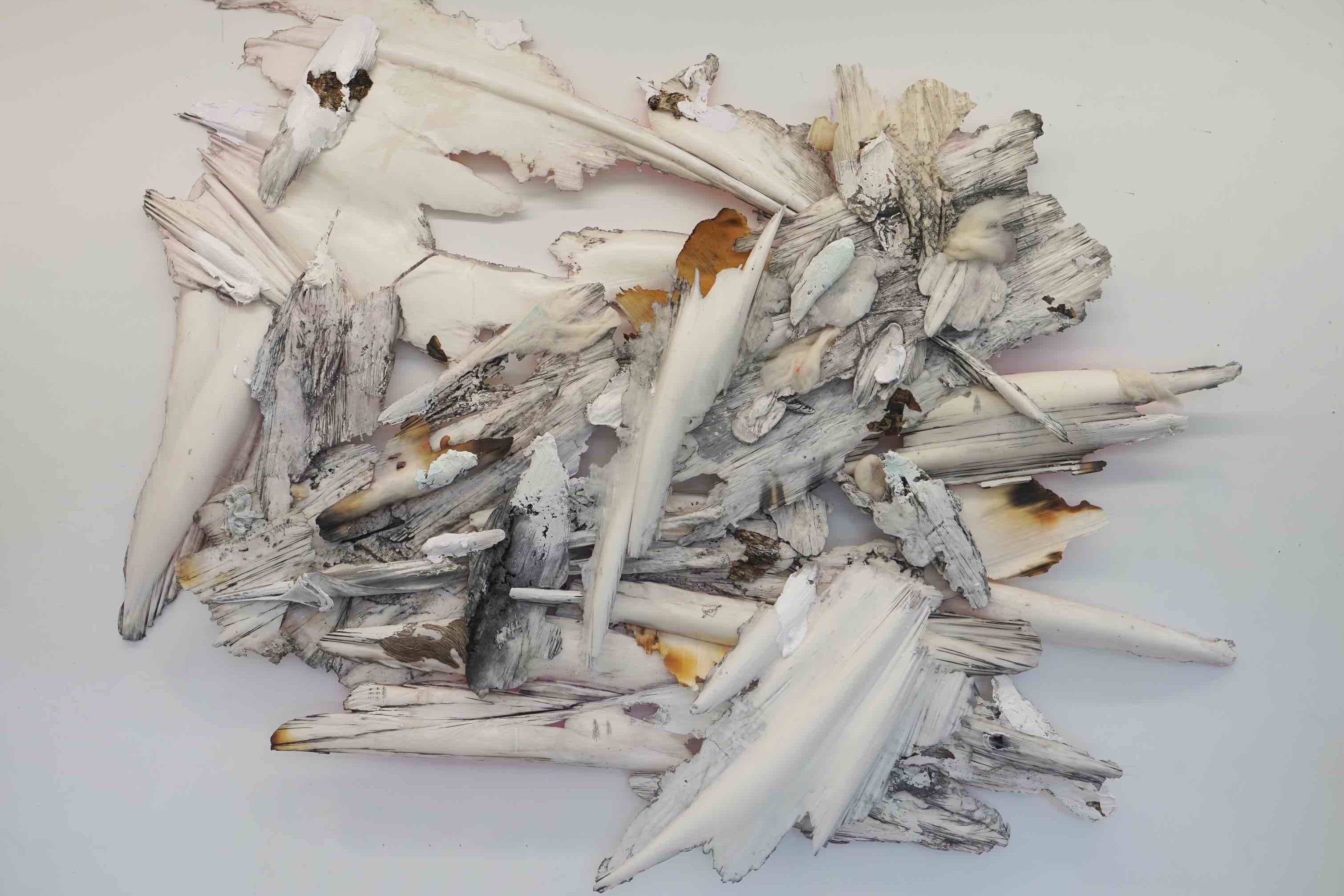
For years I’ve imagined that the perfect Peter Gronquist artwork would be nothing at all. He once hung a metallic sheet across a canyon to catch the wind. Another work is a neon line drawn across a mirrored billboard. One of the Portland artist’s “line drawing” sculptures—a lively bronze squiggle the size of a large ship anchor—is currently on display at the Portland Art Museum. Each is an attempt to greedily feast on a slice of time itself frozen in amber. Ironic, then, that Gronquist’s work might involve the most intervention of the five artists featured in Sculpted Light, a show at Elizabeth Leach Gallery (through February 26, free) that stems from the 1970s Light and Space artistic movement. Featuring work by Dan Flavin, Fabiola Menchelli, Gregg Renfrow, and Hap Tivey alongside Gronquist’s, the show also marks the gallery’s 45th birthday.
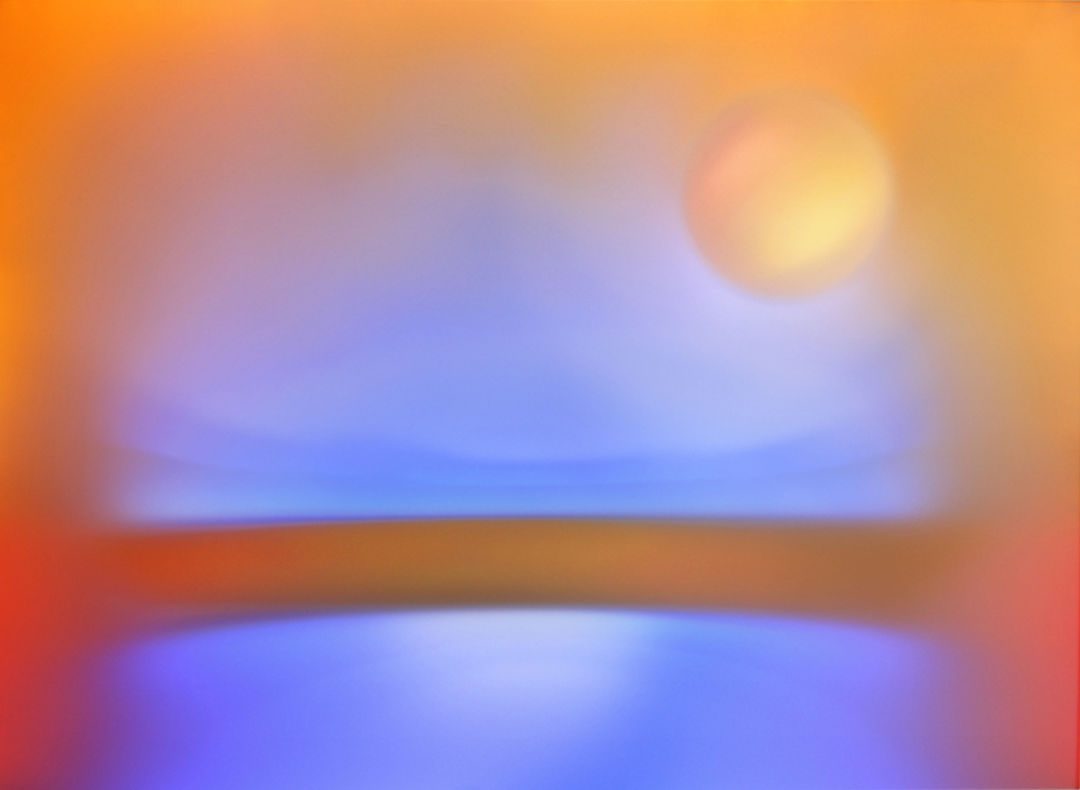
Light and Space was a progressive branch of minimalism, started in Southern California, that pushed minimalism’s emphasis on the viewer’s experience into the stratosphere. Often this involved architecture and immersive installations, past the bounds of a frame. But Light and Space artists (James Turrell is perhaps the biggest associated name) were also subtle in their awesomeness. Instead of ostentatiously bouncing off the walls, they bathed them in ultraviolet and neon hues, mimicking surreal phenomena like the rainbow in a pool of spilled oil—replicating the impossible things we see every day, as Gronquist does, so we might savor them. “It was like going to Minimalist heaven,” Michael Auping recently wrote in Gagosian Quarterly.
Elizabeth Leach, no doubt the matriarch of Portland’s contemporary art scene, has been interested in the movement since at least 1981. She included Tivey in one of her namesake gallery’s earliest shows; seeing his work again here gives a nice full-circle feeling to the anniversary show. Tivey is another big name associated with Light and Space. He collaborated with Turrell and Robert Irwin on producing something called the Ganzfeld effect—a kind of sensory deprivation that lets the viewer’s mind, freed of any distraction or outside stimulation, wander in a way that’s virtually impossible in the natural world (a recent Tivey show bore the title Perception Is the Medium). Tivey’s trick is to modulate the effect through shifting light projections—a kind of pinch jolting you out of your own head, reminding you that you’re being manipulated, that the artwork you’ve melted into does in fact exist.
More things to do this week
THEATER The Play That Goes Wrong
THRU FEB 15 | PORTLAND CENTER STAGE, $25–98
The Play That Goes Wrong is not so much a doomed production but a play about a play that goes wrong. The play that does go wrong, if the one you’re attending goes right, is an Agatha Christie–ish spoof called The Murder at Haversham Manor: 1920s, big old house, an inspector named Bean. The Cornley Polytechnic Drama Society, an amateur company (and a name playwrights Henry Lewis, Jonathan Sayer, and Henry Shields, who won an Olivier for The Play That Goes Wrong in 2015, have used outside the play), fumble through missed lines, malfunctioning props, and an overambitious set technician as the comedy tears itself apart. This local run is a coproduction with Seattle Rep directed by its artistic director, Dámaso Rodríguez, who was formerly artistic director of Portland’s Artists Repertory Theatre. If all goes right, er, wrong, the whole set should collapse by curtain call.
BOOKS Natan Last
7PM FRI, JAN 23 | POWELL’S CITY OF BOOKS, FREE
All media presents itself as a cultural spider web, a mirror whose job is to reflect only the stickiest and juiciest things that fly into it. In Across the Universe, longtime New Yorker crossword contributor Natan Last argues that crossword puzzles are rife with the same bias as conventional news sources—and that they hold the same sway. The medium’s newfound audience (younger and more diverse, they came during the pandemic and haven’t left) is changing what constitutes common trivia by asking, Common knowledge for whom? In conversation with Portland novelist Justin Taylor (Reboot), Last will chat about the book’s scope, from the easy way word games can infiltrate your subconscious to the potential he sees in them for effecting change—per the title—across the world.
MUSIC Typhoon
7PM FRI & SAT JAN 23 & 24 | REVOLUTION HALL, $35+
In the show notes for this pair of anniversary dates, the famously big Portland band recalls playing “murder ballads and Gregorian chants and sea shanties” at the Clinton Street Theater as teens in 2005. After countless house shows and a record with Portland’s Tender Loving Empire, they were on Letterman by 2011. Black Belt Eagle Scout opens the Friday show, and Lost Lander opens Saturday.
Elsewhere...
- A 2010 throwback episode of Oregon Art Beat about Portland artist Marie Watt, a Turtle Clan of the Seneca Nation of Indians member, and her blanket sculptures just went on YouTube.. (OPB)
- Experience Theatre Project’s Macbeth X Radiohead mashup, and the company’s “new locale in back of a feed store hidden behind downmarket mini malls.” (Willamette Week)