Umico Niwa Is Mother
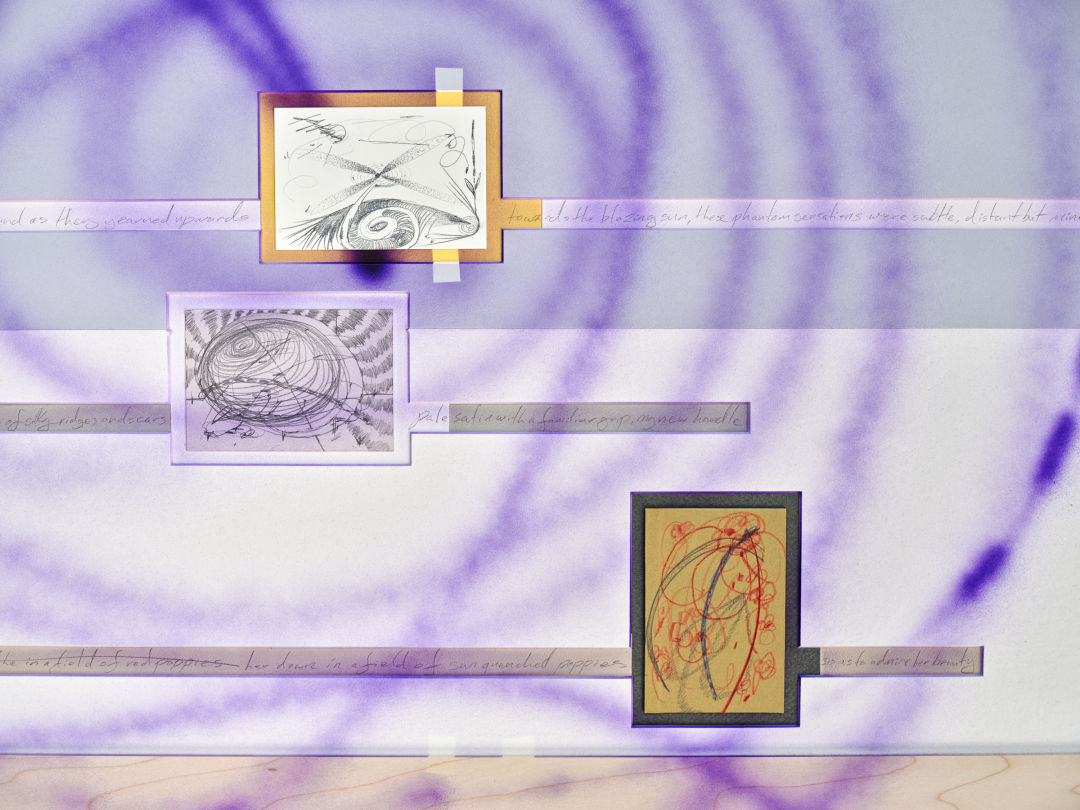
Image: Aaron Wessling/Courtesy ILY2
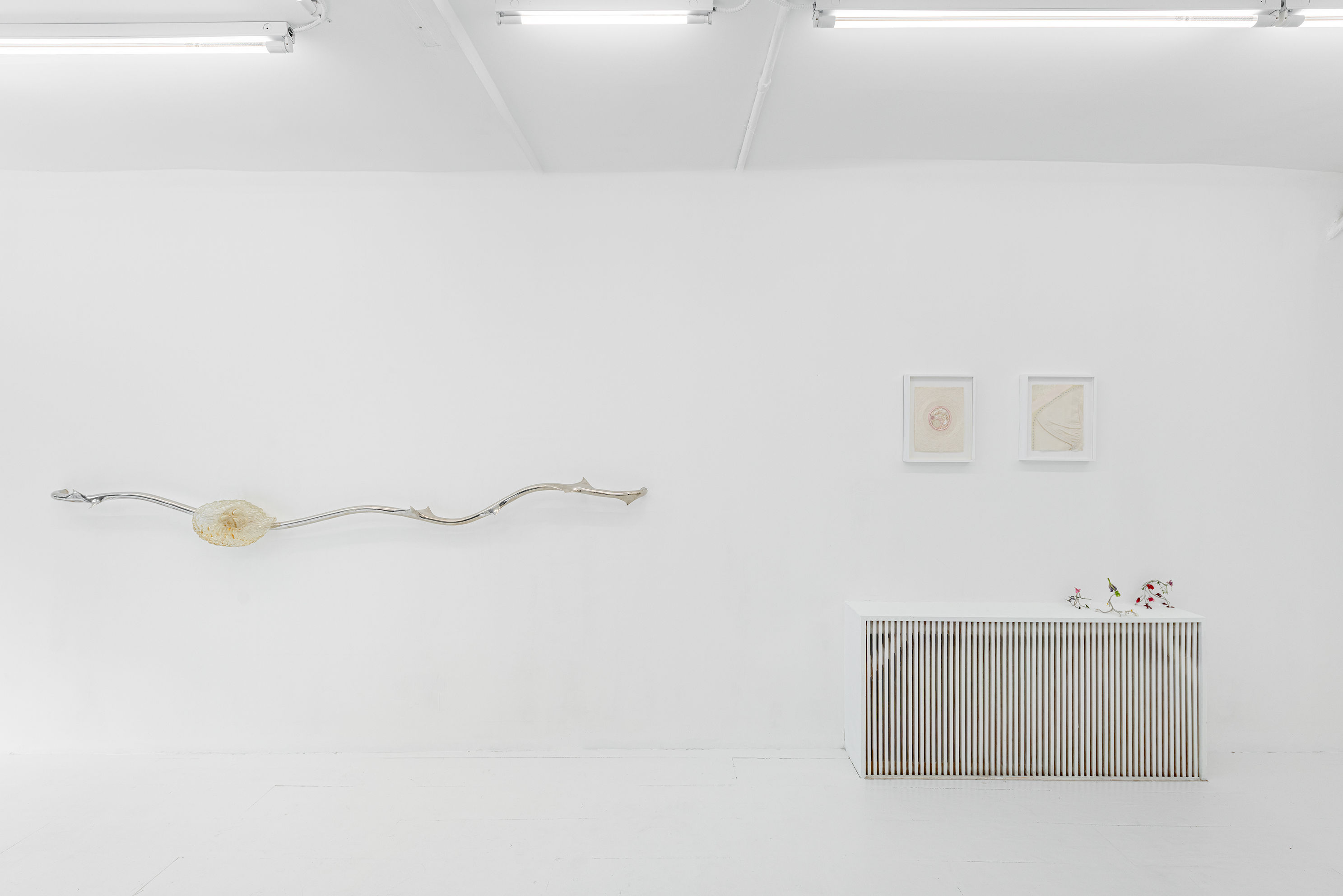
Several years ago, while installing a show at the New York gallery Someday, the artist Umico Niwa underestimated the life still within her materials. She had trimmed various plants, selecting flowers and leaves to adorn extraordinarily elegant twigs she’d cast in pewter, which transformed the silvery sticks into figures. These Daphnes, as Niwa calls the botanical creatures, look sentient-ish—somewhere between a gleefully anthropomorphized cartoon plant and a hermit crab that’s adopted a conveniently shaped piece of ocean trash as a body part. But Niwa’s own garbage, the stems, played a similar trick on the artist. Forgotten overnight, the stems had bent and stretched out toward the light, continuing with their own biological imperative.
A similar pile of flower stems hides behind a faux wall in Niwa’s current show at the Portland gallery ILY2 (through July 3). Niwa, who was born in Japan and works between there and the US, told me the above story at the opening earlier this month. Then she told me about hiding cherry tomatoes atop the gallery’s track lights and high up on its windowsills, as well as in the ceiling panels and HVAC vents. (“I don’t think they care,” Niwa said of the folks who run the gallery; she hadn’t asked.) More little tomatoes were spilled across the ground. Several had been smooshed underfoot. Niwa said she liked the way accidentally crushing one implicated the viewer, jolting them into the installation.

Image: Aaron Wessling/Courtesy ILY2
We looked around to see who’d stomped them, and all of a sudden I was implicated, in on the prank. “It’s kind of mischievous,” Niwa said. It was. Lifting the overripe yellow heirloom, which, serving as a paperweight, sagged like a water balloon over a stack of programs on the floor, made for a similar am-I-touching-the-art? initiation. As did avoiding the sprays of paint tracking across the floor, which crawled up the walls and over the framed drawings that are, technically, the artworks on display here (more on those in a moment).
“When this place goes out of business,” Niwa told me, “or the building gets torn down, these might still be here.” The tomato seeds could grow from the rubble.
This tone—of prankish antics that disarm and then, once they’ve snared you, turn profound—is Niwa’s general artistic mode. This show’s title alone walks you through the whole daffy progression: the disappearance of my testicles, and other such mysteries regarding motherhood.
These such mysteries play out in a series of grouped drawings. They’re all titled motherhood, and a drawn scythe, and differentiated as chapters: one through seven. Each chapter is a long, horizontally oriented frame holding what are essentially comic strips of journal entries sectioned by elaborate matting, with panels illustrating running handwritten text.

Image: Aaron Wessling/Courtesy ILY2
chapter one goes like this. Before undergoing gender-affirming surgery about a decade ago, Niwa writes, she was asked by her mother “if i wanted to save my seed.” She declined, but the phrase inspired a year of vivid dreams about seeds taking root, which impelled her to visit the landfill where her testicles were buried. There, the story continues, she found “a winding tree, cloudbound, grasping at the heavens above with the tips of its branches outstretched.” Like a severed flower stem or a hidden tomato, her “seed” had continued its mission. “these phantom sensations were subtle,” she writes, “distant but mine.”
In Niwa’s previous show, in New York, the nymphish Daphnes were presented as an example of poesis, or the concept of bringing something into being by means other than procreation. Artists speak of their work as offspring all the time. But Niwa had extended the metaphor as a comment on the ways queer and trans people are precluded from normative paths to having children. “Teeming with life,” the gallery statement read, “Niwa’s creations posit Poesis to be the primary ‘maternal wellspring,’ rather than biological reproduction.”
The stems, and then testicles, said something else. Nobody asked them to keep on living, no artistic intervention made it happen. Seeking light, and therefore life, was a reflex, muscle memory. Both reinforced a feeling Niwa can’t seem to shake. “I am afflicted with a constant low-grade baby fever,” she writes in an introduction to this Portland show. Under that one big tomato, which is surely rotten by now, on the back of the zine-like program, Niwa writes that “there is a sadness in my heart, and no amount of fantastical storytelling as to the role of the artist as the source of creation—mother supreme—truly fills my heart compared to when i hold my niece in my arms.”

Image: Aaron Wessling/Courtesy ILY2
Several chapters articulate these moments of caring for another as a salve. Making art is not the same thing as rearing a child. But, after wading through all the show’s charmed hijinks, I’m moved by the sentiment that a body’s ability to make a person is not a prerequisite for authentic mothering.
I can’t remember feeling as strongly that the physical, saleable, shelf-stable objects of an art show were merely one piece of the larger thing. As if to prove that point, Niwa has “entombed” two of the chapters, mounting the drawings and writings facing inward. All you see is the verso, a matrix of neatly taped secrets; some are marked with a faint spray of paint to expose any tampering. In the show notes, she specifies they should remain sealed until she dies. It seems more likely that the artworks will sprout limbs and go on to flower.