Just Sell It: How Nike and Wieden+Kennedy Changed Advertising

Image: Portland Monthly composite
In what reads like a Portland version of Mad Men, which premiered two years later, this story by Sean Elder from 2005 tracks the partnership between a sneaker company and the local ad firm that helped make it cool. It also captures a time when the sports world was largely a boys’ club, “famous athlete” pretty much always meant a man, and women weren’t generally represented in media depictions of fandom.
It’s January 19, 2003, and football fans in sports bars all across the United States are busy knocking back a few cold ones, inhaling baskets of hot wings, hurling invective at the television screen. But during a commercial break from the NFC championship game between Tampa Bay and Philadelphia, that screen unexpectedly switches to another football game in progress—this time a British one.
As a shot on goal is deflected into the stands, a naked man, wearing naught but a scarf and a pair of running shoes, rushes onto the field, pursued by bobbies. With a pair of droll announcers doing play-by-play (“So far he’s given the police nothing but a good look at his backside”; “I do hope he’s not headed for the royal box”), the streaker turns cartwheels, his privates digitally blurred, all the while staying one step ahead of his pursuers.
“I think he’s got the shoes to thank,” one of the announcers says, providing viewers the first clue as to what they are seeing. Then comes the motto, “More Go,” followed by the brand name—Nike Shox—and the Swoosh. When the ad ends, laughter and cheers erupt throughout the bars, punctuated by a cacophony of cell phone ring tones. And it’s certainly not about the football game.
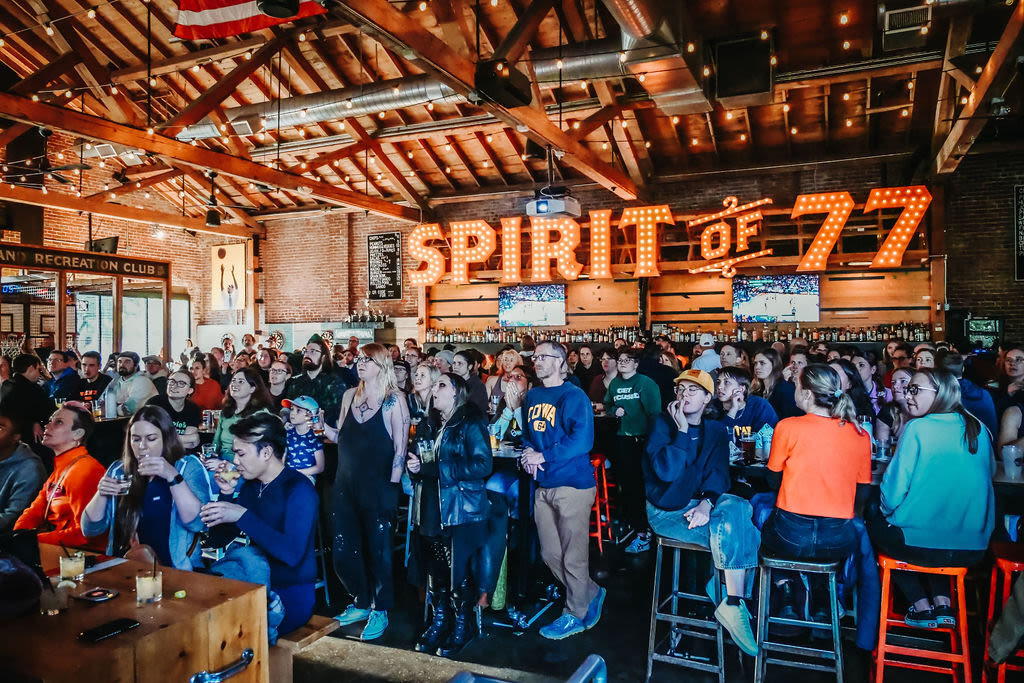
That afternoon, members of the creative team at Wieden+Kennedy that produced the ad for Nike were hitting the bars in force, gauging audience reaction. For them, it’s an instant high to “see the visceral reaction to one of your commercials,” says Hal Curtis, Wieden’s creative director for the project. “The Swoosh goes up on the screen, and people in the bar shout, then the phones ring” with congratulations from colleagues, friends and family.
That’s the first inkling the ad has been a hit. The second comes when the shoes start walking. Shox sales spiked immediately, with over 400,000 pairs leaving stores within days of the initial airing of “The Streaker.”
It was yet another victory for the winning 23-year-old partnership of Nike and W+K, which has revolutionized how the ad world approaches sports marketing and has had a profound impact on the overall vocabulary of advertisting. The collaboration is grounded in economic science, but it thrives because of an infusion of mystery, creativity, mutual respect and intuition—plus the courage to try something a little bit off-message.
In advertising, it all begins with The Brief: a piece of paper, or many pieces of paper, on which clients list the objectives and challenges of the campaign they’re seeking. What are the selling points? What makes this shoe different from all other shoes? Should the message be funny or factual, inspirational or off-the-wall?
In this case, the intended message was “what the shoe does,” says Nike associate ad director Saga Shoffner. “Not just what it’s made of, but what you can get out of it.”
As Curtis recalls, “We wanted to make sure we were saying something with the actual technology and not just underlining a brand idea.”
Right there is the moment of creative mystery: translating concepts like objectives and challenges into memorable images (“scorched onto my retina,” as one of the announcers in “The Streaker” says). How do you go from a request for an ad that will sell people on the advanced shock-absorber technology of a sneaker and end up with a naked guy being chased by bobbies on a British soccer pitch? Inspired perhaps by British streaking legend Mark Roberts (who has been arrested nearly 300 times for exposing himself at soccer games, rugby matches and the like), project writer Jonathan Cude hit on just the thing. What if Nike’s sneakers couldn’t be caught?
Then he called Curtis into his office. Shoffner recalls the scene: "I think in one or two sentences Jonathan said, ‘We’re going to put Shox on a streaker at a soccer match, and he’s going to outrun everyone.’ Hal stood up, shook his hand and said, ‘Good job. Let’s go show it to the client.’”

Image: Portland Monthly composite
When Nike people and the W+K folk get together, the talk can take a slightly cultish turn. Both speak of The Brand as if it were the Holy Grail.
There’s no way of telling who works for which company, and it isn’t surprising, really; the two grew up together, started going steady 23 years ago and (aside from a trial separation in the late ’90s) have been yoked together since. It is one of advertising’s most notable long-term relationships, rivaling that of Chiat\Day and Apple, if not quite such legendary marriages as Leo Burnett and Kellogg’s (“They’re grrr-eat!”). Although, Nike ad director Nancy Monsarrat cautions, “We’re not always this friendly with each other.”
In the mid-’70s, long before Dan Wieden met David Kennedy, Wieden’s father, Duke, a local advertising legend, turned down the opportunity to hawk shoes for the homegrown sneaker company Phil Knight then called Blue Ribbon Sports. (He didn’t think the product showed promise.) Knight began to design his advertising in-house. In 1977, one such homemade ad ran in Runner’s World with the slogan, “There is no finish line.” It was ripped out of the magazine and tacked on runners’ walls across the country. The magazine had so many requests for the ad that it made up a poster to send to fans.
As the shoe company grew and changed its name to Nike, Wieden’s son Dan, as aspiring poet and screenwriter, met David Kennedy, an alumnus of Chicago’s established Hal Riney agency, at the Portland offices of powerhouse agency McCann-Erickson. After a tour at the nascent William Cain agency, where their creative copy caught the eye of Nike, they hung out their own shingle. In 1982, Wieden turned up at a Nike sales meeting in Sun Valley, Idaho, to ask for the business.
“I went there, and he was standing by the ice rink,” Wieden recalls. “Someone introduced me, and he said, “Hi, I’m Phil Knight, and I don’t believe in advertising.” Weiden figured this was going to take some doing. “So I said, ‘Would you like to see some pictures of my children?’”
The truth was that Wieden and his partner hated advertising almost as much as Knight did. That antipathy landed them the business—with lots of input from the client. Nike understood the mentality of the runner, its primary customer. And it shared that knowledge with W+K, pushing the agency to break whatever rules about ads it might have learned.
“I think it was Rob Strasser [Nike’s first marketing director] who pointed out to us, ‘These aren’t just customers; these are our buds,’” Wieden recalls. “‘We grew up with them, we went to school with them, we raced against these guys. We know these guys, so I don’t want to see any goddamn models. And I want them to talk in public like I would in the locker room and use words the public might not understand.’”
All of which was music to the young team’s ears. The agency helped establish the brand’s voice, using the Beatles’ “Revolution” and then “Instant Karma” in some early spots. They hired directors such as Spike Lee and Spike Jonze who were eager to work for Nike. Wieden in particular showed an affinity for the brand’s flinty sort of existentialism. It was he who coined the company’s credo, “Just Do It,” though the sentiment had been heard in Nike meetings for ages.
Like Knight, W+K knew that not everyone would get what they were doing. The “Search and Destroy” ad they made for the 1996 Summer Olympics included a shot of a runner upchucking—not something America necessarily wanted to watch from the dinner table, but something real athletes, even amateurs, would understand.
This was a new approach. The Olympics are an advertising showcase for sports, booze and financial institutions. Widen says, “At the Olympics, all the banks’ ads were talking about this event as if it were a Julie Andrews moment and we’re going to hold hands and sing on the mountaintop,” says Wieden. “There is that aspect to it. But from an athlete’s point of vier, just before that gun goes off, suddenly sports is war minus the killing.”
Sports advertising came of age in the early 20th century along with advertising itself. That was when the profession evolved beyond drummers and nostrums to the art of actually creating an identity for a product—even adding value that wasn’t actually there.
In 1905 Honus Wagner, the “Flying Dutchman” of the Pittsburgh Pirates, allowed his signature to be burned into a Louisville Slugger—the first use of a signature endorsement in American advertising. Later bats carried the signatures of Babe Ruth and Ty Cobb. For fans of the game and the titans who played it, the Louisville Slugger became like a piece of the true cross.
Wheaties began putting athletes on the cover of its cereal boxes over 70 years ago. The great athletes of the day, from Jimmie Foxx to Babe Didrikson, were soon gracing the orange-and-white boxes, and endorsements grew more significant.
Babe Ruth, the first sports celebrity to cross over into the mass market, signed on to promote the Baby Ruth bar. The candy was actually named for the daughter of former president Grover Cleveland, but it was the sweet’s associate with the Sultan of Swat that made it (as ads proclaimed) “the most popular candy in the world.” In short order, millions of ordinary Americans wanted to partake of what he partook of (though perhaps not in the same quantities).
The 1923 World Series, in which Ruth homered three times to help the Yankees bear the Giants, was the first to be broadcast via radio coast-to-coast. That innovation took sports out of the provincial domain and into the national. Advertising possibilities abounded, as companies began to see opportunities in things like the dead air between innings or even pitches (ideal for promoting soft drinks and beer). During the Depression and World War II, listening to games on the radio was still free, and the sporting battles had a powerfully positive impact on the national psyche. These were little wars, ones that could be won. Athletes became heroes. In times of crisis, a nation turned its lonely eyes to men like Joe DiMaggio for inspiration as well as entertainment.
The advertising industry, largely based in New York, flourished in the ’50s, with J. Walter Thompson and then McCann-Erickson passing more than $100 million in billings. The growth of television presented even more branding possibilities. Kraft Television Theater and Goodyear TV Playhouse made way for the Gillette Cavalcade of Sports.
Athletes were trotted out to endorse the most obvious of products, many stuff by and large: razors, hair goo, beer and, or course, cigarettes. “By the time TV came along it was already beginning to dawn on people that tobacco was bad for you,” says Roger Thompson of Syracuse University’s Center for the Study of Popular Television. “Having athletes pitch tobacco products would compensate: ‘Look, thee are heroes. Would they do something that was bad for them?’”
Come the ’60s, advertising—like the rest of the culture—rebelled against all things safe and approached its mission with irony. The New York agency Doyle Dane Bernbach embodied the new style in campaigns such as one for Volkswagen (“Think small”) that violated all the known rules of the business. Success came from a brand of humor that was decidedly more ethnic and informed by popular culture.
More and more sports figures were sprung from the advertising dugout. In a series of wacky ads for Braniff Airways, designed by New York-based Well, Rich & Greene, Andy Warhol and Sonny Liston were featured as frequent flying buddies. So were Whitey Ford and Salvador Dali.
The next step was trading on the athlete’s personal story, one free of teams and seasons. When Mullen/LHC put the beloved, game Jets quarterback Joe Namath in a pair of Hanes Beautymist pantyhose in 1974, the ad was sending messages not in the script: real men wear pantyhose (or might) and anything else they fancy, such as Namath’s trademark full-length fur coat. And it touched on Namath’s reputation as a womanizer (Hey! This guy knows something about pantyhose!).
In the mid-’70s, sports advertising went into a jokey mode. McCann-Erickson produced a memorable Miller Lite series in which retired athletes riffed off their one-dimensional reputations. Billy Martin was portrayed as a battler, Bubbe Smith fostered his rep as a bad-ass (“I even like the easy-opening can,” he says, shredding the container with his bare hands), and Bob Uecker gained fame for being not famous, a living butt of all baseball jokes.
By the early ’80s, clients were calling for advertising that was inspirational, transcendent. The major ad firm of that generation, Los Angeles-based Chiat\Day (now TBWA\Chiat\Day), launched its “1984” ad for Apple computers. Director Ridley Scott, then best known for Blade Runner, created the unforgettable image of a woman running past an anesthetized crowd to toss a hammer through the image of a droning Big Brother.
That became the most-talked-about Super Bowl spot ever, and it raised the bar for everyone in the business. Ads could be inspirational as well as aspirational, and cultural referents like Orwell’s 1984 could be used, even if they were not explained. (Plus, it became clear that some really cool directors were willing to make ads). Suddenly, the industry’s most creative work had moved away from New York and was all coming from the West Coast, with Chiat\Day’s “Jordan Flight” ad for Nike (“Who said man wasn’t made to fly?”)—and Wieden+Kennedy’s subsequent Jordan spots—setting the new tone.
“Look at all the great sports campaigns—Wheaties, Miller, Coke and Mean Joe Greene—these are all in-the-dirt campaigns,” says University of Florida professor of English and advertising James Twitchell, who includes the initial Nike-Jordan campaign (as well as “1984”) in his Twenty Ads That Shook the World. “But in that Nike campaign, that guy is soaring. It’s not ‘Just Do It,” it’s ‘Just Believe It.’”
Then spirituality gave way to cynicism on one foot, and reverence for athletic talent on the other. The earliest of the “Spike & Mike” series in 1989 featured director Spike Lee playing his She’s Gotta Have It character Mars Blackmon, who, after examining Jordan’s superhuman abilities, concluded, “It’s gotta be the shoes.” It was a referential aside to an audience that grew up being told Keds could make you run faster and jump higher, and it exhibited the same kind of promise as the Shox commercial. We can’t all be Michael Jordan, but we can have his shoes.
By the century’s turn, Nike’s partnership with W+K had launched sought-after alumni onto the national advertising stage.
In 2000 Eric Markgraf, a senior vice president at Fox Sports, and his boss, Neil Tiles, sought out Chuck McBride, the North American creative director for Chiat\Day in San Francisco. Markgraf had worked with McBride when they were at Nike and W+K, respectively. He didn’t care where McBride was working now. He just wanted the guy who’d presented the famous PB&J sandwich with the bite out of it for the “Got Milk?” campaign, and had overseen Tiger Woods’ “Hackysack” commercial. “In our business,” says Tiles, “it’s all about the individual.”
The mission was to brand the World Series as something belonging to Fox. “We wanted to invest in the World Series ownership because we had recently signed a deal to have successive World Series for six years,” says Tiles. They nailed it down to 24 days in October—division series to league championship to World Series. “We wanted to make that time special, and that’s the strategy we came to Chuck with,” says Markgraf.
The brief for the October campaign was, well, brief. The wanted the ad to be funny, they wanted it to be “Fox”—bold, irreverent—they wanted to salute the fan (not that they had much choice: early in the season there was no telling what teams would make the playoffs). And they wanted it soon.
Working with writer Eric King, creative director McBride began batting ideas around. They knew they wanted something “inside baseball,” with October as the code word.
What’s October like for baseball fans? In October, true baseball fans do not have time for their wives, their families—or their jobs. Quality control takes a hike. After several iterations Chiat\Day came up back to Fox with a pitch: A handyman unwraps a new nail gun—a gun with a mind of its own that begins firing random nails at the handyman’s wife, the dog, a passerby. Then comes the tagline. “Beware of things made in October,” followed by a shot of a guy on the nail gun assembly line, watching the Yankees score while the tool leaves his station a lethal weapon.
It was clean, it was classic, it saluted the fervid fan mentality without taking it too seriously. And it worked.
Fox liked that campaign so much they came back to TBWA\Chiat\Day to ask for a new series of spots to promote the network’s regional hockey coverage. What resulted was a series tagged “The more hockey you watch, the tougher you get.” Each ad featured a hapless hockey fan on successive days (Day 15, Day 47) as he bravely endures increasingly horrendous accidents. He takes a dart in the neck. His wife slams the door on his hand. He opens his car radiator and shakes the scalding water off like so much seltzer. He is impervious to pain. He is a Fox hockey fan.
The athletes, even the game itself, are almost an afterthought; where some of the earliest Nike/W+K successes tapped into the culture of the die-hard participant, the Fox spots extended the circle to the out-and-out fanatic. If you want to sell shoes, connect with the runners. If you want to sell TV programs, connect with the couch potatoes.
Since being told by Fox that they were “batting 1,000,” McBride has invoked one of sport’s noble superstitions. “I haven’t changed my underwear since that first spot,” he says.
Such success has its price. The wit escalates, the bar rises. “It’s hard when you do a basketball ad here,” says W+K account manager Thomas Harvey, “because you’re not just competing with Adidas or Reebok. You’re competing with all the great work that’s come out of here before.”
That great work includes the whole “Spike & Mike” series (Lee directed the last one when Jordan retired for real in 2004), the “Bo Knows” Bo Jackson series, Penny Hardaway and “Little Penny” (voiced by Chris Rock), the Barkley ads, the Tiger ads, the Olympics spots and hundreds of lesser-known (or less fondly remembers) advertisements that drew, in equal measure, on humor, sentiment and our shared culture.
Most of these ads were linked to great athletes, some of whom had pretty amazing stories. But W+K’s influences went beyond their treatment of Nike’s star endorsers (who were treated with equal parts irreverence and awe). By slipping in odd cultural referents, borrowing from Iggy Pop as well as The Barber of Seville, and allowing an ad’s tone to turn on a dime, W+K became the most influential ad agency, sports or no, of the last 20 years. The endorsements are indeed important. But by painting the athlete into a canvas of its own division, W+K has made him—and sometimes her—merely part of the equation, changing the nature of sports endorsements forever in the process.
No matter what is being sold—shoes, drinks or the very games themselves—sports ads get their juice from their associations with sports. And since the day Michael Jordan sprung into America’s collective commercial unconscious, seemingly never to come down, the best and the brightest in this business have wanted to do sports ads. Some are ex-jocks and most are ardent fans, but all of them want to light up the scoreboard and put their own man into space.
Mike Harris, account director at Chiat\Day’s San Francisco office, agrees. “I don’t think anybody gets into advertising saying, ‘I’d really like to work on the Tampax account.’ People get into advertising and say, ‘I want to work on Nike; I want to work on Adidas.’”
Between the request and the result—between the client asking for something to keep fans watching all season long and the agency delivering footage of a man scorching his arm with a hot iron—is where the mystery lies. In that sense it’s like asking someone to put the wood on the ball. They may homer, they may single—or they may fly out. In fact, even the best of them only get a hit one-third of the time. The ad people are like athletes that way, although they may be even more like the streaker: just trying to give fans something big to remember.
The influence of the Nike/Wieden+Kennedy partnership, even on a major international firm such as Chiat\Day, is as subtle yet omnipresent as the Swoosh on Tiger Woods’ clothing. It is more than the agency connection. Nike/W+K redefined sports advertising. They wedded sports apparel to the humor, passion and loyalty associated with sports itself. Without downplaying the heroism and struggle of athletic achievement, they presented the sports world as a vital and unique—though not entirely separate—component of our popular culture. In the process, they succeeded in making advertising cool again.
Or at least as cool as any medium meant to separate consumers from their cash can be.