Antique Store Hopping in Aurora via TriMet and Canby Area Transit
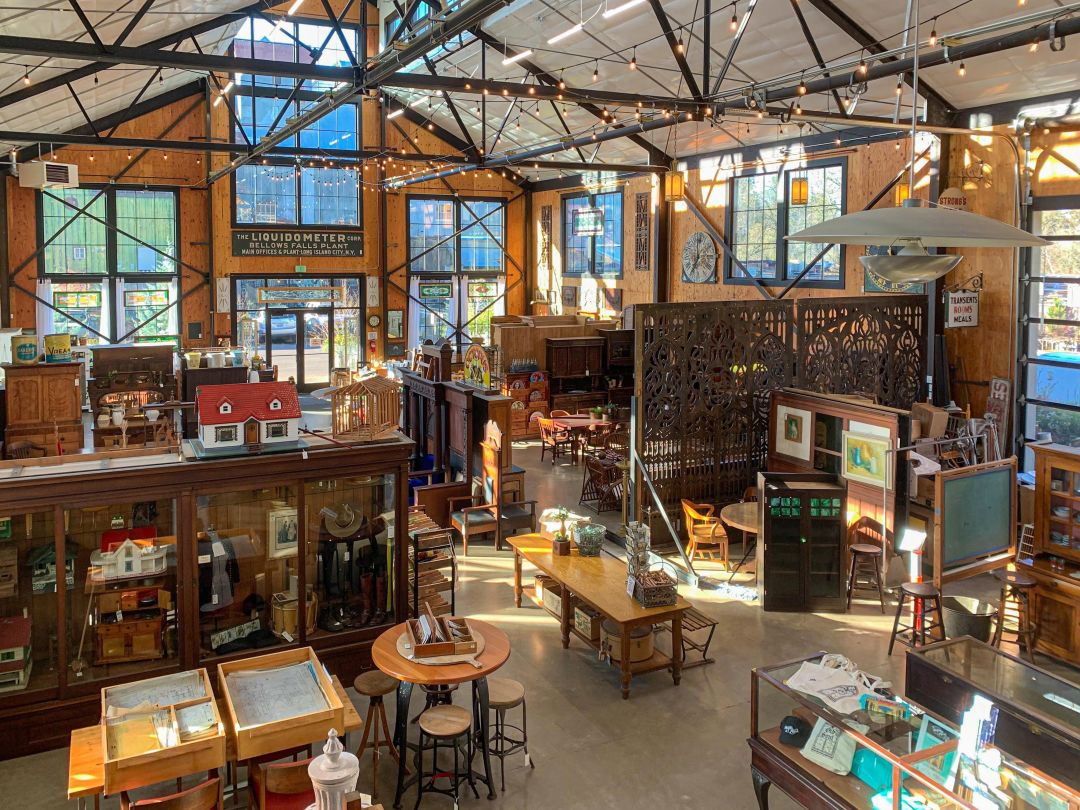
Image: Margaret Seiler
One of the most famous figures in Aurora history never actually made it to town. Willie Keil died of malaria in 1855 in Bethel Colony, Missouri, a few days before he was to accompany his father, German immigrant and evangelical leader William Keil, and about 80 colonists on a journey west to establish a new settlement of their communal society near Willapa Bay. His dad had promised Willie he’d be in the lead wagon for their journey along the Oregon Trail, and so he was—only in a metal coffin inserted into a giant, custom-made wooden vat, filled with three barrels’ worth of Bethel Colony’s famous Golden Rule whiskey. He was buried near what’s now Raymond, Washington, before the travelers decided Willapa Bay was too remote for their new settlement and headed inland, carrying Willie with them only as a memory.
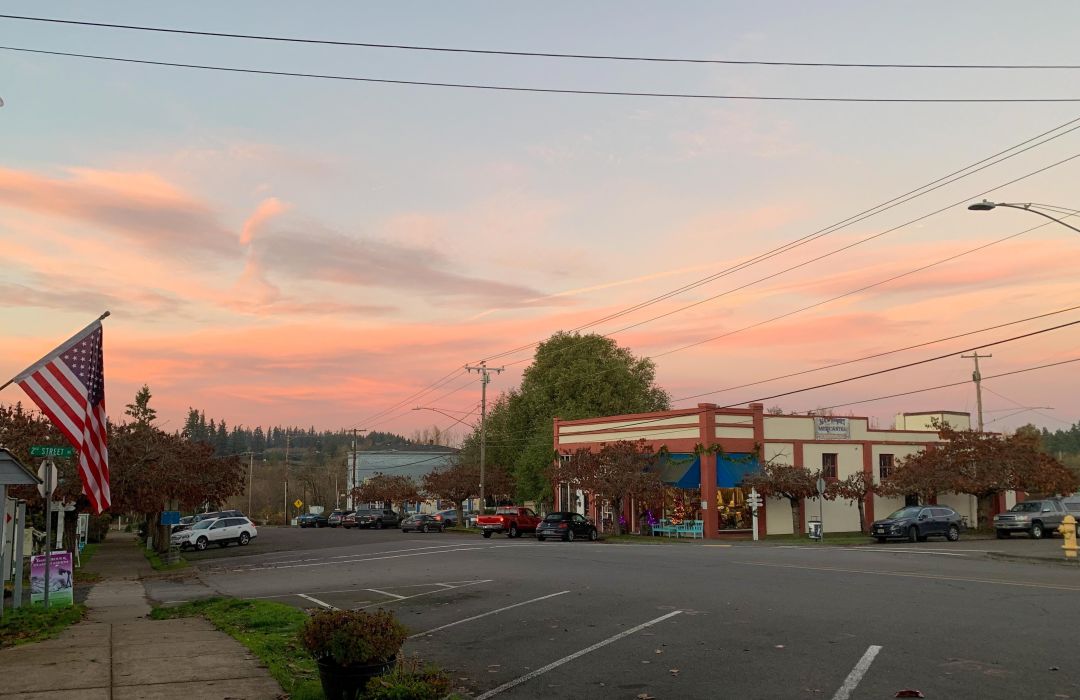
Image: Margaret Seiler
My own trip to Aurora on a sunny Friday in late fall is a little smoother. I take TriMet’s 35 through Lake Oswego and West Linn to the end of the line, in downtown Oregon City, and then catch Canby Area Transit’s 99X. (Had the timing worked out, I could have taken an Amtrak train for $2, but then I would have had a bit of a walk to the connecting bus.) Most CAT conveyances from Oregon City go through Aurora and all the way to Woodburn, but I’ve hopped on one that ends its run in Canby, so I have about a half-hour wait for the next bus to go the last few miles.
Our driver from Oregon City radioed her colleague to let him know she had a few continuing passengers who had already paid the $1 cash fare, so we can just hop on when the next bus comes. We pass through tiny Barlow (named not for famed road builder Sam but for one of his sons) and cross the Pudding River (named not for Willy Wonka reasons, alas, but for a hearty meal of elk blood pudding a hunting party once enjoyed on its banks) before I hop off in the heart of Aurora.

Image: Margaret Seiler
I’ve already heard Aurora was a popular destination for antiquers, but someone who hasn’t would pick up on it pretty quickly after getting off the bus. The skyline of the little town is dominated by an 1890s-era hop, grain, and feed mill that’s been an architectural salvage and antique shop for almost 30 years. Inside, aisles of bathroom fixtures, doors, signs, art glass windows, metal grates, multimeters, 1930s address tiles, heavy commercial kitchenware, and more fill the main floor. Upstairs, there’s a bed of nails, a coffin (not Willie’s), vintage sporting equipment, and a gorgeous Schlitz sign that a) I can’t afford and b) is probably too big to take home on the bus. Aurora Mills’ light-filled annex building next door, showcasing stunningly refinished pieces, feels old but dates only to 2022, when it became the first new commercial building in 45 years in the Aurora Colony Historic District and won a design award from Restore Oregon.
Just up the hill from Aurora Mills is a warren of interconnected antique shops (I go in the door for Back Porch Vintage and exit through a different door under a sign for Main Street Mercantile) and then more shops in separate buildings. I find Scrabble tiles priced by color and sorted into vowel (including, perhaps controversially, the Y), consonant, and blank. There are also tiny crocheted affirmation dolls, incredibly creepy baby dolls, faceless Amish cloth dolls, Olympia and Hamm’s beer memorabilia, midcentury lawn furniture, and a shoe tree hung with old Chuck Taylors.

Image: Margaret Seiler
A half mile south of this cluster of shops sits the South End Antique Mall, an airier arrangement of booths and displays. I browse shelves of cast-iron cookware, salt and pepper shakers, fishing reels, shotgun shells, children’s books, and Trail Blazer souvenir glassware. Old postcards are filed by state or theme (the “Risque” section is empty), and are certainly easier to carry home on the bus than the framed prints of Amtrak trains that catch my eye.
On my late-November visit, every shop seems to have a collection of light-up Nativity scenes, with their little plug-in plastic baby Jesuses. At the midcentury-focused Timeless Antiques & Collectibles, colored lights bounce off rotating foil Christmas trees; at the South End mall, a large horse statue in red plaid legwarmers and a wreath necklace pulls a wagon with Santa and a Joan Crawford–esque Mrs. Claus in a goth feather-and-velvet black gown. A lot of vendors are gearing up for Aurora’s annual Wine & Chocolate Walk the first weekend of December, a fundraiser for the museum and visitors association. (Advance tickets for the 2025 event, on December 6 and 7, are $27 or $52 for a pair, and include passports, souvenir glasses, shopping bags, and nearly half the ticket price’s worth of gift certificates to use at the local shops.) Everyone I chat with tells me I can’t miss it, and one shopkeeper makes it a point to assure me that it’s not just wine and chocolate but that some places hand out cheese. Cheese!
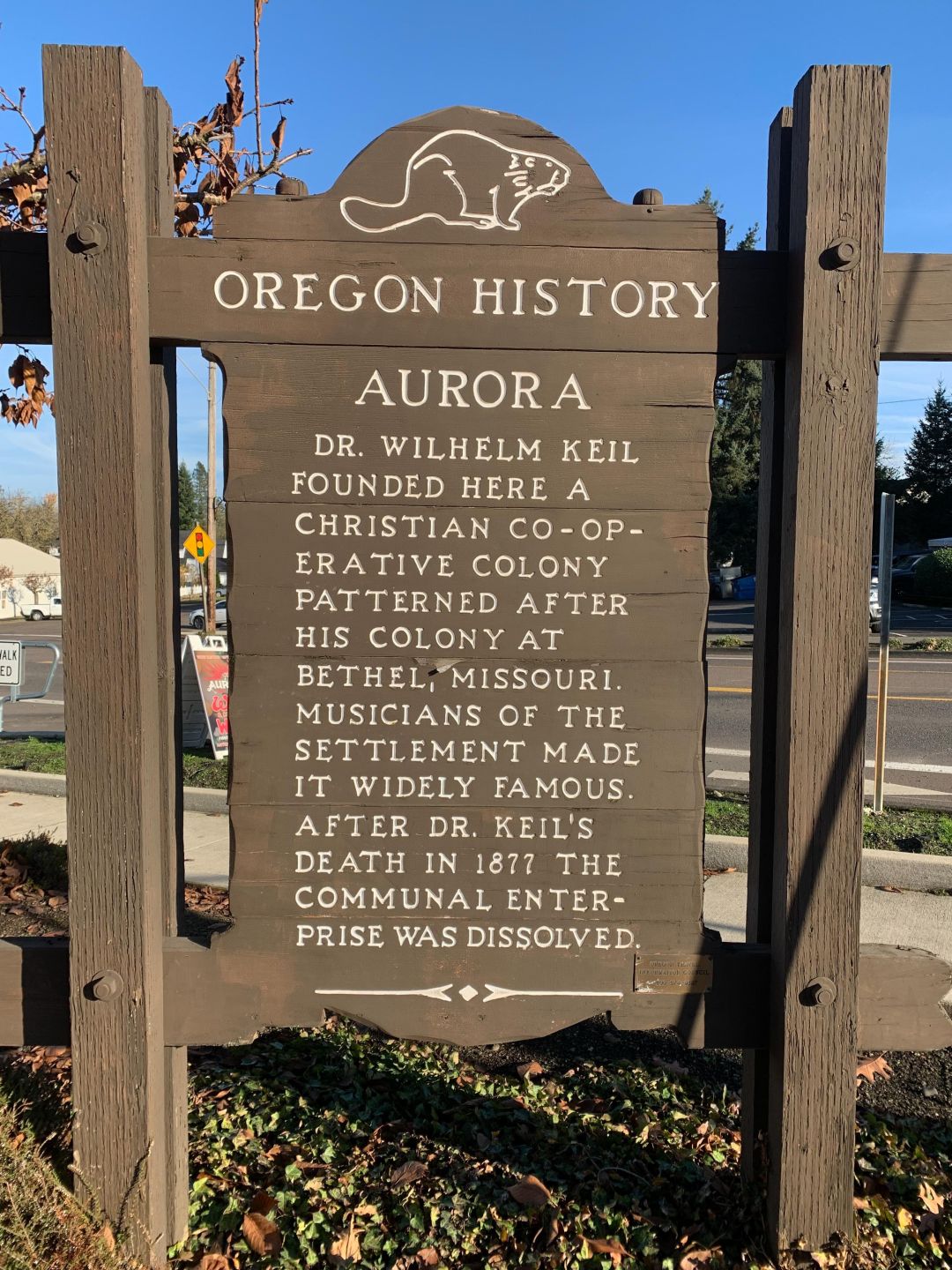
Image: Margaret Seiler
There’s a definite sense that Aurora really pulls together for this big civic event. While small towns often get excited for such shindigs, after a visit to the Old Aurora Colony Museum it’s hard not to draw a line between that energy and the town’s founding as a utopian colony for William Keil’s followers, a Christian group that believed in communal property and shared labor. (Some of them had broken away from the Harmony Society, which had similar principles but espoused celibacy, which history tells us is not the best recipe for longevity.)
The little museum ($8, $6 for kids and seniors) chronicles Willie Keil’s cross-country funeral procession, the redirection to a Willamette Valley parcel where there was already a mill, the popularity of quilts and baskets from Aurora (known to outsiders as Dutchtown), and the colony’s switch from communal to individual ownership after the death of its charismatic leader in 1877. An old washhouse, workshop, woodshed, and log cabin sit out back.
I also learn about the Aurora Colony Hotel, a beloved rest stop for stagecoach drivers and, later, railroad engineers before it was torn down during the Depression to make way for a new road. Nowadays, there’s no grand hotel dining room serving German favorites while a band plays on the hotel roof, so for lunch I land at the White Rabbit Bakery, full of regulars picking up loaves of bread or bags of housemade granola and shoppers taking a break to grab a stacked sandwich. I ponder the pastrami and the ham-Gouda-apple before settling on the Italian with pickled asparagus and spinach layered in with salami and provolone.
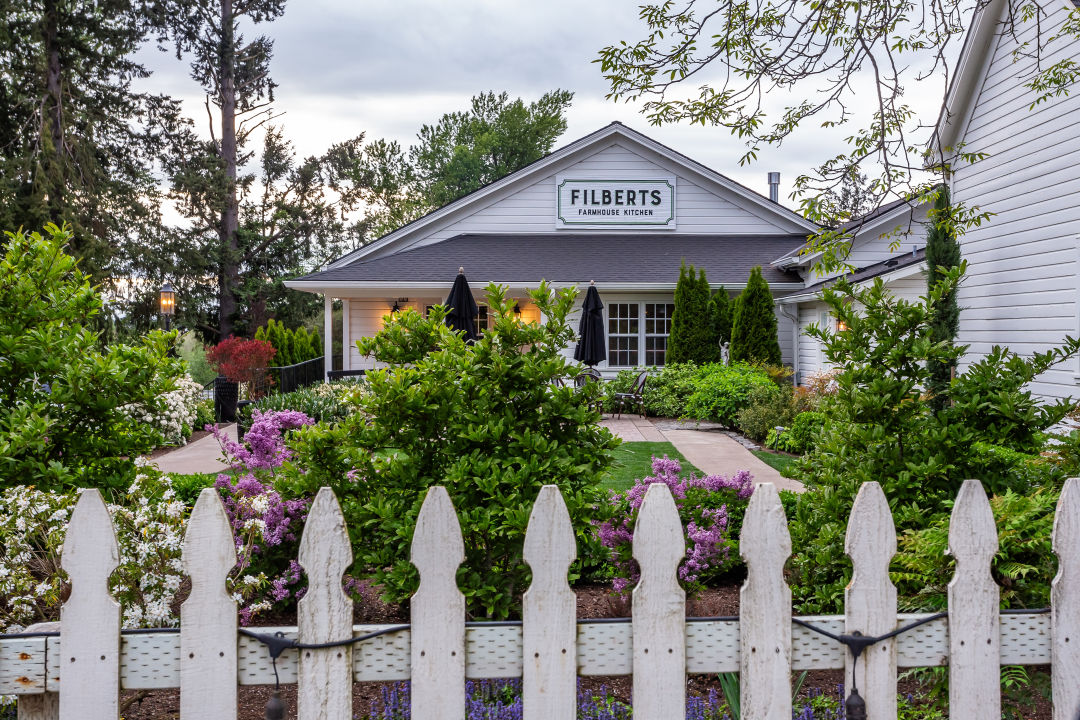
For dessert, I save White Rabbit’s maple pecan whoopie pies for another day and wander down to Granny Fi’s for its vast shortbread selection, from the basic Scottish recipe to all kinds of flavors and fillings and toppings. Had I planned ahead, I could have made a reservation for high tea in the adjoining dining room, with finger sandwiches, sausage rolls, scones, and, of course, more shortbread. Across the street at Filberts Farmhouse Kitchen, a sister restaurant to Southpark Seafood in downtown Portland and a handful of fancy-ish hotel restaurants, the deviled eggs come topped with brown sugar candied bacon and the chicken and dumplings sounds delicious, though I’m too full from my other stops to try anything there.
After the antique shops and museum close for the day, the most bustling place in town is the Aurora Colony Pub. Originally called the Halfway thanks to Aurora’s near equidistance from Portland and Salem, it serves up burgers, BLTs, wraps, roasted chicken, and Friday-only clam chowder under Budweiser neon lights and a vintage hanging lamp with Clydesdales inside it pulling a wagon.
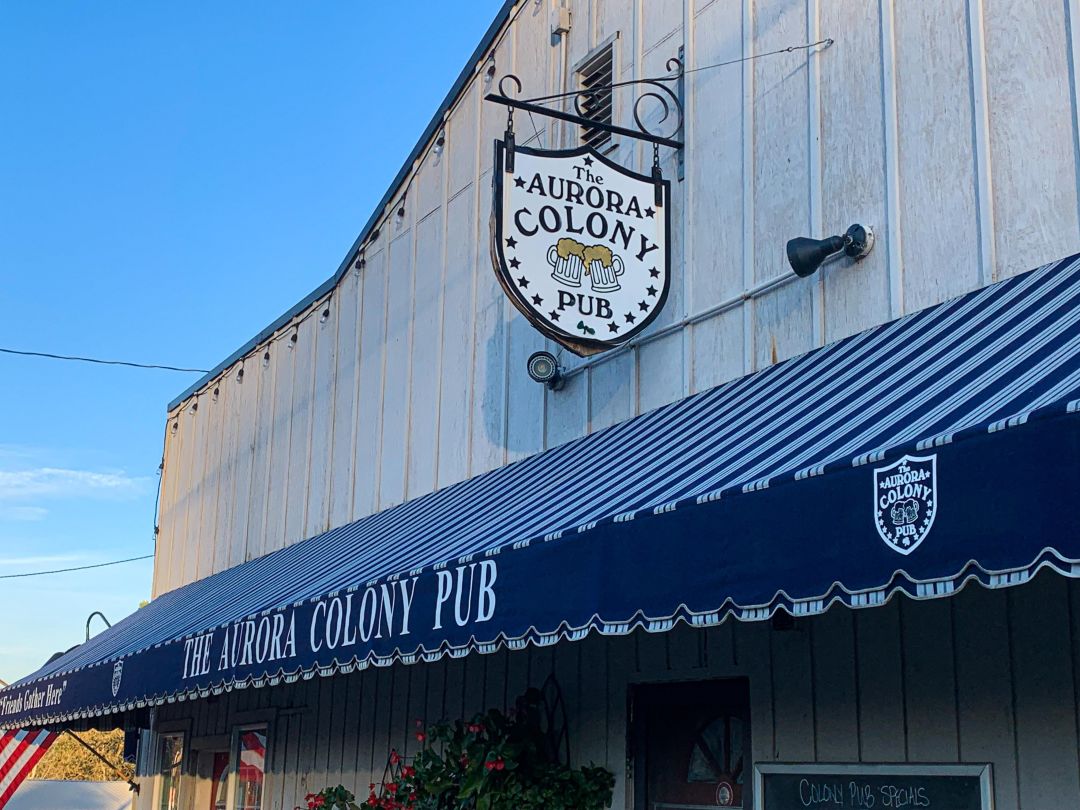
Image: Margaret Seiler
There’s a mellower scene at the Pheasant Run Winery Tasting Room, inside a former bank that was built for the 1905 Lewis and Clark Centennial Exposition in Portland and then moved to Aurora. (It made a cameo in the Oregon-shot Bandits.) The vault is now full of wine, including bottles of Pheasant Run’s Mojo cabernet; on the menu, the winemaker describes it as being “exceptionally well blended with help from my soccer team.” Tasting flights come in adorable mini-carafes, and pair well with what’s billed as an “almost famous” cheese and meat board.
After a glass of the Double Barrel cab, I’m happy a pair of bus drivers will be bringing me home, all for a whopping $3.80. (The 38-minute bus ride from Aurora back to Oregon City might be perfect for a Ruth Bader Ginsburg–style wine nap, too.) If I follow all my new acquaintances’ advice and return for the Wine & Chocolate Walk, it will be even cheaper: The 99X is fareless on Saturdays. It doesn’t run on Sundays, so if I come back then I might need to drive a car or find some mules to pull me in a giant vat of whiskey.