The Public Health Educators Changing How We Think About Fat

For a good chunk of her life, Debbie Kaufman had tried to lose weight. She tried aerobics. She tried hiking groups. Nothing worked. “I quit them all because I didn't lose weight,” she says. “But all of those things would have been good for my health if I continued.”
Kaufman is the founder of the Body Liberation & Public Health Project, a resource for public health professionals to learn about weight stigma and the ways antifatness negatively impacts our health. Antifatness, or bias and discrimination against people in larger bodies, has become a crisis in its own right. A 2003 study found that weight-based harassment or bullying increased suicidal ideation and depression in teens, and that children exposed to antifat prejudice in physical-activity settings were less likely to enjoy or participate in sports or exercise.
But in health care settings, antifat bias can be even more hazardous. Fat people are often misdiagnosed, or their actual condition untreated, when medical providers assume weight is the cause of their health problems. A 2001 study in the International Journal of Obesity indicated that fat patients were more likely to get shorter visits with doctors, and that antifat stigma at the doctor's office has kept many plus-size patients from returning to health care settings for years, putting them at higher risk for serious health complications.
“Weight stigma causes chronic stress,” Kaufman says. “The chronic stress is where the harm is caused, mentally and physically.”
In the United States and much of the world, thinness has become synonymous with health. School nutrition programs aspire to end the “childhood obesity crisis,” workplace HR departments organize office-wide weight-loss challenges with prizes for the people who dropped the most pounds. These health programs and policies are rooted in the assumption that fatness is inherently dangerous.
But data tells a more complicated story. When Katherine Flegal, now a consulting professor at Stanford, investigated the number of excess deaths in the United States in 2000 for the CDC, she found that more underweight people died from causes that could be associated with body size than “overweight” or “obese” people. While many factors are at work at end of life, a 2013 research review of 40 studies noted that “overweight” people showed “significantly lower risks for total mortality and cardiovascular mortality.” Many researchers refer to this concept as the “obesity paradox”—the idea that overweight or obese patients with coronary heart disease showed better health outcomes than people in the so-called normal weight range.
Often, existing data about health and size has more to do with behavior— exercise, reduced alcohol consumption, stress management—than actual body weight. Nonetheless, “obesity” has become a shorthand for an image of a specific type of person: someone who doesn't move their body, who eats nothing but “junk food,” who is inherently lazy or unmotivated. And this specter of poor health associated with fatness now behaves as the Big Bad of public health, with weight loss the ultimate solution.
Kaufman is one of a handful of Portland public health professionals and educators challenging the weight stigma embedded in their field. Before founding the Body Liberation & Public Health Project, Kaufman taught a Body Liberation for Health class at the Oregon Health & Science University–Portland State University School of Public Health. While she was there, she helped organize the Fat Justice Working Group, which addressed issues of antifat bias in the school's curriculum and culture. Both the class and the working group were born from student feedback: When Kaufman began talking about weight stigma in the classroom, students shared their own stories and frustrations after lectures. Kaufman remembers a particular student who, after a lecture about body liberation, came up to her and said, “Thank you for that. Now I feel like I belong in public health.”
Today, other OHSU-PSU professors, like Jamie L. Jones and Hannah Cory, have kept the working group going now that Kaufman is focusing on her new project. Jones, a School of Public Health alumna, saw Kaufman as a mentor and wanted to help shape the next generation of public health researchers, providers, and policymakers. “We're preparing the workforce,” she says. “People will say, 'Come back to me after you've lost weight.' Deterring people from getting health care is not what public health is about.” Jones was particularly involved in the school's journal club, in which students and faculty discussed studies challenging preconceived notions about weight and wellness. “Many were bringing this into their work, their schoolwork,” Jones says. “It introduced students to peer-reviewed research we use as a profession that is starting to debunk this research that said, 'Being fat is bad.'”
One of the primary reasons public health researchers continue to lean into studies centering obesity has to do with funding: Weight loss is a $427.5 billion industry, between GLP-1 medications (such as Ozempic and Wegovy), dieting apps, weight-loss programs, low-calorie meal services, and supplements, just to name a few. According to the World Health Organization (WHO), 890 million adults were considered obese in 2022. It's a staggering number, but the definition of obesity has changed several times in the last 50 years: Notably, in 1995, WHO lowered the cutoff for what was considered a healthy weight, despite researchers' recommendations that the definition of a “normal” body mass index (BMI) be expanded. Millions became “overweight” or “obese” overnight, and the obesity epidemic was born.
“When you think of the so-called 'obesity epidemic,' that has been such a cash cow,” Cory says. “Even for people who don't fully buy into the concept, it's just such an easy default. If you slap it on something, it makes it sound like science.”
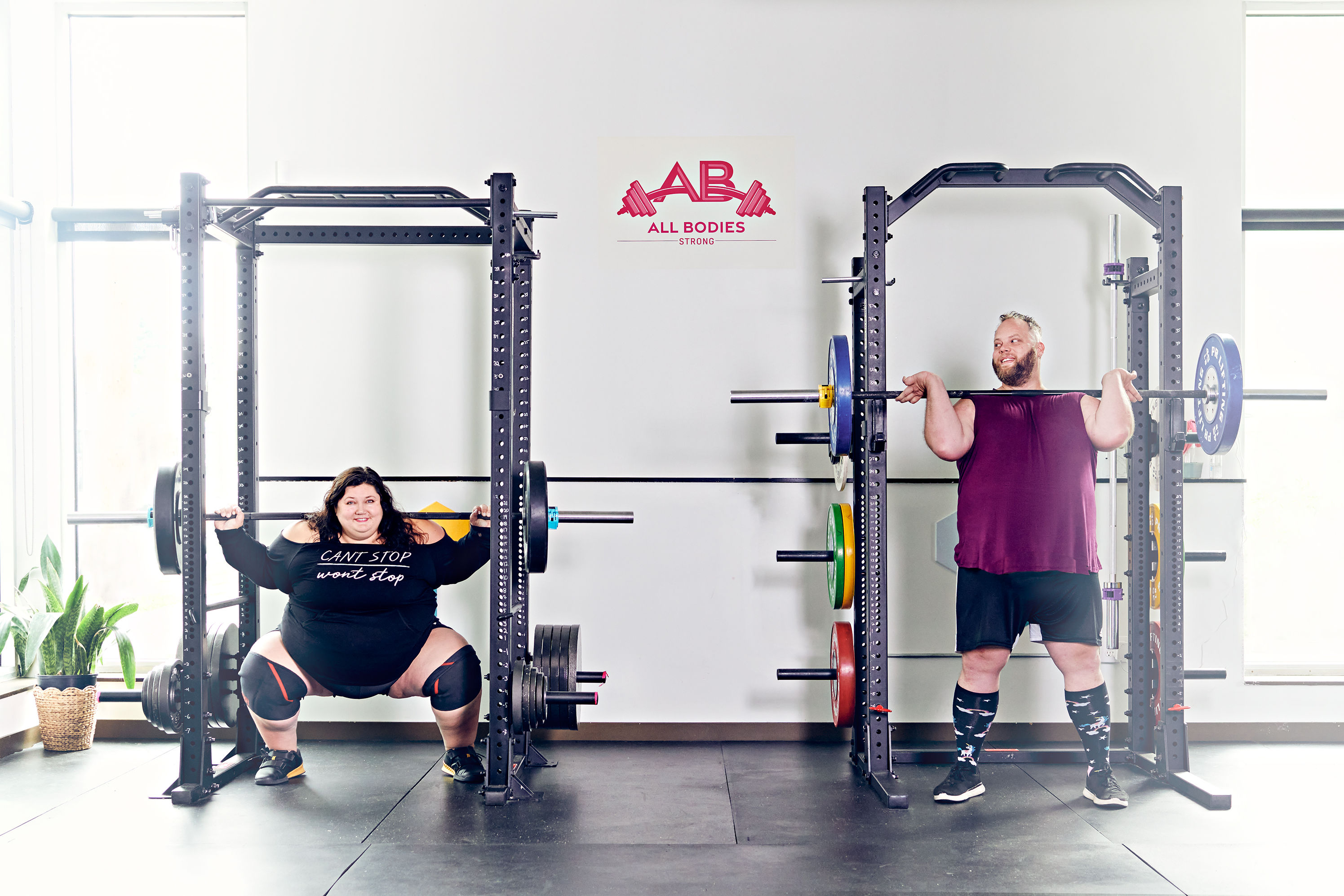
In Portland, fat justice and community have a significant presence already. All Bodies Strong, a gym designed for people in larger bodies, offers yoga, boxing, and weight lifting classes for people of all skill levels and body types. The Big Splash, Portland's body-positive pool party, sells out every year, and the thrift store I Want Seconds exclusively stocks clothing in sizes XL and above. Fat activists like Aubrey Gordon live in Portland; Gordon's podcast Maintenance Phase, which she hosts with journalist Michael Hobbes, tackles the stories behind fad diets and health trends, digging into and debunking many of the oft-regurgitated statistics and misconceptions that fuel them. Gordon's most recent book, “You Just Need to Lose Weight”: And 19 Other Myths About Fat People, appears on the Body Liberation & Public Health Project's website as a recommended resource.
“We are in Portland, and there is a fair amount of fat justice work happening in this city,” Cory says. “In an ideal world, students would be both interfacing with that in the real world, and getting to be in classes and in learning spaces that allow them to start rethinking something that's probably baked into their learning.”