What Makes Afuri’s Vegan Ramen So Damn Good?

Image: Amber Day
In 2016, Tokyo-based ramen chain Afuri opened its first location outside of Japan, landing on Portland for its initial outpost. The reason? The Bull Run watershed. The pristine quality and softness of its water is as ideal for ramen broth as it is for beer. The SE Seventh and Belmont izakaya drew crowds for its yuzu shio and tonkotsu tantanmen piled high with pork and housemade noodles. But the sleeper hit was the vegan hazelnut tantanmen, its broth so rich, silky, and nuanced that it needed no meat whatsoever. Today, it’s a little different, with sunflower seeds standing in for the hazelnuts, but the flavor hasn’t changed. We sat down with Afuri’s Takashi Higuchi to see what makes it so special—and why it needs a banana allergen warning.
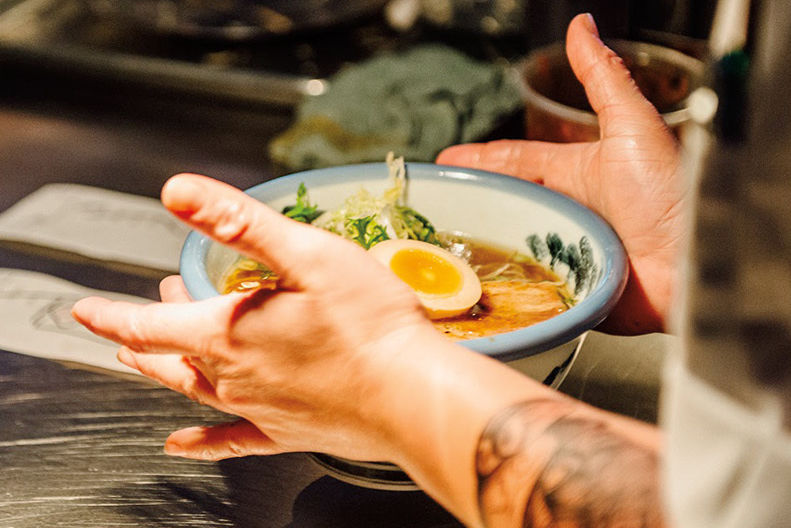
Bowl: Afuri’s custom bowls depict an illustration of the mountain on the Japanese island of Honshu that gives the restaurant group its name.
Sunflower broth: This is where things get strange. Raw sunflower seeds land in a puree with fresh ginger and garlic, sake, water, and banana of all things before the mixture gets cooked and strained. On a visit to the Portland branch, Afuri’s head chef in Japan suggested banana for subtle sweetness and body. It worked.
Dashi: Instead of sticking to one broth, Afuri’s ramen comes with two. For a serious dose of umami, the bowl’s dashi relies on a combination of kombu (seaweed), dried shiitake mushrooms, and sun-dried tomatoes.
Tare: A concentrated liquid seasoning or paste, the foundation of all good ramen. White miso and soy pack a salty-sweet punch, with garlic, ginger, Japanese chile powder, and scallions the aromatic heavyweights. Cooks dollop 20 grams into the base of each bowl before stirring in the broth.
Noodles: While Afuri’s thinner noodles are made in-house, these thicker, chewier whole wheat noodles come from a Japanese company to Afuri’s specifications. They’re boiled for two minutes before they plop into the awaiting bowl. Afuri’s Slabtown shop, opened in 2022, goes through 20 to 30 pounds daily.
Chile oil: Japanese chile powder, leeks, ginger, and sake infuse a blend of vegetable and sesame oils, giving the ramen a peppery element and lush mouthfeel.
Bok choy: Tender leaves blanch for one minute before a brief sauté in scallion-infused oil.
Shiitake: The shiitake mushrooms used to make the dashi don’t go to waste. Instead, they end up pickled with white soy, giving them a satisfying juiciness.
Miso cashew: In lieu of the tonkotsu tantanmen’s crumbly pork bits, this vegan bowl comes with a nutty approximation— roasted cashews tossed with sugar, sake, and sansho pepper powder, baked into a crunchy, crumbly, salty-sweet topping.
Leeks: Raw, shredded leeks bring a welcome crisp, fresh bite to the soup.