A Portland Reptile Shop Strikes It Big with Snake Yoga
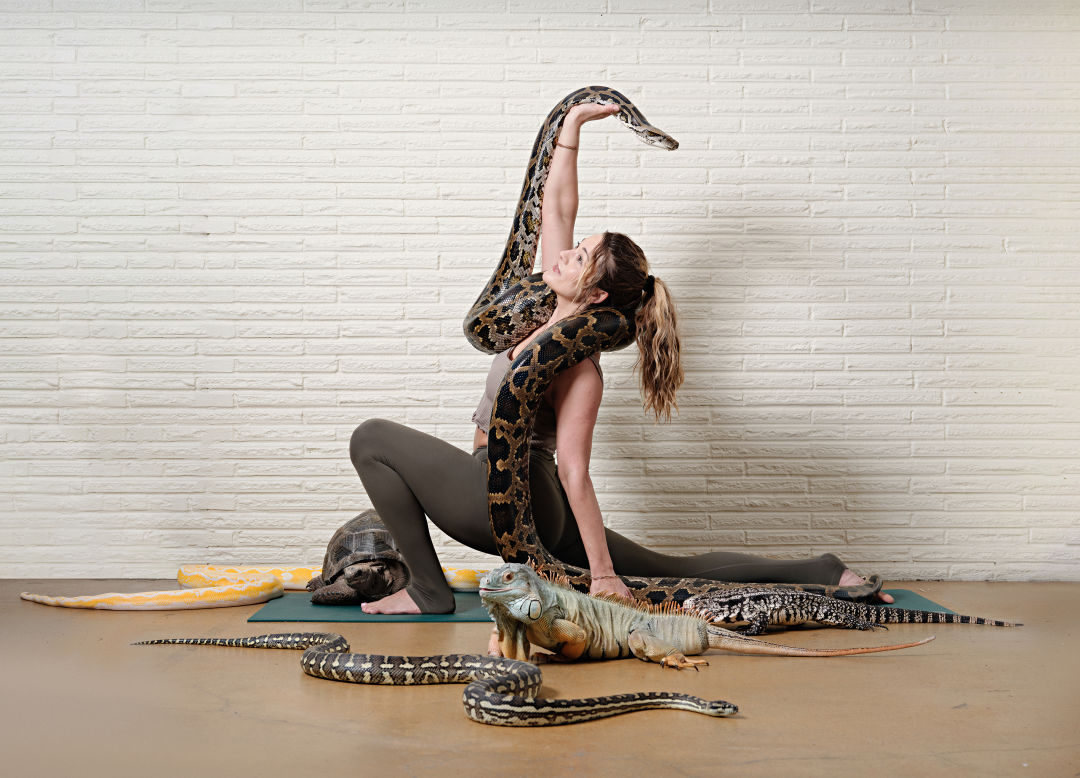
Image: Jason Hill
Sammy (full name Samwich) is a three-and-a-half-foot-long, three-and-a-half-year-old ball python. He weighs just under three pounds and eats one six-inch rat a week. He’s beautiful: deep brown with gold patches and a pale underbelly. And right now, in the lobby of a Northeast Portland reptile shop called Hisss, I am wearing him like a scarf. A handler draped him over my shoulders a few minutes earlier and now I’m on all fours, and Sammy has wrapped himself around my neck. His skin is cool and smooth. I arch my back. He squeezes. I drop my belly. He holds on. I arch my back again and feel his breath puff against my ear. I shiver.
I’ll later go semiviral for this moment, when The Oregonian publishes photos of Sammy and me. But in this instant, I’m trying to ignore the camera so I can keep my attention on this moving coil of compression—which, I’ll state for the record, feels even cooler than it looks. Cat, cow, cat, cow, and now Sammy has wound his way around my face. He briefly becomes a blindfold—which, weird—and then a giggling handler appears at my side, lifting Sammy off my head and carrying him to the next yoga mat.
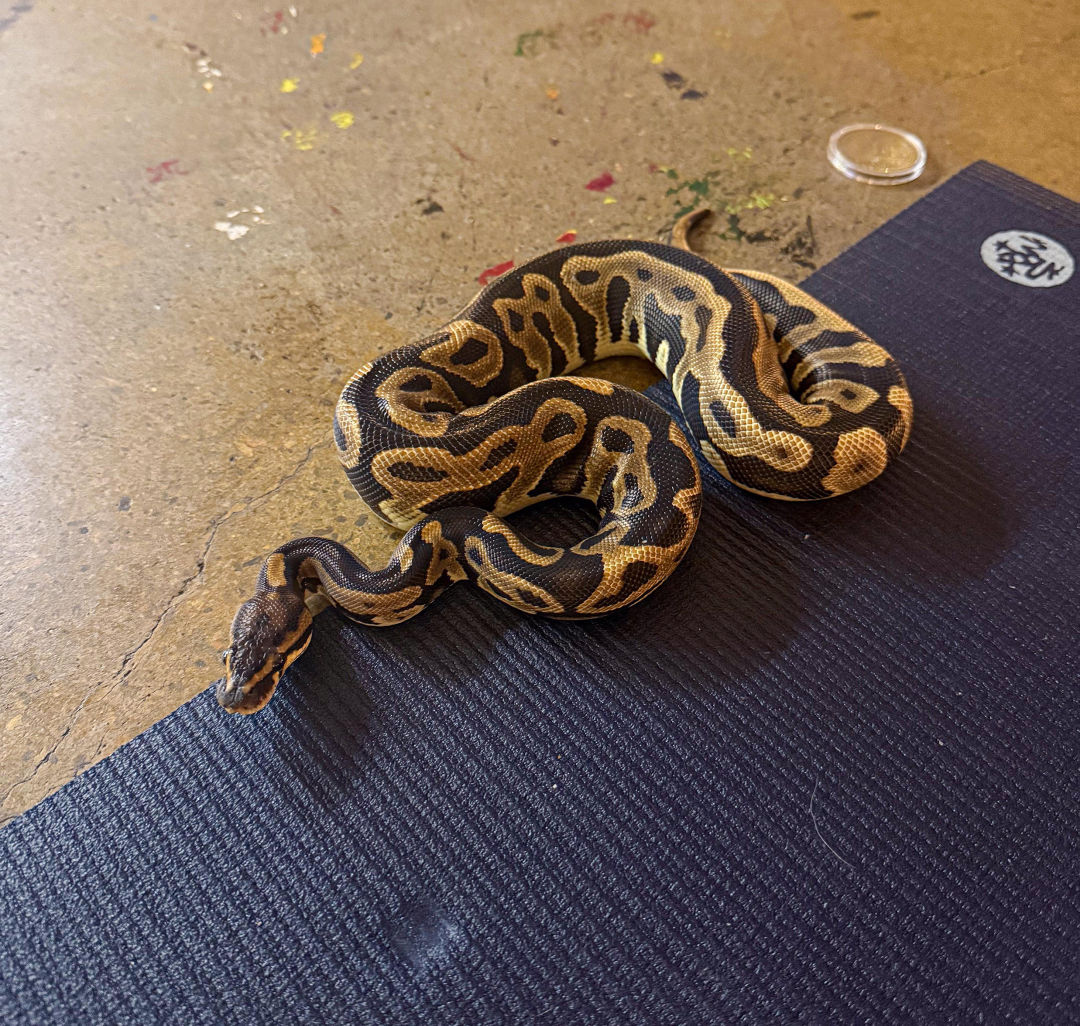
Image: Rebecca Jacobson
Hisss owner Dru Morales did not set out to launch the latest animal-based yoga trend. He was simply seeking ways to gather people at his shop, which opened last August, and he reached out on Instagram to a yoga teacher named Katy Vanek. She’d led classes with kittens and dogs but wasn’t immediately sold on snakes. “I definitely hesitated for a day,” she says. When she visited the shop, Morales placed a ball python named Diana in her arms. Vanek expected frantic wriggling. Diana was as calm as could be. “I was like, Wow, she’s kind of like a dog,” Vanek says. “She’s just hanging out.”
Vanek taught her first snake yoga class in October. It was an instant hit. Monthly classes were selling out even before The Oregonian coverage brought a spike in interest, and the shop now runs snake yoga three times a week, with a small stable of instructors. Each session features several snakes alongside other reptiles: perhaps a mellow bearded dragon named Miso, a striking Argentine black-and-white tegu lizard named Diamond (he belongs to Morales), or an Aldabra giant tortoise named Pebbles (also Morales’s). Hisss employees serve as handlers, watching for signs of stress and moving animals through the room. All students receive little consent tokens, allowing them to accept or decline visits.
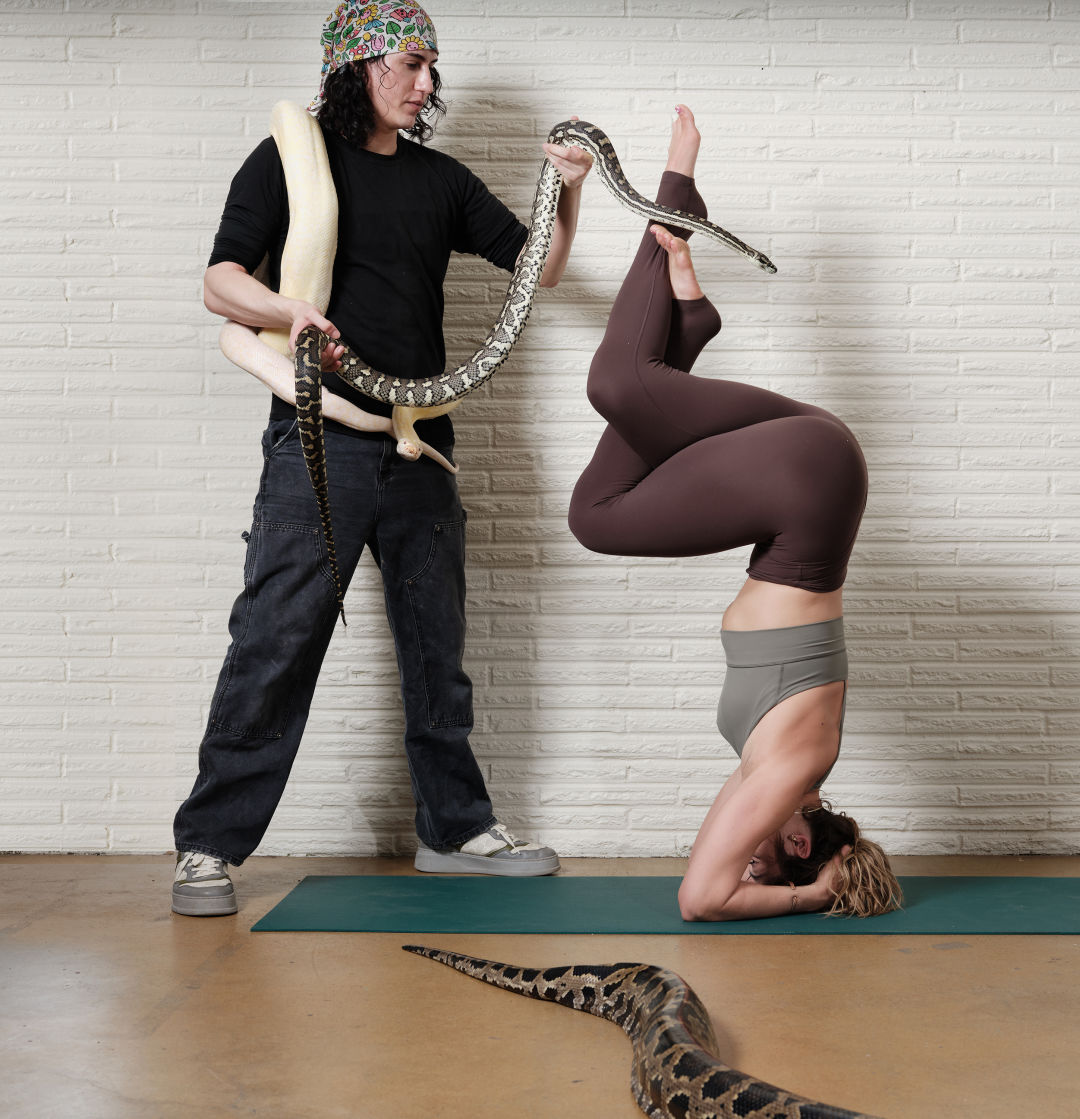
Image: Jason Hill
Morales is a lifelong reptile lover. As a kid in San Jose, he prowled creeks for Western fence lizards, which he kept alive (or tried to) in closets and dressers. In sixth grade, he got a pair of bearded dragons; he thought both were female until he woke one morning to a clutch of 30 eggs. His dad helped him build an incubator and they watched them hatch. “Just like little dinosaurs,” Morales says. “The cutest thing ever.” He gave many away to friends and sold the rest to a pet store. “Like, 20 bucks each? People were selling lemonade, and I was over here selling bearded dragons.”
He started working at a reptile shop in high school and around that time got his first snake, a red-tailed boa named Leviathan. He grew to eight feet: “a big snuggle bug,” Morales says. Leviathan's skeleton is now mounted on the wall at Hisss, which sells a range of geckos, snakes, turtles, and frogs—plus tarantulas, scorpions, even millipedes. It’s a one-stop shop, with a vast feeder menu (crickets, mealworms, rats, and mice, both live and frozen) and all the necessities and accoutrements for the tank. Services include shedding assistance, overnight boarding, and spa treatments that begin with an electrolyte soak and finish with a rosewater-infused spray.
Vanek has found snakes to be a dream yoga companion. At times distracting, sure, and she must repeatedly remind students to check their mats before stepping backwards, lest one has silently appeared. Unlike animals more often paired with yoga—puppies, kittens, goats—the snakes in a class at Hisss move slowly, sinuously. They’re curious, occasionally periscoping up to assess the scene. As cold-blooded animals, they’re drawn to the warm humans around them; some climb bodies as if they’re trees. Though snakes don’t have ears, they respond to vibrations in the environment, and Vanek likes to lead humming exercises.
And they’re remarkably strong: essentially all spine, all core. There’s a quality of massage as they twine around a limb (or neck). “They’re like tubes of muscle,” says Sam Pennypacker, who’s been a snake yoga regular since December. “Getting even a brief sense of how they locomote, how they move, is remarkable.”
Popularity has had its pitfalls. A class in February drew numerous tripod-toting TikTokers, leading Vanek and Morales to discuss barring phones. But Morales isn’t concerned. When we meet for coffee, he brings Diamond, who moves between his lap and an empty chair. A passing couple asks to say hello. “Diamond does not bite,” Morales tells them. “He’s very friendly. He’s one of our ambassadors during snake yoga.” The couple has questions. “Yeah, we do snake yoga right across the street,” he says, gesturing. “Happens all the time.”