NA Bubbles and Grilled Cheese at L’Orange’s Sibling Wine Bar
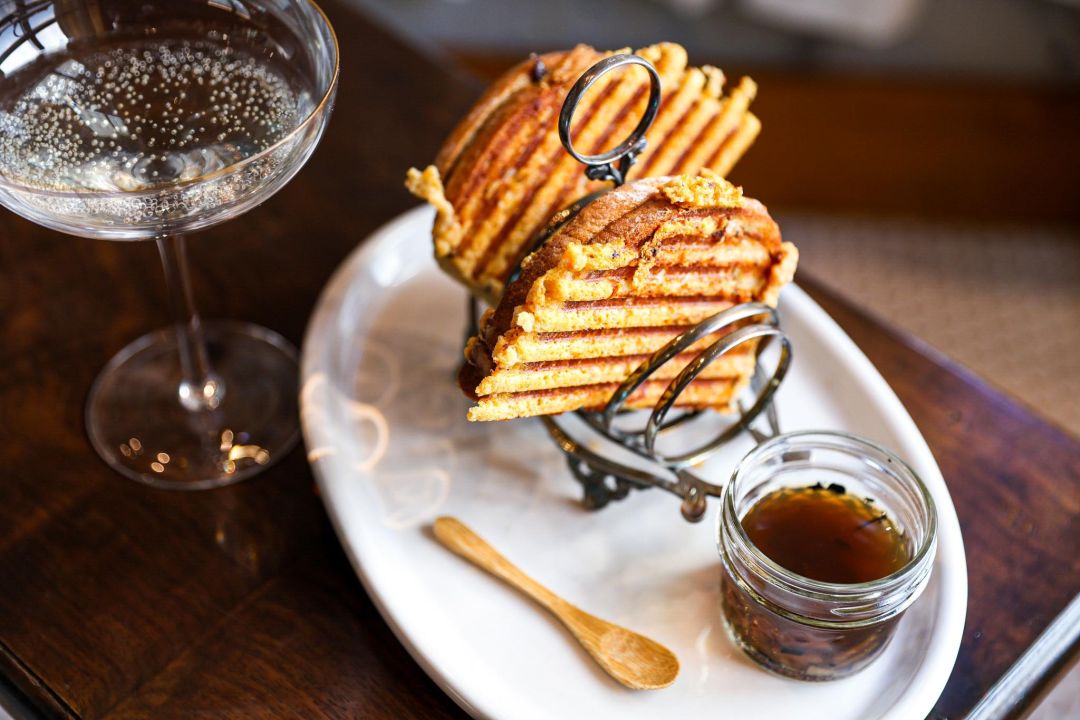
Image: Courtesy Emily Stocks/Buvons
If you’ve had dinner at L’Orange recently, you might have noticed a quirk of the wine menu. Instead of being dropped to a sober corner, a few nonalcoholic sparkling wines are listed right next to the German Rieslings and proper Champagnes, simply marked with an icon indicating their NA status. It’s a way to give due respect, says co-owner and beverage director Jeff Vejr, and to note that these wines are delicious. They aren’t necessarily cheaper than their boozy counterparts, either. “To dealcoholize wine is way more expensive than to just produce it naturally,” Vejr says. “The notion that because it doesn’t have alcohol means it should be cheaper is—the opposite is true.”
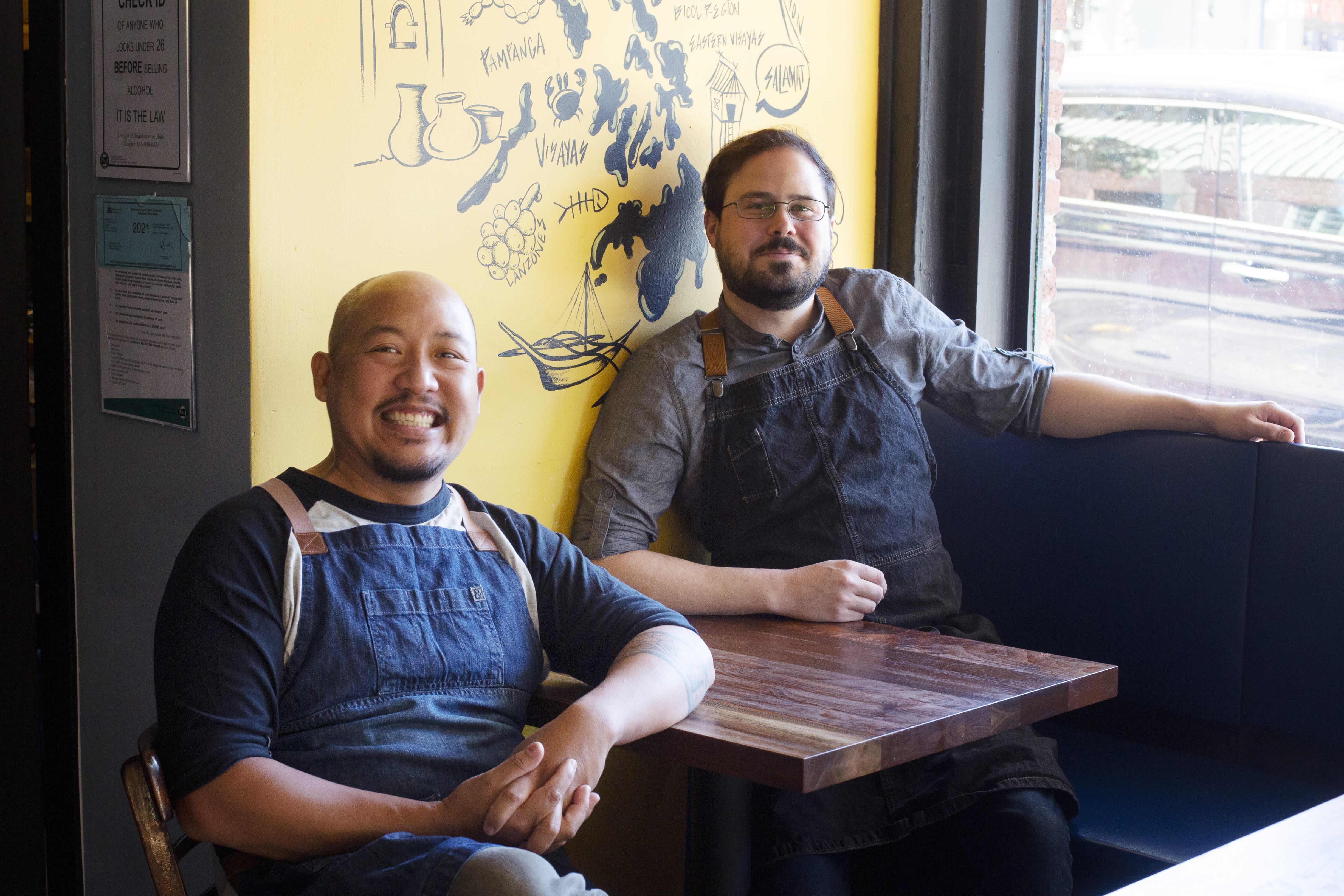
Doubling down on his belief in their deliciousness, Vejr plans to feature NA wines prominently at Buvons, the sparkling wine–focused bar he and L’Orange chef and partner Joel Stocks are set to open later this month. It’s an intimate little shoebox, a stand-alone brick structure with room for just 14 seats that’s sandwiched between two apartment buildings on SE Belmont, half a block east of Market of Choice. For years, Vejr ran the sui generis wine bar on NE Alberta Street: Les Caves, a clandestine annex down an alley that felt like the coolest basement party. Vejr was behind the counter most nights, pouring wines you hadn’t heard of and probably couldn’t find elsewhere while he pulled fancy grilled cheese sandwiches off the panini press. Buvons is not Les Caves 2.0 (Les Caves 1.0 is still open; Vejr’s former partners took it over in 2023), though it’s hard not to draw parallels—especially considering Stocks’s cheffy menu of panini.
Half a mile up SE 11th Ave from L’Orange, the new wine bar is more than simply a place to grab a drink. The food, especially, offers a low-stakes entry into the restaurant’s world. Most dishes play off L’Orange’s French-ish menu, remaking signatures like its chicken liver mousse tart and namesake orange cake as what Stocks calls “snacking, wine bar–style food.” Stocks, who previously ran the tasting menu restaurant Holdfast with Will Preisch, came up in the modernist cuisine world, but his tricks show up in execution more than flair these days. The liver mousse and L’Orange Cake are both potted in ramekins at Buvons, the latter with a tres leches twist. One grilled cheese pulls braised beef cheeks from a L’Orange entrée, mixing the shredded beef with melty-crusty Gruyère, and steals broth from the restaurant’s legendary French onion soup as a dip. Another makes a tuna melt of Oregon albacore poached in olive oil, with yogurt and avocado green goddess dip.
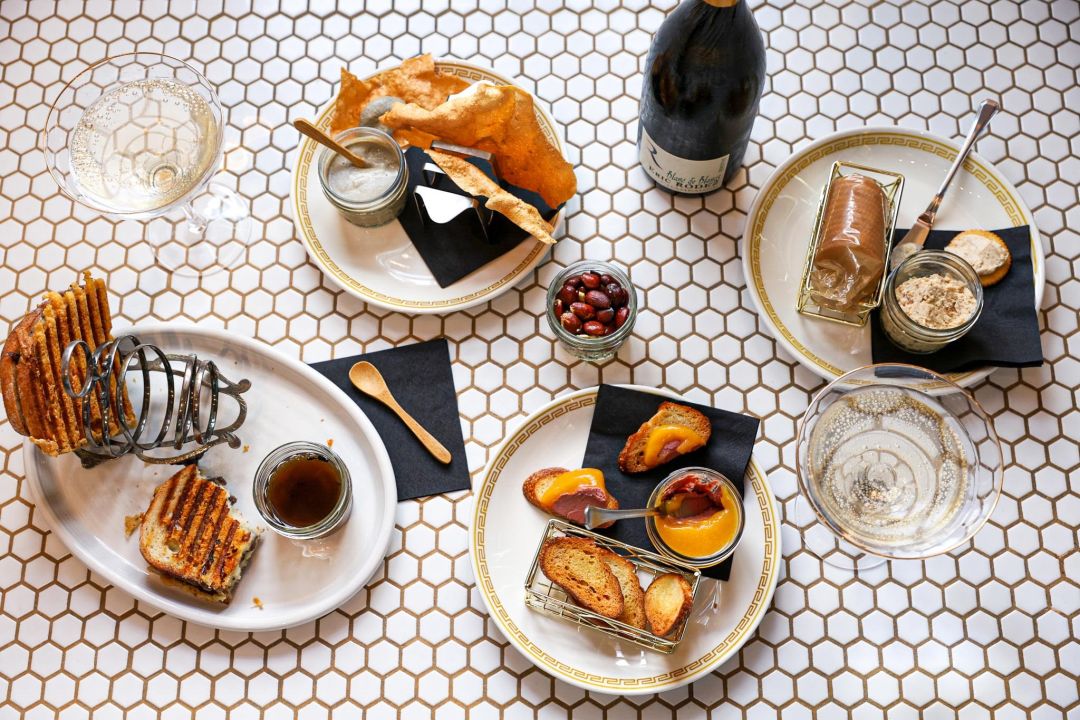
Image: Courtesy Emily Stocks/Buvons
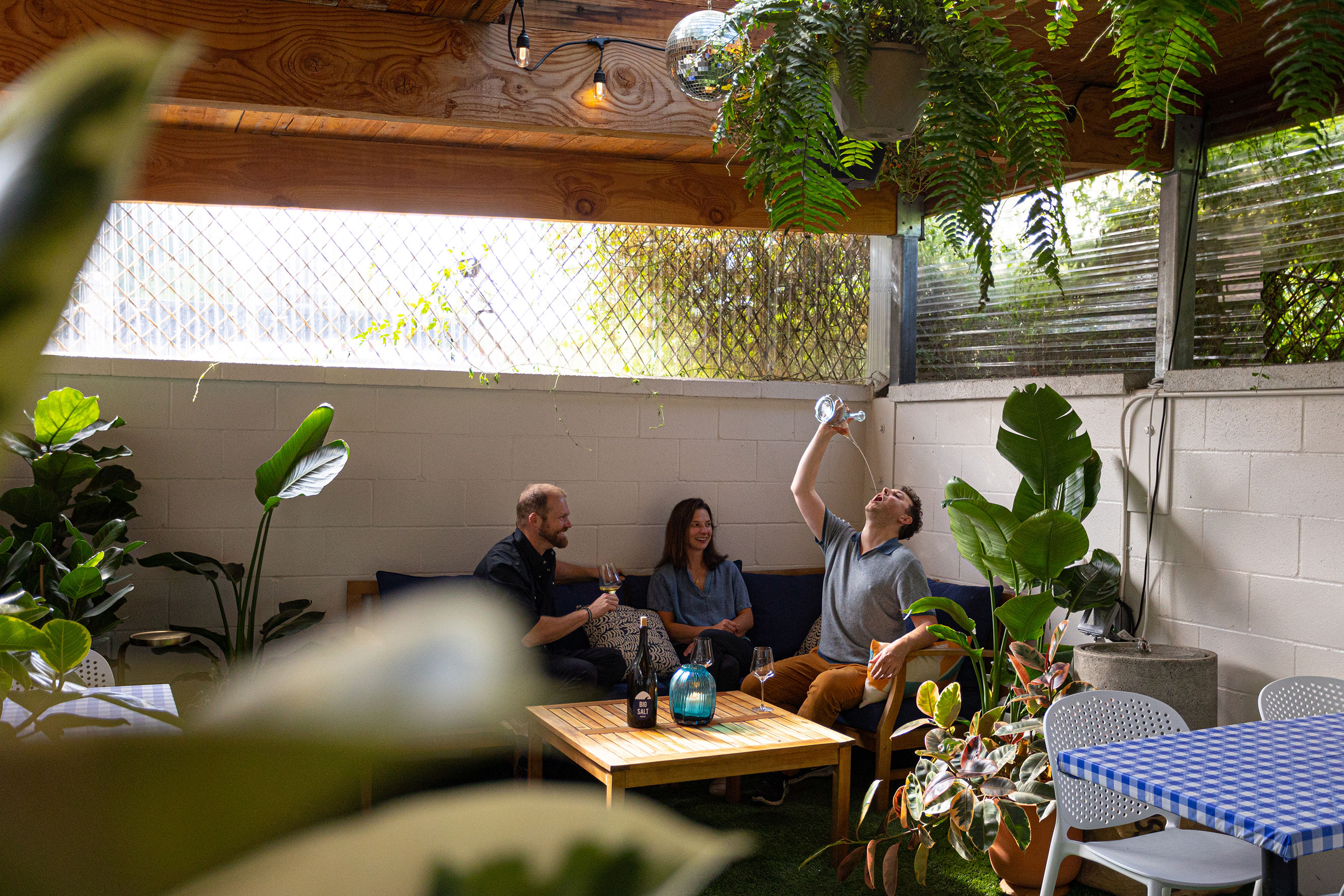
Past the sandwiches, the two-top in Buvons’s storefront window might also approximate the favorite seat at Les Caves, which is a couch squished into a little cubby carved out of the wall—a kind of wine fort for two. At Buvons, the best seat in the house gives optimum views of a salon-style display of Vejr’s mismatched art collection, which crawls up 35-foot-high walls lit mostly by candles. Immaculate vibes, no doubt, but the bar's name is French for “let’s drink,” and Vejr’s mission on that front is to upend myths about bubbly wines, those with and without alcohol.
There’s a lot we get wrong about sparkling wines. Vejr says, “People just sort of default to it being a celebratory beverage.” We pop bottles of champagne or splash some cava or prosecco into a mimosa at birthday brunches or anniversary dinners or bridal showers. We’re missing out. “All those little bubbles are essentially flavor carriers,” Vejr says, explaining why effervescent wines are his favorite to pair with food. “They heighten whatever the flavors are in the dish. It’s just that simple.” For the same reason, he finds sparkling wines hold up best to dealcoholization. Often, removing alcohol from traditional wines involves a sophisticated filtering process called reverse osmosis. Until the past few years, similar to NA beer, the results left something to be desired. Germany and Austria are ahead of the curve, Vejr says, “far ahead of most of the rest of the world,” adding that you’d be hard-pressed to tell some of the better examples apart from alcoholic wines.
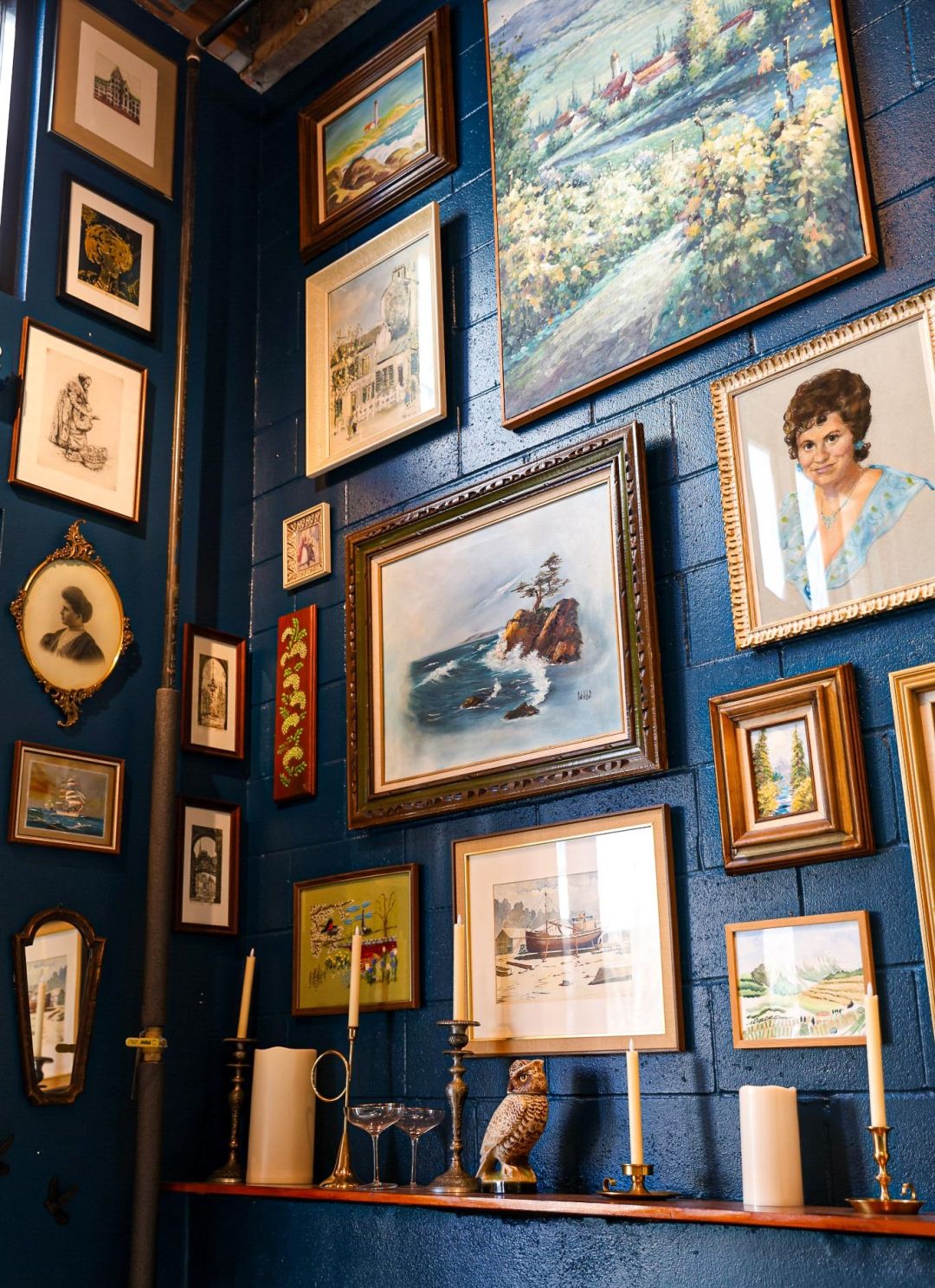
Image: Courtesy Emily Stocks/Buvons
Another approach is to make something wine-like that’s naturally free (or nearly free) of alcohol, like the experimental beverages former Noma chefs make in Copenhagen under the label Muri. Vejr is enthusiastic about drinks made with tea and pressed grapes leftover from the winemaking process. His favorite is a blend of sauvignon blanc skins with green tea from the Austrian producer La Maison Tea Royale.
As for alcoholic sparklers, Vejr admits champagne is at the top of the list for a reason (the bathroom at Buvons is wallpapered with a Moët & Chandon print), though it’s far from the only bubbly worth talking about. Coprinnat, for example, is a newer subcategory of cava produced under strict guidelines, such as being hand-harvested and vinified on the estate. Prosecco’s reputation is similarly “blanketed by inexpensive versions,” Vejr says. To change your mind, he’d pour you something from Bisol, a benchmark producer in Valdobbiadene, in northern Italy. Back in France, there are also crémants, wines made by the traditional method outside of the official Champagne region. What about Oregon wines? Vejr is big on the local label Missoula Floods, which makes champagne-style wines with Oregon chardonnay. He also teased that Clos Griotte winemaker Thibaud Mandet, known for his blanc-de-blanc and a sparkling rosé of pinot noir, might be making a cuvée specifically for Buvons.
Vejr, a winemaker himself, also plans to keep bottles from his own Golden Cluster label on hand. Though curiously, he mostly produces still wines.